
Pressure Regulator Information
A pressure regulator is a valve that controls the pressure of a fluid to a desired value, using negative feedback from the controlled pressure.
What is a stainless steel gas manifold
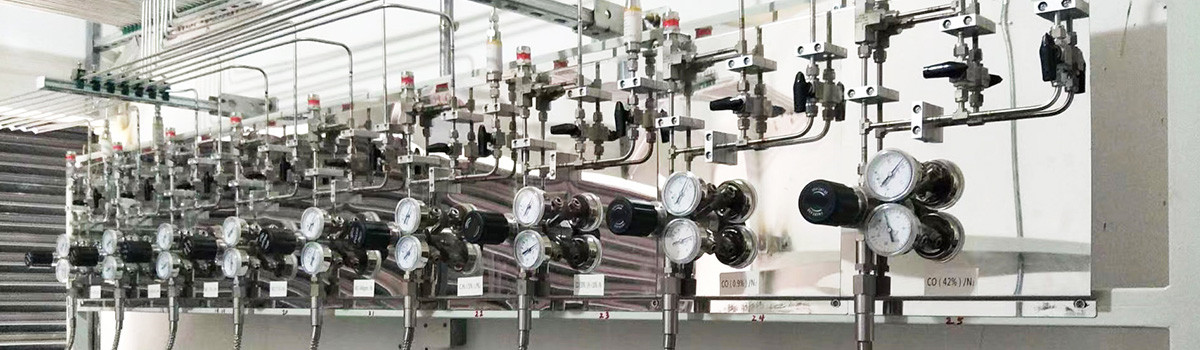
In industries ranging from manufacturing to healthcare, the safe and efficient delivery of gases is critical to operations. A gas manifold serves as the backbone of gas distribution systems, ensuring that gases are delivered from a single source to multiple points of use with precision and reliability. Among the various materials used to construct gas manifolds, stainless steel stands out as a preferred choice due to its exceptional durability, corrosion resistance, and compatibility with a wide range of gases. But what exactly is a stainless steel gas manifold, and why is it so widely used across diverse applications?
A stainless steel gas manifold is a specialized system designed to regulate and distribute gases from a centralized source, such as a cylinder or tank, to various endpoints. These systems are engineered to handle high-pressure gases, maintain safety standards, and ensure consistent flow rates. Stainless steel’s unique properties make it ideal for environments where reliability and resistance to harsh conditions are paramount. This article explores the definition, components, applications, benefits, and challenges of stainless steel gas manifolds, providing a comprehensive guide for professionals, engineers, and anyone interested in gas distribution systems.
What is a Gas Manifold?
Gas manifolds are critical systems used across various industries to manage the safe and efficient distribution of gases from a single source to multiple points of use. These systems are designed to regulate, control, and distribute gases, ensuring a consistent supply while maintaining safety and operational efficiency. From medical facilities to industrial plants and research laboratories, gas manifolds play an essential role in environments where precise gas delivery is paramount.
1. Definition and Purpose
A gas manifold is a system that connects one or more gas sources—such as cylinders, tanks, or pipelines—to multiple outlets or points of use. It serves as a centralized hub that controls the flow, pressure, and distribution of gases to ensure they are delivered safely and efficiently to equipment, processes, or end users. The primary purpose of a gas manifold is to streamline gas delivery, eliminating the need to handle individual gas cylinders for each application. This not only enhances operational efficiency but also improves safety by reducing the risk of mishandling high-pressure gas containers.
Gas manifolds are used in a wide range of applications. In medical settings, for instance, they deliver oxygen, nitrous oxide, or medical air to patient care areas, operating rooms, or intensive care units. In industrial environments, manifolds supply gases like nitrogen, argon, or acetylene for processes such as welding, cutting, or chemical manufacturing. Laboratories rely on gas manifolds to provide precise amounts of specialty gases for experiments or analytical equipment. By centralizing gas distribution, manifolds ensure consistency, reduce downtime, and minimize the need for frequent cylinder replacements.
The importance of gas manifolds extends beyond convenience. They are designed to maintain strict control over gas pressure and flow rates, which is critical in applications where even minor variations can lead to equipment failure, process inefficiencies, or safety hazards. For example, in semiconductor manufacturing, ultra-pure gases delivered through manifolds must be free of contaminants and maintained at precise pressures to ensure the quality of microchip production. Similarly, in hospitals, manifolds ensure a continuous and reliable supply of life-saving gases, even during power outages or emergencies, by incorporating backup systems and automatic switchovers.
Safety is another key purpose of gas manifolds. High-pressure gases, such as those stored in cylinders, can pose significant risks if not handled properly. Manifolds are equipped with regulators, valves, and other safety features to prevent over-pressurization, leaks, or cross-contamination between different gases. By centralizing gas management, manifolds reduce the need for personnel to interact directly with high-pressure cylinders, thereby lowering the risk of accidents.
2. Types of Gas Manifolds (General Overview)
Gas manifolds come in various configurations, each designed to meet the specific needs of different industries, applications, and gas types. The type of manifold used depends on factors such as the gas being distributed, the required flow rate, the number of outlets, and the operational environment. Below is an overview of the main types of gas manifolds:
a. Single-Station Manifolds
Single-station manifolds are the simplest type, designed to connect a single gas cylinder to one or more points of use. These are commonly used in small-scale operations, such as laboratories or workshops, where only one type of gas is needed at a time. Single-station manifolds are compact, cost-effective, and easy to install, making them ideal for applications with low to moderate gas consumption.
Single-station manifolds are the simplest type, designed to connect a single gas cylinder to one or more points of use. These are commonly used in small-scale operations, such as laboratories or workshops, where only one type of gas is needed at a time. Single-station manifolds are compact, cost-effective, and easy to install, making them ideal for applications with low to moderate gas consumption.
b. Multi-Station Manifolds
Multi-station manifolds are designed to connect multiple gas cylinders to a single distribution system. These are used in settings with higher gas demands, such as industrial plants or large medical facilities. Multi-station manifolds can be configured to allow simultaneous use of multiple cylinders or to switch between cylinders automatically when one is depleted, ensuring an uninterrupted gas supply. This type is particularly useful in applications where downtime is unacceptable, such as in hospitals or continuous manufacturing processes.
Multi-station manifolds are designed to connect multiple gas cylinders to a single distribution system. These are used in settings with higher gas demands, such as industrial plants or large medical facilities. Multi-station manifolds can be configured to allow simultaneous use of multiple cylinders or to switch between cylinders automatically when one is depleted, ensuring an uninterrupted gas supply. This type is particularly useful in applications where downtime is unacceptable, such as in hospitals or continuous manufacturing processes.
c. Automatic Changeover Manifolds
Automatic changeover manifolds are advanced systems that switch between primary and reserve gas cylinders without manual intervention. When the primary cylinder is depleted, the manifold automatically switches to a reserve cylinder, ensuring a continuous gas supply. These manifolds are equipped with sensors and alarms to alert operators when a cylinder needs replacement. Automatic changeover manifolds are widely used in critical applications, such as medical gas delivery or high-precision industrial processes, where uninterrupted gas flow is essential.
Automatic changeover manifolds are advanced systems that switch between primary and reserve gas cylinders without manual intervention. When the primary cylinder is depleted, the manifold automatically switches to a reserve cylinder, ensuring a continuous gas supply. These manifolds are equipped with sensors and alarms to alert operators when a cylinder needs replacement. Automatic changeover manifolds are widely used in critical applications, such as medical gas delivery or high-precision industrial processes, where uninterrupted gas flow is essential.
d. Specialty Gas Manifolds
Specialty gas manifolds are designed for handling high-purity or reactive gases, such as those used in semiconductor manufacturing, analytical laboratories, or chemical research. These manifolds are constructed from materials that resist corrosion and contamination, such as stainless steel, and include advanced filtration systems to ensure gas purity. Specialty gas manifolds often incorporate precise pressure regulators and flow controllers to meet the stringent requirements of these applications.
Specialty gas manifolds are designed for handling high-purity or reactive gases, such as those used in semiconductor manufacturing, analytical laboratories, or chemical research. These manifolds are constructed from materials that resist corrosion and contamination, such as stainless steel, and include advanced filtration systems to ensure gas purity. Specialty gas manifolds often incorporate precise pressure regulators and flow controllers to meet the stringent requirements of these applications.
e. Cryogenic Gas Manifolds
Cryogenic gas manifolds are used to distribute gases stored in liquid form, such as liquid nitrogen or oxygen, at extremely low temperatures. These manifolds are designed to handle the unique challenges of cryogenic gases, including maintaining low temperatures and preventing vaporization during distribution. They are commonly used in industries like healthcare, food processing, and aerospace, where large volumes of cryogenic gases are required.
Cryogenic gas manifolds are used to distribute gases stored in liquid form, such as liquid nitrogen or oxygen, at extremely low temperatures. These manifolds are designed to handle the unique challenges of cryogenic gases, including maintaining low temperatures and preventing vaporization during distribution. They are commonly used in industries like healthcare, food processing, and aerospace, where large volumes of cryogenic gases are required.
Each type of manifold is tailored to specific operational needs, and the choice depends on factors such as gas type, flow requirements, and safety considerations. For example, a hospital may use an automatic changeover manifold for oxygen delivery, while a welding shop may opt for a simpler single-station manifold for acetylene.
3. Basic Components and Functionality
Gas manifolds are composed of several key components that work together to ensure safe and efficient gas distribution. Understanding these components and their functionality is essential to appreciating how manifolds operate in various settings.
a. Gas Cylinders or Source
The gas source, typically high-pressure cylinders or tanks, is the starting point of the manifold system. In some cases, the source may be a pipeline connected to a bulk gas storage system. The manifold connects to these sources to draw gas for distribution.
The gas source, typically high-pressure cylinders or tanks, is the starting point of the manifold system. In some cases, the source may be a pipeline connected to a bulk gas storage system. The manifold connects to these sources to draw gas for distribution.
b. Pressure Regulators
Pressure regulators are critical for controlling the pressure of the gas as it flows from the high-pressure source to the distribution system. They reduce the high pressure in the cylinders (often thousands of psi) to a safe and usable level for downstream equipment. Regulators also help maintain consistent pressure, preventing fluctuations that could damage equipment or disrupt processes.
Pressure regulators are critical for controlling the pressure of the gas as it flows from the high-pressure source to the distribution system. They reduce the high pressure in the cylinders (often thousands of psi) to a safe and usable level for downstream equipment. Regulators also help maintain consistent pressure, preventing fluctuations that could damage equipment or disrupt processes.
c. Valves
Valves control the flow of gas through the manifold. These include inlet valves (to connect the gas source), outlet valves (to direct gas to points of use), and isolation valves (to shut off gas flow for maintenance or emergencies). Check valves are often included to prevent backflow, which could cause contamination or safety hazards.
Valves control the flow of gas through the manifold. These include inlet valves (to connect the gas source), outlet valves (to direct gas to points of use), and isolation valves (to shut off gas flow for maintenance or emergencies). Check valves are often included to prevent backflow, which could cause contamination or safety hazards.
d. Piping and Tubing
Piping or tubing forms the physical network that carries gas from the manifold to the points of use. The material used (e.g., copper, stainless steel, or flexible hoses) depends on the gas type and application. For instance, corrosive gases require non-reactive materials to prevent degradation.
Piping or tubing forms the physical network that carries gas from the manifold to the points of use. The material used (e.g., copper, stainless steel, or flexible hoses) depends on the gas type and application. For instance, corrosive gases require non-reactive materials to prevent degradation.
e. Gauges and Sensors
Gauges and sensors monitor key parameters such as pressure, flow rate, and cylinder levels. These devices provide real-time data to operators and can trigger alarms if abnormalities, such as low pressure or leaks, are detected. In automatic changeover manifolds, sensors play a critical role in switching between cylinders.
Gauges and sensors monitor key parameters such as pressure, flow rate, and cylinder levels. These devices provide real-time data to operators and can trigger alarms if abnormalities, such as low pressure or leaks, are detected. In automatic changeover manifolds, sensors play a critical role in switching between cylinders.
f. Safety Devices
Safety devices, such as relief valves, burst discs, and flame arrestors, are incorporated to prevent accidents. Relief valves release excess pressure to avoid over-pressurization, while flame arrestors are used in manifolds handling flammable gases to prevent ignition.
Safety devices, such as relief valves, burst discs, and flame arrestors, are incorporated to prevent accidents. Relief valves release excess pressure to avoid over-pressurization, while flame arrestors are used in manifolds handling flammable gases to prevent ignition.
4.Functionality
The functionality of a gas manifold begins with the connection of the gas source to the manifold’s inlet. The gas flows through the pressure regulator, which reduces and stabilizes the pressure. Valves direct the gas through the piping or tubing to the desired outlets, while gauges and sensors monitor the system’s performance. In advanced systems, automatic controls ensure seamless operation, such as switching to a reserve cylinder or shutting down the system in case of a fault. The design ensures that gas is delivered at the correct pressure, flow rate, and purity, tailored to the specific needs of the application.
Why We Choose Stainless Steel for Gas Manifolds?
Gas manifolds are essential systems for distributing gases safely and efficiently in industries such as healthcare, manufacturing, and scientific research. The choice of material for constructing these manifolds is critical, as it directly impacts performance, safety, and longevity. Stainless steel is often the preferred material for gas manifolds due to its exceptional properties, superior performance compared to other materials, and specific suitability for the demands of gas distribution systems.
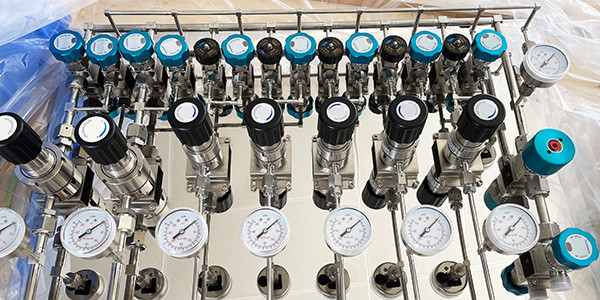
Properties of Stainless Steel
Stainless steel is a versatile alloy known for its remarkable combination of physical and chemical properties, making it ideal for gas manifolds. Its primary attributes include corrosion resistance, durability, strength, and ease of maintenance, which collectively ensure reliable and safe operation in demanding environments.
Corrosion Resistance:
One of stainless steel’s standout features is its exceptional resistance to corrosion. This is due to the presence of chromium, which forms a passive oxide layer on the surface, protecting the material from rust and degradation when exposed to moisture, chemicals, or reactive gases. In gas manifolds, where exposure to corrosive gases like ammonia or chlorine is common, this property ensures the system remains intact and free from leaks or contamination over time.
Durability and Strength:
Stainless steel is highly durable and capable of withstanding high pressures and extreme temperatures. Gas manifolds often operate under significant pressure, especially when handling compressed gases like nitrogen or oxygen. Stainless steel’s robust mechanical strength ensures it can endure these conditions without deforming or cracking, contributing to the system’s longevity and reliability.
Temperature Resistance:
Stainless steel maintains its structural integrity across a wide range of temperatures, from cryogenic levels (e.g., for liquid nitrogen) to high temperatures encountered in industrial processes. This makes it suitable for manifolds handling diverse gases with varying thermal requirements.
Ease of Maintenance:
The smooth, non-porous surface of stainless steel resists contamination and is easy to clean, which is crucial in applications requiring high purity, such as medical gas delivery or semiconductor manufacturing. This property reduces the risk of gas contamination and simplifies maintenance, ensuring consistent performance.
Aesthetic and Hygienic Benefits:
Stainless steel’s polished finish is not only visually appealing but also hygienic, making it ideal for environments like hospitals or food processing facilities where cleanliness is paramount. Its resistance to bacterial growth further enhances its suitability for sensitive applications.
Comparison with Other Materials
While stainless steel is a top choice, other materials like brass and aluminum are sometimes considered for gas manifolds. Comparing these materials highlights why stainless steel often outperforms them in critical applications.
Brass:
Brass, an alloy of copper and zinc, is commonly used in gas manifolds due to its good corrosion resistance and machinability. It is particularly effective for non-corrosive gases like air or nitrogen and is often less expensive than stainless steel. However, brass has limitations. It is less resistant to highly corrosive gases or harsh environments compared to stainless steel. Over time, brass may tarnish or develop pitting when exposed to certain chemicals, which can compromise the integrity of a manifold. Additionally, brass is softer and less durable, making it more prone to wear under high-pressure conditions or frequent use.
Aluminum:
Aluminum is lightweight and offers decent corrosion resistance due to its natural oxide layer. It is also cost-effective and easier to machine than stainless steel, making it attractive for low-pressure or less demanding applications. However, aluminum lacks the strength and durability of stainless steel, making it less suitable for high-pressure gas manifolds. It is also more susceptible to damage from reactive gases or extreme temperatures, which can lead to deformation or failure. In applications requiring high purity, aluminum’s tendency to release trace particles can pose contamination risks, unlike stainless steel’s inert surface.
Other Materials:
Materials like carbon steel or plastic are occasionally used in specific contexts. Carbon steel is strong but highly prone to rust, limiting its use in corrosive environments. Plastics, while corrosion-resistant, lack the strength and temperature tolerance needed for most gas manifold applications. Stainless steel’s balanced combination of strength, corrosion resistance, and versatility makes it superior in most cases.
Suitability for Gas Manifold Applications
Stainless steel’s properties make it uniquely suited for gas manifold applications across various industries. Its ability to handle diverse gases, maintain purity, and ensure safety under challenging conditions sets it apart.
Handling Diverse Gases:
Gas manifolds distribute a wide range of gases, from inert ones like helium to reactive ones like hydrogen or oxygen. Stainless steel’s corrosion resistance and chemical inertness ensure compatibility with these gases, preventing reactions that could damage the system or contaminate the gas supply. For example, in semiconductor manufacturing, where ultra-pure gases are critical, stainless steel manifolds prevent contamination that could ruin delicate processes.
High-Pressure and Safety Requirements:
Gas manifolds often operate under high pressure, requiring materials that can withstand mechanical stress without failing. Stainless steel’s strength and durability ensure it can handle these conditions, reducing the risk of leaks or ruptures. Additionally, its resistance to fatigue and wear makes it reliable for long-term use, minimizing maintenance costs and downtime.
Critical Applications:
In medical settings, stainless steel manifolds deliver gases like oxygen or nitrous oxide to patients. The material’s hygienic properties and resistance to contamination ensure patient safety and compliance with strict regulatory standards. Similarly, in laboratories, stainless steel manifolds maintain the purity of specialty gases used in analytical equipment, ensuring accurate results.
Versatility Across Environments:
Stainless steel’s ability to perform in extreme temperatures and harsh environments makes it ideal for applications ranging from cryogenic gas distribution to high-temperature industrial processes. Its durability ensures manifolds remain operational in demanding settings like chemical plants or offshore facilities.
Regulatory Compliance:
Many industries, such as healthcare and pharmaceuticals, have stringent standards for gas delivery systems. Stainless steel’s properties align with these requirements, as it is non-reactive, easy to sterilize, and capable of maintaining gas purity, making it a preferred choice for compliance with regulations like those set by the FDA or ISO.
Components of a Stainless Steel Gas Manifold
Stainless steel gas manifolds are critical systems used to distribute gases safely and efficiently in industries such as healthcare, manufacturing, and research. These manifolds rely on a combination of specialized components to regulate, control, and deliver gases from a source to multiple points of use. The use of stainless steel ensures durability, corrosion resistance, and compatibility with various gases.
1. Detailed Breakdown of Key Components
A stainless steel gas manifold is composed of several essential components, each designed to ensure precise gas delivery and system reliability. These components include valves, pressure regulators, fittings, piping, gauges, and safety devices, all typically made from or lined with stainless steel to resist corrosion and maintain gas purity.
Valves:
Valves are critical for controlling the flow of gas through the manifold. Inlet valves connect the gas source (e.g., cylinders or tanks) to the manifold, while outlet valves direct gas to points of use. Isolation valves allow sections of the system to be shut off for maintenance or emergencies, and check valves prevent backflow, which could cause contamination or pressure issues. Stainless steel valves are preferred for their durability and resistance to reactive gases.
Pressure Regulators:
Pressure regulators reduce and stabilize the high pressure of gas from cylinders (often thousands of psi) to a safe, usable level for downstream equipment. Single-stage regulators provide consistent pressure for simpler applications, while dual-stage regulators offer greater precision for sensitive processes. Stainless steel regulators ensure compatibility with corrosive or high-purity gases.
Fittings:
Fittings, such as connectors, tees, and elbows, join components like valves, regulators, and piping. Stainless steel fittings are used to maintain system integrity, as they resist corrosion and ensure leak-tight connections. High-quality fittings are essential to prevent gas leaks, especially in high-pressure or hazardous gas applications.
Piping and Tubing:
Piping or tubing forms the network that carries gas from the manifold to end-use points. Stainless steel piping is chosen for its strength, corrosion resistance, and ability to maintain gas purity. The smooth, non-porous surface of stainless steel minimizes contamination risks, making it ideal for applications like medical gas delivery or semiconductor manufacturing.
Gauges and Sensors:
Gauges and sensors monitor critical parameters such as pressure, flow rate, and cylinder levels. Pressure gauges display real-time pressure readings, while sensors in advanced manifolds can detect low cylinder levels or system faults, triggering alarms or automatic switchovers. Stainless steel construction ensures these components withstand harsh environments.
Safety Devices:
Safety devices, such as relief valves, burst discs, and flame arrestors, protect the system and operators. Relief valves release excess pressure to prevent over-pressurization, burst discs rupture safely under extreme pressure, and flame arrestors prevent ignition in manifolds handling flammable gases like hydrogen. Stainless steel enhances the durability and reliability of these devices.
2. Role of Each Component in Gas Distribution
Each component of a stainless steel gas manifold plays a specific role in ensuring safe, efficient, and reliable gas distribution.
Valves:
Valves regulate the flow of gas, allowing operators to start, stop, or redirect gas as needed. Inlet valves control gas entry from the source, outlet valves manage delivery to equipment, and check valves ensure one-way flow to prevent cross-contamination. Isolation valves enable safe maintenance by isolating parts of the system without disrupting overall operation.
Pressure Regulators:
Regulators maintain consistent pressure, which is critical for protecting downstream equipment and ensuring process accuracy. For example, in a laboratory, precise pressure control prevents damage to sensitive instruments, while in medical settings, it ensures safe delivery of oxygen to patients.
Fittings:
Fittings ensure secure, leak-free connections between components, maintaining system integrity. In high-purity applications, stainless steel fittings prevent contamination by avoiding reactions with gases or the release of particles.
Piping and Tubing:
Piping or tubing serves as the conduit for gas distribution, delivering gas from the manifold to points of use. Stainless steel’s inert properties ensure the gas remains uncontaminated, which is vital for applications like pharmaceutical production or analytical testing.
Gauges and Sensors:
These components provide real-time monitoring, enabling operators to detect issues like pressure drops or depleted cylinders. In automatic changeover manifolds, sensors trigger seamless transitions to reserve cylinders, ensuring uninterrupted gas supply in critical applications like hospitals.
Safety Devices:
Safety devices mitigate risks by preventing over-pressurization, leaks, or ignition. For instance, relief valves protect the system from pressure surges, while flame arrestors reduce the risk of explosions when handling flammable gases.
3. Design Considerations for Safety and Efficiency
Designing a stainless steel gas manifold requires careful consideration of safety and efficiency to meet the demands of specific applications. Key factors include material selection, system configuration, and compliance with industry standards.
Material Selection:
Stainless steel is chosen for its corrosion resistance, strength, and compatibility with a wide range of gases, from inert to reactive. The grade of stainless steel (e.g., 316L) is selected based on the gas type and environmental conditions to ensure durability and prevent contamination.
ystem Configuration:
The manifold’s design must account for the number of cylinders, flow rate, and pressure requirements. For high-demand applications, multi-station or automatic changeover manifolds ensure continuous supply. Compact designs are preferred for space-constrained environments like laboratories, while robust systems are needed for industrial settings.
Safety Features:
Safety is paramount in manifold design. Redundant safety devices, such as dual relief valves or backup sensors, enhance reliability. Automatic shutoff systems and alarms alert operators to issues like leaks or low pressure. Stainless steel’s strength ensures the manifold can withstand high pressures without failure.
Efficiency Optimization:
Efficient manifolds minimize gas waste and downtime. Features like automatic changeover systems reduce the need for manual cylinder replacement, while precise regulators optimize gas usage. Stainless steel’s smooth surface reduces flow resistance, improving delivery efficiency.
Regulatory Compliance:
Manifolds must comply with industry standards, such as those set by OSHA, FDA, or ISO, particularly in medical or pharmaceutical applications. Stainless steel’s hygienic properties and resistance to contamination help meet these requirements.
Maintenance and Accessibility:
Designs should facilitate easy maintenance, with accessible valves and fittings for quick repairs. Stainless steel’s durability reduces maintenance frequency, while its cleanability ensures compliance with hygiene standards.
Applications of Stainless Steel Gas Manifolds
Stainless steel gas manifolds are critical systems for distributing gases safely, efficiently, and reliably across a wide range of industries. Their use of stainless steel ensures corrosion resistance, durability, and compatibility with various gases, making them ideal for demanding environments. These manifolds centralize gas delivery from sources like cylinders or tanks to multiple points of use, maintaining precise control over pressure, flow, and purity.
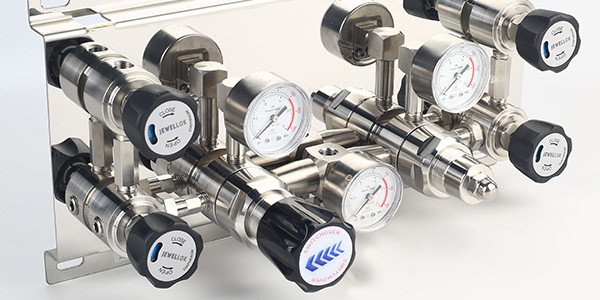
1. Industrial Applications
In industrial settings, stainless steel gas manifolds are indispensable for processes requiring the controlled delivery of gases. Industries such as manufacturing, chemical processing, and energy production rely on these systems to ensure operational efficiency, safety, and product quality.
Manufacturing:
In manufacturing, gas manifolds distribute gases like nitrogen, argon, or oxygen for applications such as welding, cutting, and metal fabrication. For example, in arc welding, argon or helium is delivered through stainless steel manifolds to shield the weld from atmospheric contamination, ensuring strong, high-quality joints. Stainless steel’s corrosion resistance is critical here, as industrial environments often involve exposure to moisture, chemicals, or high temperatures that could degrade lesser materials. Manifolds in these settings are designed for high-pressure operation and often incorporate automatic changeover systems to maintain uninterrupted gas supply during high-volume production.
Chemical Processing:
Chemical plants use stainless steel gas manifolds to deliver gases like hydrogen, nitrogen, or chlorine for reactions, inerting, or purging processes. For instance, nitrogen is used to create inert atmospheres that prevent unwanted reactions, while hydrogen is critical in processes like ammonia synthesis. Stainless steel’s resistance to reactive gases ensures the manifold remains intact and prevents contamination, which could compromise product quality or safety. These manifolds are often equipped with precision regulators and sensors to maintain strict control over gas flow and pressure, meeting the stringent demands of chemical processing.
Energy Sector:
In the energy industry, particularly in oil and gas or renewable energy, manifolds deliver gases for processes like refining, testing, or calibration. For example, natural gas or nitrogen manifolds are used in pipeline purging to prevent explosions or corrosion. Stainless steel’s durability ensures manifolds can withstand harsh conditions, such as offshore platforms exposed to saltwater, while its strength supports high-pressure gas delivery.
The robustness of stainless steel manifolds in industrial applications reduces maintenance costs and downtime, while their ability to handle high-pressure and corrosive gases ensures safety and reliability in demanding environments.
2. Medical Applications
In medical facilities, stainless steel gas manifolds are vital for delivering life-saving gases like oxygen, nitrous oxide, and medical air to patient care areas, operating rooms, and intensive care units. Their use in healthcare is driven by the need for reliability, hygiene, and compliance with strict regulatory standards.
Hospital Gas Delivery Systems:
Hospitals rely on centralized gas manifold systems to supply oxygen for respiratory therapy, nitrous oxide for anesthesia, and medical air for ventilators. Stainless steel is the material of choice due to its hygienic properties and resistance to contamination. For example, oxygen manifolds ensure a continuous supply to patients, with automatic changeover systems switching to reserve cylinders if the primary source is depleted. This is critical in emergencies, where uninterrupted gas delivery can be a matter of life and death. Stainless steel’s non-porous surface prevents bacterial growth, ensuring compliance with standards like those set by the FDA or NFPA.
Emergency and Backup Systems:
Medical gas manifolds often include backup systems to ensure reliability during power outages or cylinder depletion. Stainless steel’s durability ensures these systems remain operational under constant use, while its corrosion resistance prevents degradation in humid hospital environments. For instance, manifolds in surgical suites deliver precise mixtures of gases, with stainless steel components ensuring purity and preventing reactions that could compromise patient safety.
Specialized Medical Applications:
In hyperbaric oxygen therapy, stainless steel manifolds deliver high-pressure oxygen to chambers used for treating conditions like decompression sickness or chronic wounds. The material’s strength and compatibility with high-purity oxygen make it ideal for these applications, where even minor contamination could have serious consequences.The use of stainless steel in medical gas manifolds ensures patient safety, regulatory compliance, and long-term reliability, making them a cornerstone of modern healthcare infrastructure.
3. Laboratory and Research Settings
Laboratories and research facilities depend on stainless steel gas manifolds to deliver high-purity gases for experiments, analytical equipment, and calibration processes. These settings require precise control and contamination-free delivery, which stainless steel manifolds are uniquely suited to provide.
Analytical Laboratories:
In analytical labs, manifolds supply gases like helium, nitrogen, or argon to instruments such as gas chromatographs or mass spectrometers. These instruments require ultra-pure gases to produce accurate results, and stainless steel’s inert properties prevent contamination or reactions that could skew data. For example, helium manifolds in gas chromatography ensure consistent flow and pressure, critical for separating and analyzing chemical compounds.
Research Facilities:
In research settings, manifolds deliver specialty gases for experiments in fields like chemistry, physics, or materials science. Stainless steel manifolds are used to handle reactive or high-purity gases, such as hydrogen for fuel cell research or xenon for particle physics experiments. The material’s corrosion resistance and smooth surface ensure gas purity, while its strength supports high-pressure delivery for complex experiments.
Cleanroom Applications:
In cleanrooms, such as those used in semiconductor manufacturing, stainless steel manifolds deliver ultra-pure gases like nitrogen or argon for processes like wafer fabrication. The material’s non-reactive nature and ability to maintain gas purity are critical, as even trace contaminants can ruin microchip production. Manifolds in these settings often include advanced filtration and precision regulators to meet stringent requirements.Stainless steel’s versatility and reliability make it ideal for laboratory manifolds, where precision, purity, and safety are paramount.
4. Other Niche Applications
Beyond industrial, medical, and laboratory settings, stainless steel gas manifolds are used in niche applications where their durability, corrosion resistance, and compatibility shine.
Aerospace:
In aerospace, manifolds deliver gases like nitrogen or helium for applications such as fuel tank inerting, pressure testing, or rocket propulsion systems. For example, helium is used to pressurize fuel tanks in spacecraft, requiring manifolds that can handle high pressures and cryogenic temperatures. Stainless steel’s strength and temperature resistance ensure reliability in these extreme conditions, while its corrosion resistance is critical in humid or salty environments, such as launch facilities near oceans.
Food Processing:
The food industry uses stainless steel manifolds to deliver gases like nitrogen or carbon dioxide for packaging, preservation, or carbonation. Nitrogen is used in modified atmosphere packaging to extend shelf life, while carbon dioxide is used in beverage carbonation. Stainless steel’s hygienic properties and resistance to corrosion from food-grade gases ensure compliance with FDA standards and prevent contamination, making it ideal for these applications.
Pharmaceuticals:
In pharmaceutical manufacturing, manifolds deliver gases like nitrogen or compressed air for processes such as blanketing, drying, or equipment sterilization. Stainless steel’s inertness and cleanability ensure compliance with Good Manufacturing Practices (GMP), while its durability supports continuous operation in high-throughput production environments.
Environmental Testing:
Manifolds are used in environmental testing to deliver gases for simulating conditions, such as carbon dioxide for greenhouse gas studies or oxygen for combustion testing. Stainless steel’s ability to handle reactive gases and maintain purity ensures accurate test results.
Benefits of Stainless Steel Gas Manifolds
Stainless steel gas manifolds are widely used in industries such as healthcare, manufacturing, and research to distribute gases safely and efficiently from a single source to multiple points of use. The choice of stainless steel as the primary material offers significant advantages, making these manifolds a preferred solution for demanding applications.
1. Safety and Reliability
Safety is paramount in gas distribution systems, and stainless steel gas manifolds excel in ensuring secure and dependable operation. The material’s inherent properties make it ideal for handling a wide range of gases, including high-pressure, reactive, or hazardous ones, while minimizing risks.
Corrosion Resistance:
Stainless steel’s high chromium content forms a protective oxide layer, making it highly resistant to corrosion from moisture, chemicals, or reactive gases like chlorine or ammonia. This prevents leaks, cracks, or system failures that could lead to dangerous gas releases. For example, in medical facilities, corrosion-resistant manifolds ensure safe delivery of oxygen or nitrous oxide, protecting patients and staff.
Strength and Durability:
Stainless steel’s robust mechanical strength allows manifolds to withstand high pressures and extreme temperatures without deforming or failing. This is critical in industrial applications like welding, where manifolds handle high-pressure argon, or in cryogenic systems distributing liquid nitrogen. The material’s durability ensures consistent performance, reducing the risk of unexpected downtime or accidents.
Contamination Prevention:
In applications requiring high-purity gases, such as semiconductor manufacturing or laboratory research, stainless steel’s inert and non-porous surface prevents contamination. This ensures gases remain pure, avoiding costly process errors or compromised experimental results. Additionally, safety features like stainless steel relief valves and check valves prevent over-pressurization and backflow, enhancing system reliability.
Regulatory Compliance:
Stainless steel manifolds meet stringent safety standards, such as those set by OSHA, FDA, or ISO, particularly in medical and pharmaceutical settings. Their reliability and compatibility with diverse gases make them a trusted choice for critical applications where safety cannot be compromised.
2. Cost-Effectiveness Over Time
While stainless steel gas manifolds may have a higher initial cost compared to alternatives like brass or aluminum, their long-term cost-effectiveness makes them a smart investment. This is due to their durability, low maintenance requirements, and ability to reduce operational costs.
Longevity:
Stainless steel’s resistance to corrosion and wear extends the lifespan of gas manifolds, even in harsh environments like chemical plants or offshore facilities. Unlike carbon steel, which rusts, or brass, which may tarnish, stainless steel manifolds require fewer replacements, reducing capital expenditures over time.
Reduced Maintenance Costs:
The material’s durability and resistance to degradation minimize the need for frequent repairs or part replacements. For instance, in industrial settings, stainless steel manifolds handling corrosive gases require less frequent maintenance than those made of less resilient materials, saving on labor and downtime costs.
Operational Efficiency:
Stainless steel manifolds are designed for precision, with components like regulators and fittings ensuring optimal gas flow and minimal waste. This is particularly valuable in high-cost gas applications, such as helium in research labs, where efficient delivery reduces operational expenses. Automatic changeover systems further enhance efficiency by ensuring uninterrupted gas supply, avoiding costly production halts.
Versatility:
Stainless steel’s compatibility with a wide range of gases eliminates the need for multiple specialized systems, reducing equipment costs. A single stainless steel manifold can serve diverse applications, from medical oxygen delivery to industrial nitrogen purging, offering economies of scale.
3. Environmental and Maintenance Advantages
Stainless steel gas manifolds offer significant environmental and maintenance benefits, aligning with sustainable practices and operational efficiency. These advantages stem from the material’s properties and the design of modern manifold systems.
Environmental Sustainability:
Stainless steel is fully recyclable, reducing the environmental impact of manifold production and disposal. Its long lifespan minimizes the need for frequent replacements, conserving resources and reducing waste. Additionally, stainless steel’s inert nature prevents gas leaks that could release harmful substances into the environment, such as greenhouse gases or volatile organic compounds in chemical processing.
Low Maintenance Requirements:
The smooth, non-porous surface of stainless steel resists contamination and is easy to clean, making it ideal for applications requiring high hygiene, such as food processing or medical gas delivery. This reduces the need for harsh cleaning chemicals, lowering environmental impact and maintenance costs. In cleanroom environments, stainless steel manifolds maintain gas purity without frequent servicing, further enhancing efficiency.
Energy Efficiency:
Stainless steel manifolds contribute to energy savings by optimizing gas delivery. Their smooth surfaces reduce flow resistance, ensuring efficient gas transfer with minimal pressure loss. This is particularly beneficial in energy-intensive industries like manufacturing, where efficient gas use lowers overall energy consumption.
Compliance with Green Standards:
Many industries face increasing pressure to adopt sustainable practices. Stainless steel manifolds support compliance with environmental regulations by minimizing leaks, reducing waste, and enabling efficient gas usage. For example, in food packaging, nitrogen manifolds made of stainless steel ensure precise delivery, reducing gas overuse and supporting eco-friendly operations.
Challenges and Considerations
Stainless steel gas manifolds are widely used in industries such as healthcare, manufacturing, and research for their durability, corrosion resistance, and reliability in distributing gases. While these manifolds offer significant advantages, their implementation comes with challenges and considerations that must be addressed to ensure optimal performance.
1. Cost of Stainless Steel vs. Other Materials
One of the primary challenges of stainless steel gas manifolds is their higher initial cost compared to alternatives like brass, aluminum, or carbon steel. This cost differential can influence decision-making, particularly for budget-constrained projects, but understanding the trade-offs is essential.
Higher Upfront Cost:
Stainless steel is more expensive to produce due to its alloy composition, which includes chromium and nickel for corrosion resistance. For example, a stainless steel manifold system for a hospital oxygen delivery setup may cost significantly more than a brass system for a similar application. This can be a barrier for small-scale operations or facilities with limited capital, such as research labs or small manufacturing plants.
Comparison with Alternatives:
Brass is often less costly and suitable for non-corrosive gases like air or nitrogen, making it a popular choice for simpler applications. Aluminum is lightweight and cheaper but lacks the strength and durability of stainless steel, limiting its use in high-pressure or reactive gas systems. Carbon steel, while strong and affordable, is prone to rust, making it unsuitable for corrosive environments. These alternatives may reduce initial costs but often lead to higher long-term expenses due to maintenance or replacement needs.
Long-Term Value:
Despite the higher upfront cost, stainless steel’s durability and corrosion resistance often result in lower lifecycle costs. For instance, in chemical processing plants handling corrosive gases, stainless steel manifolds require fewer replacements than brass or aluminum, offsetting initial expenses. However, decision-makers must weigh these long-term savings against immediate budget constraints, particularly in industries with tight financial margins.
2. Installation and Maintenance Requirements
The installation and maintenance of stainless steel gas manifolds present specific challenges that require careful planning to ensure safety, efficiency, and compliance with industry standards.
Complex Installation:
Installing stainless steel manifolds can be complex due to their robust construction and the need for precise integration with existing systems. For example, in a hospital, installing a medical gas manifold requires compliance with strict codes, such as NFPA 99, which mandates specific configurations and safety features. This process often involves specialized labor, such as certified technicians, and may require custom fittings or welding, increasing installation costs and time. In industrial settings, aligning manifolds with high-pressure piping systems adds further complexity, especially in confined spaces.
Maintenance Demands:
While stainless steel’s durability reduces maintenance frequency, regular inspections and upkeep are still necessary to ensure performance. Components like regulators, valves, and gauges must be checked for wear, leaks, or calibration issues. In high-purity applications, such as semiconductor manufacturing, manifolds require periodic cleaning to prevent contamination, which can be time-consuming and costly. Maintenance also involves ensuring safety devices, like relief valves, function correctly, particularly in systems handling hazardous gases.
Training and Expertise:
Proper installation and maintenance require trained personnel familiar with stainless steel systems and gas-specific requirements. This can be a challenge in regions with limited access to skilled technicians, potentially leading to delays or improper handling that compromises system safety.
3. Compatibility with Specific Gases
Ensuring compatibility between stainless steel gas manifolds and the gases they handle is critical to prevent system failures, safety hazards, or contamination. While stainless steel is highly versatile, certain gases pose unique challenges.
Reactive Gases:
Stainless steel is generally compatible with a wide range of gases due to its corrosion resistance. However, highly reactive gases, such as chlorine or hydrogen sulfide, can still pose risks if the wrong grade of stainless steel is used. For example, standard grades may experience pitting corrosion under prolonged exposure to certain chemicals. Selecting the appropriate grade, such as 316L stainless steel, is crucial for handling such gases, but this increases costs and requires expertise in material selection.
High-Purity Requirements:
In applications like laboratory research or pharmaceutical manufacturing, manifolds must deliver ultra-pure gases without contamination. Stainless steel’s inert surface is ideal, but even minor impurities in the material or improper cleaning can introduce contaminants. For instance, helium used in gas chromatography requires manifolds free of trace particles, necessitating rigorous quality control during manufacturing and installation.
Cryogenic and High-Temperature Gases:
Stainless steel is well-suited for cryogenic gases like liquid nitrogen or high-temperature gases like those in industrial furnaces. However, extreme conditions require specific designs, such as insulated piping or specialized fittings, to prevent thermal stress or vaporization. These adaptations add complexity and cost to the system.
Recent Innovations and Trends
Stainless steel gas manifolds are critical for safe and efficient gas distribution in industries like healthcare, manufacturing, and research. Recent innovations have enhanced their performance, integrating advanced materials, smart technology, and sustainable practices. These developments improve reliability, efficiency, and environmental impact, aligning with modern industrial demands.
1. Advances in Stainless Steel Gas Manifold Design
Recent advancements in stainless steel gas manifold design have focused on improving durability, precision, and adaptability to meet diverse application needs. These innovations ensure manifolds perform reliably in demanding environments while reducing operational challenges.
Material Improvements:
Manufacturers are using advanced stainless steel alloys, such as 316L, which offer superior corrosion resistance and compatibility with reactive or high-purity gases. These alloys extend manifold lifespan in harsh settings like chemical plants or offshore facilities. Enhanced surface treatments, such as electropolishing, create smoother, non-porous surfaces, reducing contamination risks in applications like semiconductor manufacturing or medical gas delivery.
Modular and Compact Designs:
Modern manifolds feature modular designs, allowing easy customization and scalability. For example, modular systems in laboratories can be reconfigured to accommodate additional gas cylinders or new equipment without major overhauls. Compact designs are also gaining traction, especially in space-constrained environments like cleanrooms, where smaller manifolds maintain high performance without sacrificing flow capacity.
Improved Components:
Advances in component design, such as precision regulators and high-flow valves, enhance gas delivery accuracy. For instance, dual-stage regulators provide finer pressure control for sensitive applications like gas chromatography. Stainless steel fittings with improved sealing technologies reduce leak risks, enhancing safety and efficiency in high-pressure systems.These design improvements make stainless steel manifolds more versatile, reliable, and user-friendly, addressing the needs of diverse industries.
2. Integration with Smart Technology and Automation
The integration of smart technology and automation has transformed stainless steel gas manifolds, enabling real-time monitoring, predictive maintenance, and seamless operation. These advancements enhance efficiency and safety in critical applications.
Smart Sensors and IoT:
Modern manifolds incorporate sensors that monitor pressure, flow, and cylinder levels in real time. Internet of Things (IoT) connectivity allows these sensors to transmit data to centralized systems, enabling remote monitoring. For example, in hospitals, smart manifolds alert staff to low oxygen levels, ensuring timely cylinder replacements. In industrial settings, IoT-enabled manifolds optimize gas usage, reducing waste and costs.
Automated Changeover Systems:
Automation has improved manifold reliability with systems that automatically switch to reserve cylinders when primary ones are depleted. These systems use advanced algorithms to ensure uninterrupted gas supply, critical in applications like medical gas delivery or continuous manufacturing processes. Stainless steel’s durability supports the longevity of these automated components.
Predictive Maintenance:
Smart manifolds use data analytics to predict maintenance needs, such as detecting valve wear or pressure anomalies before they cause failures. This reduces downtime and maintenance costs, particularly in high-stakes environments like pharmaceutical production, where system reliability is paramount.These smart technologies make manifolds more efficient, reduce human error, and enhance operational control.
3. Sustainability Trends in Manufacturing
Sustainability is a growing focus in stainless steel gas manifold manufacturing, driven by environmental regulations and industry demand for eco-friendly solutions.
Recyclable Materials:
Stainless steel is fully recyclable, reducing the environmental impact of manifold production. Manufacturers are increasingly using recycled stainless steel to create manifolds, conserving resources without compromising quality. This is particularly relevant in industries like food processing, where sustainable practices are prioritized.
Energy-Efficient Production:
Advances in manufacturing, such as precision machining and additive manufacturing (3D printing), reduce material waste and energy consumption. For example, 3D-printed stainless steel components allow for complex designs with minimal raw material use, lowering the carbon footprint of production.
Eco-Friendly Operation:
Modern manifolds are designed to minimize gas leaks and optimize flow, reducing waste of valuable gases like helium or nitrogen. In applications like modified atmosphere packaging, efficient manifolds lower gas consumption, supporting sustainability goals. Stainless steel’s corrosion resistance ensures long-term performance, reducing the need for frequent replacements and further conserving resources.These sustainability trends align with global efforts to reduce environmental impact while maintaining high performance.
Conclusion
Stainless steel gas manifolds are vital for safe, efficient, and reliable gas distribution across industries like healthcare, manufacturing, and research. Their key advantages include exceptional corrosion resistance, durability, and compatibility with diverse gases, making them ideal for demanding applications. This article recaps their benefits, emphasizes the importance of selecting the right manifold, and encourages exploring stainless steel options tailored to specific needs.
Recap of Key Points:
Stainless steel gas manifolds excel due to their robust properties. Their corrosion resistance, driven by chromium content, prevents degradation from reactive gases or harsh environments, ensuring longevity in chemical plants or medical facilities. The material’s strength supports high-pressure operations, critical for industrial processes like welding or cryogenic gas delivery. Stainless steel’s inert, non-porous surface maintains gas purity, essential for laboratory research or semiconductor manufacturing. Additionally, their recyclability and low maintenance needs enhance sustainability and cost-effectiveness, reducing long-term expenses despite higher initial costs compared to brass or aluminum.
Importance of Choosing the Right Gas Manifold:
Selecting the appropriate manifold is crucial for safety, efficiency, and compliance. The wrong material or design can lead to leaks, contamination, or system failures, posing risks in critical applications like hospital oxygen delivery or high-purity gas systems. Stainless steel manifolds, with proper grade selection (e.g., 316L), ensure compatibility with specific gases and meet stringent standards like those of the FDA or ISO. Tailored designs, such as modular or automated systems, optimize performance for unique operational needs.
Encouragement to Explore Stainless Steel Options:
Given their versatility, stainless steel gas manifolds are a reliable choice for diverse applications. Industries should explore customized solutions to address specific gas types, pressure requirements, or environmental conditions, ensuring safety, efficiency, and sustainability.