
Pressure Regulator Information
A pressure regulator is a valve that controls the pressure of a fluid to a desired value, using negative feedback from the controlled pressure.
Back pressure regulator vs pressure reducing regulator
In the intricate world of fluid system management, maintaining precise pressure control is paramount to ensuring operational efficiency, safety, and equipment longevity. Two critical devices that serve this purpose are back pressure regulators (BPRs) and pressure reducing regulators (PRRs). While both are designed to manage pressure within a system, their functions, applications, and operational mechanisms differ significantly. Understanding these differences is essential for engineers, system designers, and industry professionals who aim to optimize their processes, whether in chemical manufacturing, oil and gas production, or water treatment systems.
A back pressure regulator maintains a constant upstream pressure by releasing excess pressure when it exceeds a set threshold, making it ideal for systems requiring stable pressure before a process. Conversely, a pressure reducing regulator controls downstream pressure, ensuring that the output remains consistent regardless of fluctuations in the supply pressure. These distinct roles make each regulator suitable for specific applications, and choosing the wrong one can lead to inefficiencies, equipment damage, or safety hazards.
This article provides a comprehensive comparison of back pressure regulators and pressure reducing regulators, exploring their working principles, design features, applications, and limitations. By delving into real-world examples and offering practical guidance, we aim to equip readers with the knowledge to select the appropriate regulator for their needs. Whether you’re designing a new system or troubleshooting an existing one, understanding the nuances of BPRs and PRRs is key to achieving optimal performance.
Understanding Pressure Regulators
In the intricate world of fluid systems, pressure regulators stand as critical components, ensuring that pipelines, vessels, and equipment operate safely and efficiently. These devices maintain consistent pressure levels, whether handling gases, liquids, or steam, preventing issues like overpressurization, cavitation, or flow instability. From oil and gas refineries to pharmaceutical manufacturing, pressure regulators are vital for protecting equipment, optimizing processes, and ensuring operational reliability. This article explores the function, types, and applications of pressure regulators, shedding light on their indispensable role in modern industries.
The Role of Pressure Regulators
At their core, pressure regulators are designed to control and stabilize pressure within a fluid system. They achieve this by dynamically adjusting the flow of fluid through a valve mechanism in response to changes in system pressure. By maintaining pressure within a predefined range, regulators prevent damage to equipment, reduce the risk of system failures, and ensure consistent performance. For instance, in a gas distribution system, a pressure regulator ensures that end users receive gas at a safe and usable pressure, regardless of fluctuations in the supply line.
Pressure regulators are versatile, handling a wide range of fluids, including corrosive chemicals, compressed gases, and high-temperature steam. Their ability to operate under diverse conditions makes them essential in industries such as oil and gas, chemical processing, water treatment, and even food and beverage production. Without regulators, systems could experience catastrophic failures, such as pipe bursts or equipment damage, leading to costly downtime and safety hazards.
How Pressure Regulators Work
The operation of a pressure regulator relies on a combination of mechanical components, including diaphragms, springs, valve seats, and sometimes pistons. These components work together to sense and respond to pressure changes in the system. When pressure exceeds or falls below the desired level, the regulator adjusts the valve opening to either restrict or allow more fluid flow, thereby stabilizing the pressure.
For example, in a typical pressure regulator, a diaphragm senses changes in system pressure and moves in response. This movement adjusts the position of a valve, which controls the flow of fluid. A spring often provides the necessary force to balance the diaphragm, ensuring that the valve opens or closes precisely to maintain the target pressure. Some advanced regulators incorporate electronic sensors and actuators for even greater precision, particularly in high-stakes applications like aerospace or semiconductor manufacturing.
Types of Pressure Regulators
Pressure regulators come in two primary types: back pressure regulators (BPRs) and pressure reducing regulators (PRRs). Each serves a distinct purpose, and selecting the right type depends on the system’s design and operational needs.
- Back Pressure Regulators (BPRs):
BPRs are designed to maintain a constant upstream pressure, protecting components on the upstream side of the system. They achieve this by releasing excess pressure when it exceeds a set threshold. For example, in a chemical processing plant, a BPR might be installed to prevent a pump from overpressurizing, which could lead to mechanical failure or fluid leaks. By venting excess fluid or gas, BPRs ensure that upstream equipment operates within safe limits. - Pressure Reducing Regulators (PRRs):
PRRs focus on maintaining a stable downstream pressure, ensuring that equipment or users on the downstream side receive fluid at a consistent and safe level. For instance, in a natural gas distribution network, a PRR ensures that households receive gas at a low, usable pressure, even if the supply line operates at much higher pressures. PRRs are critical in applications where downstream equipment is sensitive to pressure fluctuations.
Applications Across Industries
Pressure regulators are ubiquitous in industries where precise pressure control is critical. In the oil and gas sector, regulators manage the flow of crude oil, natural gas, and refined products through pipelines, preventing overpressurization that could lead to leaks or explosions. In pharmaceutical manufacturing, regulators ensure that sterile fluids are delivered at consistent pressures to maintain product quality and safety. Even in everyday applications, such as HVAC systems or propane tanks for outdoor grills, pressure regulators play a crucial role in ensuring safe and reliable operation.
For example, in water treatment plants, PRRs are used to regulate the pressure of water entering filtration systems, preventing damage to delicate membranes. In contrast, BPRs might be employed in hydraulic systems to protect pumps and actuators from excessive pressure. The versatility of pressure regulators makes them adaptable to both high-pressure industrial environments and low-pressure consumer applications.
Selecting the Right Pressure Regulator
Choosing the appropriate pressure regulator requires a thorough understanding of the system’s requirements. Key considerations include the type of fluid, operating pressure range, flow rate, and environmental conditions. For instance, regulators used in corrosive environments, such as chemical plants, must be constructed from materials like stainless steel or specialized polymers to withstand degradation. Similarly, regulators for high-temperature steam applications must be designed to handle thermal expansion and extreme conditions.
Other factors include the regulator’s set point (the target pressure), its accuracy, and its response time. In critical applications, such as medical gas delivery systems, regulators must provide precise control and rapid response to ensure patient safety. Engineers must also consider whether a single-stage or multi-stage regulator is needed, depending on the degree of pressure reduction required.
Challenges and Innovations
While pressure regulators are highly reliable, they are not without challenges. Wear and tear on mechanical components, such as diaphragms or seals, can lead to performance degradation over time. Contaminants in the fluid stream, such as debris or corrosive substances, can also affect regulator performance. Regular maintenance and inspection are essential to ensure long-term reliability.
Recent advancements in regulator technology have addressed some of these challenges. For example, smart regulators equipped with sensors and IoT connectivity allow for real-time monitoring and diagnostics, enabling predictive maintenance and reducing downtime. Additionally, innovations in materials science have led to the development of regulators that can withstand harsher environments and operate with greater efficiency.
Back Pressure Regulators
Back Pressure Regulators (BPRs), also known as pressure-sustaining regulators, are critical components in fluid systems, designed to maintain a consistent pressure on the upstream side of a system. By dynamically managing pressure, BPRs protect vital equipment such as pumps, reactors, and pipelines from the dangers of overpressurization. These devices ensure operational stability and safety across a wide range of industries, from chemical processing to oil and gas production.
How Back Pressure Regulators Work
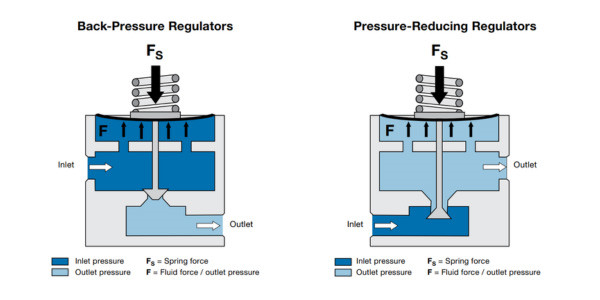
The primary function of a BPR is to maintain a predetermined pressure on the upstream side of a system. It achieves this by opening a valve to release excess fluid when the upstream pressure exceeds a specific setpoint, preventing damage to equipment and maintaining system stability. The operation of a BPR relies on a simple yet effective combination of mechanical components: a diaphragm or piston, a spring, and a valve.
The diaphragm or piston senses changes in upstream pressure, while the spring is calibrated to set the desired pressure threshold. When the upstream pressure exceeds this setpoint, the diaphragm compresses the spring, causing the valve to open and vent excess fluid to a lower-pressure system, such as a bypass line, relief tank, or flare system. As the pressure drops back to the desired level, the spring pushes the diaphragm back, closing the valve and stabilizing the system. This dynamic response ensures that upstream equipment operates within safe pressure limits, even during sudden changes in flow or system conditions.
Some advanced BPRs incorporate electronic sensors or actuators for enhanced precision, particularly in high-stakes applications like aerospace or pharmaceutical manufacturing. However, the core principle remains the same: maintaining upstream pressure by releasing excess fluid when necessary.
Applications of Back Pressure Regulators
BPRs are indispensable in industries where precise upstream pressure control is critical to equipment safety and process efficiency. In chemical processing plants, for example, BPRs are often installed downstream of centrifugal pumps to maintain consistent discharge pressure. This prevents cavitation—a phenomenon where low pressure causes vapor bubbles to form and collapse, potentially damaging pump impellers and reducing efficiency. By maintaining stable pressure, BPRs extend the lifespan of pumps and ensure reliable operation.
In the oil and gas industry, BPRs play a vital role in protecting pipelines and equipment from pressure surges caused by sudden changes in flow or blockages. For instance, in a natural gas pipeline, a BPR can prevent overpressurization by diverting excess gas to a flare system, safeguarding downstream components and ensuring compliance with safety regulations. Similarly, in water treatment facilities, BPRs protect hydraulic systems by maintaining consistent pressure in high-pressure circuits, preventing damage to actuators or valves.
BPRs are also used in specialized applications, such as laboratory equipment and HVAC systems, where precise pressure control is necessary for experimental accuracy or system performance. Their versatility makes them a cornerstone of fluid system design across diverse sectors.
Limitations of Back Pressure Regulators
While BPRs are highly effective for upstream pressure control, they have limitations that engineers must consider. Most notably, BPRs are designed solely to regulate upstream pressure and have no control over downstream conditions. In systems requiring both upstream and downstream pressure management, a combination of BPRs and Pressure Reducing Regulators (PRRs) is often necessary. This can increase system complexity, cost, and maintenance requirements.
Another challenge is the potential for wear and tear in the valve mechanism, particularly in systems handling corrosive fluids, particulate-laden gases, or high-temperature steam. Debris or chemical buildup can cause clogging or erosion, leading to reduced performance or failure of the regulator. Regular maintenance, including cleaning and inspection of the diaphragm, spring, and valve seat, is essential to ensure long-term reliability. In some cases, selecting materials like stainless steel or specialized polymers can mitigate corrosion and extend the regulator’s lifespan.
Additionally, BPRs may not be suitable for applications requiring extremely precise pressure control, as mechanical components can introduce slight variations in response time. For such scenarios, electronic or hybrid regulators may be preferred, though they come at a higher cost.
Case Study: BPR in a Refinery
To illustrate the practical importance of BPRs, consider their application in an oil refinery. In one instance, a centrifugal pump was used to transfer crude oil through a pipeline at a discharge pressure of 50 bar. During normal operation, the pump maintained a steady flow, but sudden increases in demand could cause pressure spikes, risking damage to the pump and downstream equipment. To address this, a BPR was installed downstream of the pump, set to maintain a constant upstream pressure of 50 bar.
During a sudden surge in flow, caused by a downstream valve opening unexpectedly, the upstream pressure began to rise. The BPR’s diaphragm sensed the increase, compressing the spring and opening the valve to divert excess oil to a bypass line. This action prevented the pressure from exceeding safe limits, protecting the pump from cavitation and mechanical stress. Once the flow stabilized, the valve closed, restoring normal operation. This case underscores the BPR’s critical role in maintaining system stability and protecting expensive equipment in high-pressure environments.
Innovations and Future Trends
Recent advancements in BPR technology have focused on improving durability and precision. For example, smart BPRs equipped with sensors and IoT connectivity allow for real-time monitoring of pressure conditions, enabling predictive maintenance and reducing the risk of unexpected failures. Additionally, advancements in materials science have led to the development of regulators capable of withstanding harsher environments, such as those involving corrosive chemicals or extreme temperatures.
Looking ahead, the integration of machine learning and advanced control algorithms could further enhance BPR performance, allowing for more precise and adaptive pressure control. These innovations will likely expand the applications of BPRs in emerging fields like renewable energy and advanced manufacturing.
Pressure Reducing Regulators
Pressure Reducing Regulators (PRRs), often simply referred to as pressure regulators, are vital components in fluid systems, designed to maintain a consistent downstream pressure regardless of fluctuations in the upstream supply. By precisely controlling the flow of fluid through a valve, PRRs ensure that downstream equipment and processes receive fluid at a safe and stable pressure, preventing damage and optimizing performance. From natural gas distribution to HVAC systems, PRRs play a critical role in industries and applications where reliable downstream pressure control is essential.
How Pressure Reducing Regulators Work
The primary function of a PRR is to deliver a stable downstream pressure, even when the upstream supply pressure varies. This is achieved through a combination of mechanical components: a diaphragm or piston, a spring, and a valve. The diaphragm or piston senses the downstream pressure, while the spring is calibrated to set the desired output pressure, known as the setpoint. The valve adjusts the flow of fluid to maintain this setpoint, responding dynamically to changes in downstream conditions.
When the downstream pressure falls below the setpoint, the diaphragm moves, compressing the spring and opening the valve to allow more fluid to flow, thereby increasing the pressure. Conversely, if the downstream pressure exceeds the setpoint, the spring expands, causing the valve to close and restrict flow, reducing the pressure to the desired level. This feedback mechanism ensures that downstream equipment receives fluid at a consistent pressure, protecting sensitive components and ensuring operational efficiency.
In advanced PRRs, electronic sensors and actuators may be integrated to enhance precision, particularly in applications requiring extremely tight pressure control, such as semiconductor manufacturing or medical gas delivery. However, the core principle of maintaining stable downstream pressure remains consistent across all PRR designs.
Applications of Pressure Reducing Regulators
PRRs are ubiquitous in systems where downstream pressure control is critical to safety and performance. In natural gas distribution networks, for example, PRRs reduce high-pressure gas from transmission lines (often exceeding 1000 psig) to a low, usable pressure (typically 0.5–5 psig) for residential and commercial users. This ensures that household appliances, such as water heaters and stoves, operate safely without being damaged by excessive pressure.
In HVAC systems, PRRs regulate the pressure of refrigerants to optimize cooling efficiency and prevent damage to compressors or evaporators. In pharmaceutical manufacturing, PRRs ensure that fluids used in drug production are delivered at precise pressures to maintain process consistency and product quality. Similarly, in food and beverage processing, PRRs control the pressure of gases or liquids used in packaging or carbonation, ensuring compliance with safety and quality standards.
PRRs are also found in everyday applications, such as propane tanks for outdoor grills or irrigation systems in agriculture, where they maintain consistent pressure to ensure reliable performance. Their ability to deliver precise and stable pressure makes them ideal for systems with sensitive downstream components that could be damaged by pressure fluctuations.
Challenges of Pressure Reducing Regulators
Despite their versatility, PRRs face several challenges that engineers must address. One significant limitation is their sensitivity to inlet pressure fluctuations. If the upstream supply pressure drops significantly, the PRR may struggle to maintain the desired downstream pressure, leading to performance issues. This is particularly problematic in systems with variable supply conditions, such as remote gas pipelines or water distribution networks.
Another challenge is pressure droop, a phenomenon where the downstream pressure decreases at high flow rates due to limitations in the regulator’s capacity. To mitigate this, PRRs must be carefully sized and calibrated for the specific application, taking into account the expected flow rates and pressure ranges. Incorrect calibration can also lead to issues like pressure overshoot, where the downstream pressure temporarily exceeds the setpoint, potentially stressing downstream components.
Regular maintenance is essential to ensure PRR reliability. Debris, corrosion, or wear in the valve, diaphragm, or seals can impair performance, leading to inaccurate pressure control or system failures. In systems handling particulate-laden fluids or corrosive substances, selecting PRRs made from durable materials, such as stainless steel or specialized polymers, can help mitigate these issues.
Case Study: PRR in a Municipal Water Supply System
To illustrate the practical importance of PRRs, consider their application in a municipal water supply system. In one city, the main water supply line operated at a high pressure of 100 psi to ensure adequate flow across a large distribution network. However, household plumbing systems are typically designed to handle pressures of 40–50 psi. To prevent damage to residential pipes, fixtures, and appliances, a PRR was installed at a key distribution point to reduce the pressure to 40 psi.
During peak demand periods, such as early mornings when residents were using water for showers and household chores, the PRR dynamically adjusted the valve to maintain the 40-psi setpoint, even as the upstream pressure fluctuated due to varying flow rates. This ensured that households received water at a safe and consistent pressure, preventing leaks, pipe bursts, and costly repairs. The PRR’s ability to adapt to changing conditions highlighted its critical role in protecting downstream infrastructure and ensuring reliable water delivery.
Innovations and Future Trends
Recent advancements in PRR technology have focused on improving performance and durability. Smart PRRs equipped with sensors and IoT connectivity allow for real-time monitoring of downstream pressure, enabling predictive maintenance and early detection of issues like pressure droop or valve wear. These innovations reduce downtime and improve system reliability, particularly in critical applications like medical gas delivery or industrial automation.
Additionally, advancements in materials science have led to the development of PRRs capable of withstanding harsher environments, such as those involving corrosive chemicals or extreme temperatures. Looking ahead, the integration of advanced control algorithms and machine learning could further enhance PRR precision, enabling adaptive pressure control that responds to complex system dynamics in real time.
Comparing Back Pressure Regulators and Pressure Reducing Regulators
Back Pressure Regulators (BPRs) and Pressure Reducing Regulators (PRRs) are essential components in fluid systems, both designed to manage pressure but with distinct operational focuses. While BPRs maintain a constant upstream pressure to protect equipment like pumps and pipelines, PRRs ensure a stable downstream pressure to safeguard sensitive processes and components. Understanding the differences in their design, functionality, applications, performance, and maintenance requirements is crucial for selecting the right regulator for a given system.
Functional Differences
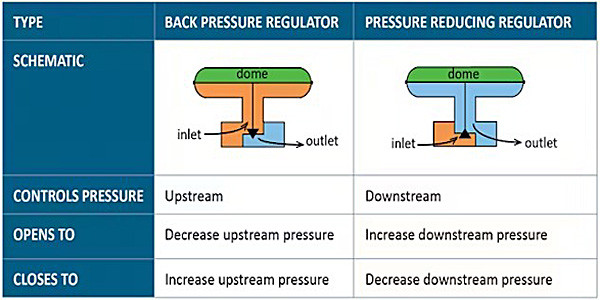
The primary distinction between BPRs and PRRs lies in their pressure control focus. A BPR, also known as a pressure-sustaining regulator, is designed to maintain a consistent upstream pressure by releasing excess fluid when the pressure exceeds a predetermined setpoint. This makes BPRs ideal for protecting upstream components, such as pumps, reactors, or pipelines, from overpressurization, which could lead to mechanical failure or system instability.
In contrast, a PRR, often referred to simply as a pressure regulator, focuses on maintaining a stable downstream pressure, regardless of fluctuations in the upstream supply. By throttling the flow of fluid through a valve, PRRs ensure that downstream equipment or processes receive fluid at a safe and consistent pressure, making them critical in applications where downstream components are sensitive to pressure variations.
For example, in a chemical processing plant, a BPR might be installed downstream of a centrifugal pump to maintain a constant discharge pressure, preventing cavitation or damage to the pump. Meanwhile, in a medical gas delivery system, a PRR ensures that oxygen is delivered to patients at a precise, low pressure, typically 50–60 psig, despite high-pressure fluctuations in the supply line.
Design and Operation
The design of BPRs and PRRs reflects their distinct operational goals. A BPR typically features a diaphragm or piston that senses upstream pressure, a spring calibrated to the desired pressure setpoint, and a relief valve that vents excess fluid to a lower-pressure system, such as a bypass line, relief tank, or atmosphere. When the upstream pressure exceeds the setpoint, the diaphragm compresses the spring, opening the valve to release fluid and reduce pressure. Once the pressure drops to the desired level, the valve closes, maintaining system stability.
PRRs, on the other hand, use a similar combination of a diaphragm or piston and a spring but focus on downstream pressure feedback. The diaphragm senses the downstream pressure, and the spring sets the target output pressure. If the downstream pressure falls below the setpoint, the valve opens to allow more fluid to flow, increasing the pressure. If the pressure exceeds the setpoint, the valve closes to restrict flow, stabilizing the output. This throttling mechanism ensures consistent downstream pressure, even with varying upstream conditions.
In advanced systems, both BPRs and PRRs may incorporate electronic sensors and actuators for enhanced precision, particularly in applications requiring tight pressure control, such as semiconductor manufacturing or aerospace systems. However, the core mechanical designs remain fundamentally different, tailored to their specific pressure control objectives.
Applications in Industry
The distinct functions of BPRs and PRRs dictate their applications. BPRs are commonly used in systems where upstream pressure control is critical. For instance, in an oil and gas pipeline, a BPR protects upstream equipment from pressure surges caused by sudden flow changes, diverting excess fluid to a flare system to prevent damage. Similarly, in hydraulic systems, BPRs maintain consistent pressure to protect pumps and actuators from overpressurization.
PRRs, conversely, are ideal for applications requiring stable downstream pressure. In a natural gas distribution network, PRRs reduce high-pressure gas from transmission lines to a low, usable pressure for residential and commercial users, ensuring safety and reliability. In HVAC systems, PRRs regulate refrigerant pressure to optimize cooling efficiency, while in pharmaceutical manufacturing, they ensure precise pressure delivery for fluid processes, maintaining product quality.
In some complex systems, both BPRs and PRRs are used together to achieve comprehensive pressure control. For example, in a water treatment plant, a BPR might protect a high-pressure pump upstream, while a PRR ensures that downstream filtration systems receive water at a safe pressure, preventing damage to delicate membranes.
Performance Characteristics
Performance-wise, BPRs excel in dynamic systems with fluctuating upstream pressures, as they respond quickly to surges by venting excess fluid. This makes them well-suited for high-pressure environments where rapid pressure spikes are common, such as in oil refineries or chemical plants. However, BPRs do not regulate downstream pressure, which may necessitate additional regulators in systems requiring both upstream and downstream control.
PRRs, by contrast, provide precise downstream pressure control, making them ideal for applications with sensitive downstream components. However, they can struggle with significant inlet pressure variations, particularly if the upstream pressure drops below the level needed to maintain the desired downstream setpoint. This sensitivity requires careful system design to ensure adequate supply pressure.
Maintenance Considerations
Maintenance requirements for BPRs and PRRs differ due to their distinct designs and operating conditions. BPRs, with their relief mechanisms, are prone to clogging or wear, especially in systems handling corrosive fluids or particulate-laden gases. Regular cleaning of relief ports and inspection of diaphragms and seals are essential to ensure reliable performance. Using materials like stainless steel or specialized polymers can mitigate corrosion in harsh environments.
PRRs, meanwhile, require precise calibration to avoid issues like pressure droop, where downstream pressure decreases at high flow rates. Debris or wear in the valve or diaphragm can also impair performance, necessitating regular maintenance. In systems with clean fluids, such as medical gases, PRRs may require less frequent maintenance, but calibration checks are critical to ensure accuracy.
Practical Example
Consider a combined application in a petrochemical plant. A BPR is installed downstream of a pump to maintain a constant upstream pressure of 80 bar, protecting the pump from surges during sudden flow changes. Downstream, a PRR reduces the pressure to 20 bar for a sensitive reactor process, ensuring consistent operation. This combination demonstrates how BPRs and PRRs complement each other to achieve comprehensive pressure control in complex systems.
Innovations and Future Trends
Advancements in regulator technology are enhancing the capabilities of both BPRs and PRRs. Smart regulators with IoT connectivity enable real-time monitoring and predictive maintenance, reducing downtime and improving reliability. Materials science innovations are also improving durability, allowing regulators to operate in harsher environments. In the future, integration of machine learning could enable adaptive pressure control, optimizing performance in dynamic systems.
Choosing the Right Pressure Regulator
Selecting the appropriate pressure regulator for a fluid system is a critical decision that can significantly impact operational efficiency, equipment safety, and system reliability. Back Pressure Regulators (BPRs) and Pressure Reducing Regulators (PRRs) serve distinct purposes, with BPRs maintaining consistent upstream pressure and PRRs ensuring stable downstream pressure. Choosing between them requires a thorough understanding of the system’s requirements, including pressure control needs, fluid characteristics, operating conditions, and maintenance considerations.
Understanding System Requirements
The first step in choosing between a BPR and a PRR is identifying whether the system requires upstream or downstream pressure control. BPRs, also known as pressure-sustaining regulators, are designed to maintain a constant upstream pressure by releasing excess fluid when the pressure exceeds a predetermined setpoint. This makes them ideal for protecting upstream components, such as pumps, reactors, or pipelines, from overpressurization. For example, in a chemical processing plant, a BPR might be installed downstream of a centrifugal pump to prevent cavitation or mechanical damage by maintaining a steady discharge pressure.
In contrast, PRRs focus on delivering a stable downstream pressure, regardless of fluctuations in the upstream supply. By throttling the flow of fluid through a valve, PRRs ensure that downstream equipment or processes receive fluid at a safe and consistent pressure. For instance, in a natural gas distribution network, a PRR reduces high-pressure gas from transmission lines to a low, usable pressure (e.g., 0.5–5 psig) for residential and commercial users, protecting appliances and ensuring reliable delivery.
To determine the appropriate regulator, engineers must evaluate the system’s operational goals. If the priority is protecting upstream equipment from pressure surges, a BPR is the right choice. If the focus is on delivering consistent pressure to downstream components, a PRR is more suitable. In some complex systems, both regulators may be used together to achieve comprehensive pressure control.
Fluid Characteristics and Operating Conditions
The type of fluid—whether gas, liquid, or steam—plays a significant role in regulator selection. Different fluids have unique properties, such as viscosity, compressibility, or corrosiveness, that affect regulator performance and material compatibility. For example, corrosive fluids like acidic chemicals require regulators made from durable materials, such as stainless steel or specialized polymers, to prevent degradation. Similarly, steam systems operating at high temperatures demand regulators designed to withstand thermal expansion and extreme conditions.
The operating pressure range and flow rate are also critical considerations. BPRs and PRRs must be selected to handle the system’s expected pressure and flow requirements. For instance, a high-pressure hydraulic system may require a BPR capable of managing pressures up to 100 bar, while a low-pressure irrigation system might need a PRR designed for pressures below 10 psi. Flow rate is equally important, as it affects the regulator’s ability to maintain stable pressure. High-flow systems require regulators with larger valve openings to prevent restrictions, while low-flow systems may need more sensitive regulators for precise control.
Environmental factors, such as ambient temperature and humidity, can also influence regulator performance. In cold climates, regulators may require insulation or heating elements to prevent freezing, while in humid or corrosive environments, protective coatings or enclosures may be necessary to ensure longevity.
Sizing and Installation Considerations
Proper sizing is critical to ensure regulator performance and system stability. An oversized regulator may cause pressure instability, leading to oscillations or erratic performance, while an undersized regulator may restrict flow, reducing efficiency or causing pressure droop (a decrease in downstream pressure at high flow rates for PRRs). To determine the correct size, engineers must calculate the system’s maximum and minimum flow rates, pressure ranges, and pipe diameters, consulting manufacturer specifications to select a regulator with the appropriate capacity.
Installing pressure gauges upstream and downstream of the regulator is a best practice for monitoring performance and diagnosing issues. For BPRs, an upstream gauge helps verify that the setpoint is maintained, while for PRRs, a downstream gauge ensures that the output pressure remains consistent. These gauges can also detect problems like valve wear, clogging, or calibration drift, enabling proactive maintenance.
Maintenance and Longevity
Regular maintenance is essential to ensure the reliability and longevity of both BPRs and PRRs. For BPRs, maintenance typically involves cleaning relief ports and inspecting diaphragms or seals for wear, especially in systems handling particulate-laden or corrosive fluids. Clogging or erosion in the relief mechanism can impair the regulator’s ability to vent excess pressure, leading to system failures. For PRRs, maintenance focuses on calibrating the valve to prevent issues like pressure droop or overshoot and ensuring that the diaphragm and seals remain free of debris.
Using high-quality materials tailored to the application can reduce maintenance frequency. For example, in a seawater desalination plant, a PRR made from corrosion-resistant materials can withstand the harsh saline environment, minimizing wear and extending service life. Additionally, implementing a regular inspection schedule—checking for leaks, pressure deviations, or mechanical wear—can prevent costly downtime and ensure consistent performance.
Practical Example
Consider a combined application in a pharmaceutical manufacturing facility. A high-pressure pump delivers a sterile liquid to a reactor at 80 bar, requiring a BPR to maintain a constant upstream pressure and prevent pump damage. Downstream, a PRR reduces the pressure to 10 bar for a sensitive filtration process, ensuring that delicate membranes are not damaged by excessive pressure. By carefully selecting and sizing both regulators, the facility achieves precise pressure control, protecting equipment and maintaining product quality.
Innovations in Regulator Technology
Advancements in regulator technology are improving the performance and reliability of BPRs and PRRs. Smart regulators equipped with IoT connectivity and sensors enable real-time monitoring of pressure, flow, and system conditions, facilitating predictive maintenance and reducing the risk of failures. Innovations in materials science are also enhancing durability, allowing regulators to operate in harsher environments, such as those involving corrosive chemicals or extreme temperatures. In the future, the integration of advanced control algorithms could enable adaptive pressure regulation, optimizing performance in dynamic systems.
Future Trends in Pressure Regulation
The field of pressure regulation is undergoing a transformative shift, driven by advancements in automation, digitalization, and sustainable engineering. Back Pressure Regulators (BPRs) and Pressure Reducing Regulators (PRRs) are evolving to meet the demands of modern industries, from oil and gas to clean energy. Emerging technologies, such as smart sensors, advanced materials, and energy-efficient designs, are enhancing the performance, durability, and environmental impact of pressure regulators.
One of the most significant trends is the integration of Internet of Things (IoT) technology into pressure regulators. Smart regulators equipped with IoT sensors enable real-time monitoring of critical parameters, such as pressure, flow rate, and system health. These devices transmit data to centralized control systems, allowing operators to detect anomalies, such as pressure spikes or valve wear, before they lead to failures. For example, a smart BPR in an oil pipeline could alert operators to a pressure surge, enabling preemptive action to prevent equipment damage or leaks. This predictive maintenance capability reduces downtime, lowers maintenance costs, and enhances system reliability, particularly in critical applications like chemical processing or aerospace.
Another key trend is the development of advanced materials to improve regulator durability. Traditional materials like stainless steel are being supplemented with composites and specialized alloys designed to withstand extreme conditions, such as high-pressure hydrogen systems used in clean energy applications. These materials resist corrosion, thermal stress, and wear, extending the lifespan of regulators in harsh environments, such as offshore oil platforms or renewable energy facilities. For instance, regulators in hydrogen fuel cell systems must handle high pressures and reactive gases, making material innovation critical for safety and performance.
Sustainability is also a driving force in pressure regulator design. As industries align with global environmental goals, regulators are being engineered to minimize energy loss and reduce emissions. For example, low-leakage valves and optimized flow paths reduce wasted fluid in gas and steam systems, improving efficiency and lowering greenhouse gas emissions. In water treatment plants, energy-efficient PRRs help conserve resources by maintaining precise pressure control with minimal power consumption.
Additionally, advancements in control algorithms and machine learning are enabling adaptive pressure regulation, allowing regulators to dynamically adjust to changing system conditions. This is particularly valuable in renewable energy systems, where variable flow rates require precise control.
The future of pressure regulation lies in smart, durable, and sustainable solutions. IoT-enabled monitoring, advanced materials, and energy-efficient designs are revolutionizing BPRs and PRRs, ensuring they meet the demands of modern industries while supporting global sustainability efforts. As these trends continue, pressure regulators will play a pivotal role in enhancing safety, efficiency, and environmental responsibility across diverse applications.
Conclusion
Back pressure regulators and pressure reducing regulators play vital roles in fluid system management, each serving distinct purposes. BPRs protect upstream equipment by maintaining constant pressure, while PRRs ensure stable downstream delivery for sensitive processes. By understanding their working principles, applications, and limitations, engineers can make informed decisions to optimize system performance and safety. Whether safeguarding a pump in a chemical plant or delivering consistent gas pressure to households, the right regulator is critical to success. As technology evolves, innovations in smart regulators and sustainable designs will further enhance their capabilities, making pressure regulation more efficient and reliable. Engineers and system designers are encouraged to carefully assess their system requirements and consult with manufacturers to select the appropriate regulator for their needs.