Pressure Regulator & Valves Technology
Regulators, Valves and Systems deliver a wide range of standard and custom engineered precision pressure control solutions for a diverse world market.

Choosing the Right Types of Pressure Regulators for Your Application

Pressure regulators are essential components in fluid and gas systems, maintaining consistent downstream pressure regardless of upstream fluctuations. Selecting the wrong type can lead to system failure, safety hazards, equipment damage, or inefficient operation. For example, a regulator undersized for high flow may cause pressure drops, while an oversized one wastes energy and increases costs.
 
This guide covers pressure regulator fundamentals, major types, key selection criteria, application-specific recommendations, and common pitfalls. By understanding these factors, engineers, technicians, and facility managers can choose regulators that optimize performance, safety, and longevity. (Word count so far: 112)

Understanding Pressure Regulators: Core Principles

A pressure regulator reduces inlet pressure to a lower, stable outlet pressure. It operates via a sensing element (diaphragm, piston, or bellows) that detects outlet pressure changes and adjusts a valve to maintain setpoint.
 
Key performance metrics:
  • Setpoint accuracy: Deviation from desired pressure (e.g., ±1% full scale).
  • Droop: Outlet pressure drop as flow increases.
  • Lock-up pressure: Pressure rise when flow stops.
  • Capacity (Cv): Flow coefficient indicating maximum flow at given pressure drop.
Regulators handle gases (air, nitrogen, propane) or liquids (water, oils, chemicals). Material compatibility prevents corrosion; for instance, brass suits non-corrosive gases, while stainless steel resists aggressive fluids.
 
Ignoring these basics leads to failures like regulator “chatter” from improper sizing or leakage from material mismatch. 

Major Types of Pressure Regulators

Regulators fall into categories based on design, application, and precision. Here’s a breakdown:

1. Direct-Acting Regulators

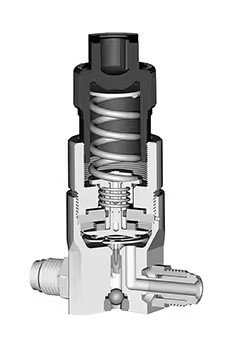
Mechanism: A spring-loaded diaphragm or piston directly opposes inlet pressure. High inlet pressure pushes the valve closed; low pressure allows it to open.
Subtypes:
  • Spring-loaded: Simple, cost-effective for general use.
  • Weight-loaded: Uses weights for very low pressures (e.g., inches water column).
Pros: Compact, fast response, low cost ($50–$500).
Cons: Limited accuracy (±5–10%), significant droop at high flows.
Best for: Low-precision applications like pneumatic tools, HVAC systems, or irrigation.
Example: A Fisher 67C spring-loaded regulator for instrument air supplies 0–100 psig with ±2% accuracy.

2. Pilot-Operated Regulators

Mechanism: A small pilot regulator controls a larger main valve. The pilot senses downstream pressure and modulates loading pressure on the main diaphragm.
Pros: High accuracy (±1%), minimal droop, high capacity (Cv up to 1000+).
Cons: Complex, higher cost ($500–$5000), slower response.
Best for: High-flow systems like natural gas distribution, steam boilers, or chemical processing.
Example: Emerson’s Type 1098-EGR for gas pipelines handles 10,000 SCFH with ±0.5% accuracy.

3. Dome-Loaded Regulators

Mechanism: External gas pressure (dome) loads the sensing element instead of a spring.
Pros: Adjustable setpoint without disassembly, excellent for varying pressures.
Cons: Requires external pressure source, potential leakage.
Best for: Precision applications like semiconductor manufacturing or aerospace testing.

4. Back-Pressure Regulators

Mechanism: Maintain upstream pressure by relieving excess (opposite of standard regulators).
Pros: Prevents overpressure in pumps or reactors.
Cons: Not for pressure reduction. Best for: Relief in closed loops or tank blanketing.

5. Specialty Types

  • Vaporizing regulators: Heat media to prevent freezing (e.g., LPG systems).
  • Sanitary regulators: 3A-certified for food/pharma with crevice-free designs.
  • Electronic regulators: Use solenoids/sensors for precise control (e.g., ±0.1%).
Understanding type-specific limitations prevents mismatches—like using direct-acting in high-flow gas transmission, causing excessive droop.

Key Selection Criteria: A Step-by-Step Framework

Choose systematically using this framework:

Step 1: Define System Requirements

  • Fluid type: Gas (compressible) vs. liquid (incompressible). Gases need larger orifices to avoid sonic flow (choked flow).
  • Inlet pressure (P1): Maximum/minimum.
  • Outlet pressure (P2): Setpoint and tolerance.
  • Flow rate: Minimum, normal, maximum (SCFM, GPM).
  • Temperature: Affects seals (e.g., Viton for 400°F, Buna-N for -20°F).

Calculation example: For air at 100 psig inlet, 30 psig outlet, 500 SCFM:

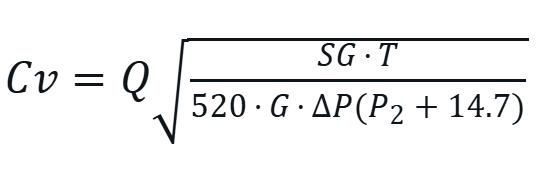
  • Use Cv formula:

(for gases, non-choked).

  • Simplified: Select regulator with Cv ≥ 50 for safety margin.

Step 2: Evaluate Performance Needs

  • Accuracy: <±1% for labs; ±5% for industrial.
  • Droop: <5% for critical processes.
  • Response time: Direct-acting fastest (<0.1s); pilot-operated slower.

Step 3: Consider Environmental Factors

  • Hazardous areas: ATEX/IECEx-certified for explosive atmospheres.
  • Corrosion: 316SS for acids; Monel for seawater.
  • Vibration: Balanced designs reduce chatter.

Step 4: Size Properly

Oversizing causes hunting; undersizing limits flow. Use manufacturer sizing software (e.g., Swagelok Pressure Regulator Flow Curve Generator).
Table 1: Sizing Quick Reference
Flow (SCFM)
Inlet (psig)
Outlet (psig)
Min Cv
0–100
0–150
0–50
1–5
100–500
50–300
10–100
10–30
500–5000
100–1000
50–500
50–200

Step 5: Budget and Maintenance

  • Initial cost vs. lifecycle: Cheap regulators fail faster.
  • Serviceability: Cartridge designs allow quick repairs.
This framework reduced downtime 40% in a case study at a petrochemical plant by switching from direct-acting to pilot-operated regulators.

Application-Specific Recommendations

Industrial Gas Supply (e.g., Welding, Pneumatics)

  • Type: Direct-acting, spring-loaded.
  • Why: Cost-effective, compact. Example: Victor SR 4J for acetylene (0–15 psig).
  • Tip: Use two-stage for cylinder pressure drop compensation.

Natural Gas Distribution

  • Type: Pilot-operated or dome-loaded.
  • Why: High flow, tight accuracy (±1%) for meter sets. Example: Mooney Flowgrid for city gates.
  • Standards: Comply with ANSI B109.4 or CSA.

Steam Systems

  • Type: Pilot-operated with cast iron/steel body.
  • Why: Handles high temperatures (up to 500°F), condensate. Example: Spirax Sarco BRV for pressure reduction stations.
  • Caution: Install drip legs to prevent water hammer.

Laboratory and Analytical

  • Type: Precision direct-acting or electronic.
  • Why: Ultra-low flow, high purity. Example: Tescom 44-1300 series (±0.1 psig).
  • Materials: 316L SS, PTFE seals for corrosives.

Water and Hydraulic Systems

  • Type: Direct-acting piston or diaphragm.
  • Why: Handles liquids without cavitation. Example: Watts LF223 for building water pressure (10–175 psig).
  • Tip: Use strainers upstream to prevent clogging.

Cryogenic Applications

  • Type: Vaporizing or insulated regulators.
  • Why: Prevents Joule-Thomson freezing. Example: RegO 1780 series for LN2.
Matching type to application prevents issues like regulator icing in CO2 systems (use heated models).

Common Mistakes and How to Avoid Them

  1. Ignoring Droop: A direct-acting regulator with 20% droop at max flow starves downstream equipment.
    Fix: Review flow curves; select low-droop pilot-operated if needed.
  2. Material Incompatibility: Brass in ammonia service corrodes rapidly.
    Fix: Consult compatibility charts (e.g., Cole-Parmer Chemical Resistance Database).
  3. Improper Installation: Horizontal mounting for vertical diaphragms causes hysteresis.
    Fix: Follow manufacturer orientation; install filters/relief valves.
  4. Neglecting Maintenance: Diaphragm fatigue after 5 years causes drift.
    Fix: Schedule annual inspections; stock repair kits.
  5. Single-Stage vs. Two-Stage Confusion: Single-stage from 3000 psig cylinders drops to 100 psig inefficiently.
    Fix: Use two-stage for stable delivery.

A food processing plant avoided $50,000 in losses by replacing mismatched sanitary regulators with 3A-compliant models after contamination incidents.

Choosing the Right Type of Pressure Regulator for Your Application

If you manage an industrial fluid system, you know that maintaining precise process conditions is often an operational imperative. Pressure represents one of your most important conditions, and maintaining desired pressure levels requires the right type of industrial pressure regulator in your system.

Your system and application have specific needs, and there are a wide variety of regulators to choose from. How can you be sure you’re selecting the right type of regulator for your application? Keep reading to learn more about specific types of regulators and key features to look for.

Learn the Basics of Regulator Selection

Industrial pressure regulators can generally be divided into two categories: pressure-reducing regulators and back-pressure regulators.
*Pressure-reducing regulators control pressure to the process by sensing the outlet pressure and controlling their own downstream pressure
*Back-pressure regulators control pressure from the process by sensing the inlet pressure and controlling pressure from upstream

Application: Analytical Instrumentation

What types of pressure regulators are best for sampling sensitive media?In sensitive analytical applications, you need to maintain exact target pressure stability. Achieving this requires a regulator designed for analytical precision.

Specialized single- and two-stage spring-loaded analytical and instrumentation regulators can help users trust their test results and maintain predictable process outputs by achieving consistent pressure control. These types of regulators are commonly spring-loaded and are available in both back-pressure and pressure-reducing designs. They should also be sensitive to adjustment, allowing operators to achieve the specific pressures they need with minimal effort.

Some features to look for include:

Fine-pitched threads on the stem of the control spring. This helps deliver precise adjustment with low torque.Different sensing mechanism options for a range of pressures. Diaphragm-sensing models perform well in applications with lower outlet pressure requirements, whereas piston-sensing models have higher outlet pressure ranges for applications that demand high-pressure control.

Poppets designed to resist oscillation caused by system vibration
Large diaphragms to have accurate low-pressure control

Application: General Industrial Processes

What types of pressure regulators are best for general industrial processes?
General industrial processes require highly reliable pressure control to best protect employees, equipment, and process output quality. In some cases, components in these applications must also be able to withstand challenging operational environments.

High-quality regulators designed for general industrial process use can provide reliable service. They are typically available in larger diameters than analytical instrumentation regulators as they need to be used in larger process lines.

When selecting a process regulator, look for features such as:

Availability in dome-loaded, spring-loaded, or combination-loaded configurations to suit your specific application. Spring-loaded options can enable precise and easy adjustment, as mentioned above. Dome-loaded options, alternatively, are good for applications with a variety of flow variations and may be able to better minimize droop.

Internal seals composed of materials that are compatible with the chemicals and pressures used in your system
Regulator bodies composed of corrosion-resistant materials, such as 316L stainless steel, that can improve component longevity in harsh operating environments

Application: High-Purity, High-Flow

What types of pressure regulators are best for high-purity, high-flow applications?Certain specialized applications (semiconductor processes, for example) demand high levels of process cleanliness and involve high flow rates. Specialized high-purity, high-flow regulators are a good option for consistent pressure control in these situations.

These regulators may be available in different configurations, and the right choice for you may depend on how much you need to adjust pressures versus simply maintaining a consistent set pressure. For example, manual versions with load springs that interact with pressure-sensing assemblies can be adjusted, whereas other versions may be preset to a certain pressure or dome-loaded with gas-actuated pressure-sensing assemblies that better suit other outlet pressure requirements.

Look for these features when selecting a high-purity, high-flow regulator:

*Compact designs that allow for close spacing of system components and process lines if space is limited in your high-flow systems. Gas-actuated versions can be less than half the size of conventional diaphragm-operated pressure regulators.
*All-welded poppet designs that eliminate the seals’ exposure to atmosphere for clean operation and positive shutoff
*Finishes and body compositions that minimize the opportunity for contaminationWhat types of pressure regulators are best for analytical instrumentation?
*Self-centering poppets that can help minimize creep and offer leak-tight shutoff

Applications: Sampling Sensitive Media

When sampling certain sensitive or volatile process gases or fluids, preheating or vaporizing the sample is required to help prevent condensation and maintain representativeness.

In these instances, a vaporizing pressure-reducing regulator can provide some operational benefits. These regulators respond to changes in operator inputs, ambient temperatures, and other operating conditions to keep systems operating consistently and reliably.

Depending on your application, vaporizing regulator features to seek out may include:

Electronic control that can override temperature settings to prevent process fluid maximum temperatures from being exceeded, stopping the regulator from overheating without stopping evaporation
Low internal volumes
The ability to accommodate sample phase changes
Certification for use in critical and hazardous environment, if required

Application: Gas Distribution Systems

What types of pressure regulators are best for gas distribution systems?Gas distribution applications require continuous supply for operations to continue uninterrupted. Enabling automatic switching between two gas sources if one gas supply is depleted is a good way to achieve this.

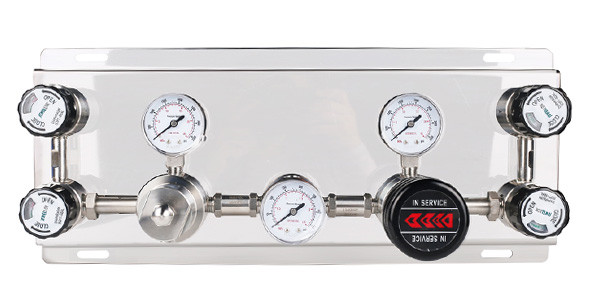
Gas cylinder changeover regulators can provide this critical functionality, enabling smooth switching between gas supply sources to ensure continuous flow. This type of regulator can help reduce costly system downtime and time-intensive maintenance.

Additional beneficial features to look for in instrumentation regulators may include:

*Convoluted, nonperforated diaphragms that provide strength, longevity, and improved pressure response
*Metal-to-metal diaphragm seals on all stages that deliver improved material compatibility and leak tightness
*Designs that require minimal maintenance, allowing users to trust gas distribution systems to work as intended

Application: Hazardous Fluid and Gas Storage

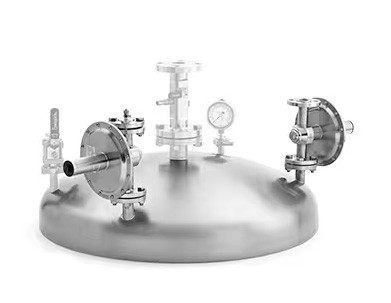
What types of pressure regulators are best for hazardous fluid and gas storage?In applications where hazardous fluids or gases are stored, it is critically important to best protect operators and bystanders. Specialized tank blanketing regulators can help maintain desired pressures of inert gases introduced into the tank’s vapor space to maintain safe and consistent tank pressure and prevent the escape of hazardous vapors.

When selecting a tank blanketing regulator, look for these features:

*Fine-pitched threads on set-pressure springs to provide improved adjustability and resolution when setting or adjusting pressure
*Sensitive diaphragm-sensing mechanisms designed for high accuracy in detecting changes in outlet pressure
*Regulator components such as bodies, seats, poppets, and feedback tubes composed of corrosion-resistant alloys, depending on your operating environment

Now that you are familiar with how to match specific regulator types to their intended applications, hopefully you feel better equipped to select regulators best suited for your unique operational needs. Always keep in mind that no matter what your application, when making your selection, it is important to ensure that the regulator has the proper inlet and outlet pressure ratings, temperature rating, flow capacity, venting, and end connections.

If you’re interested in assistance in selecting a regulator, Jewellok’s experienced pressure control specialists can provide you with tools, guidance, and training to help you feel confident in your selection.