
Regulator Manufacturer Tel: +86 13380377051
Regulator Manufacturer Tel: +86 13380377051
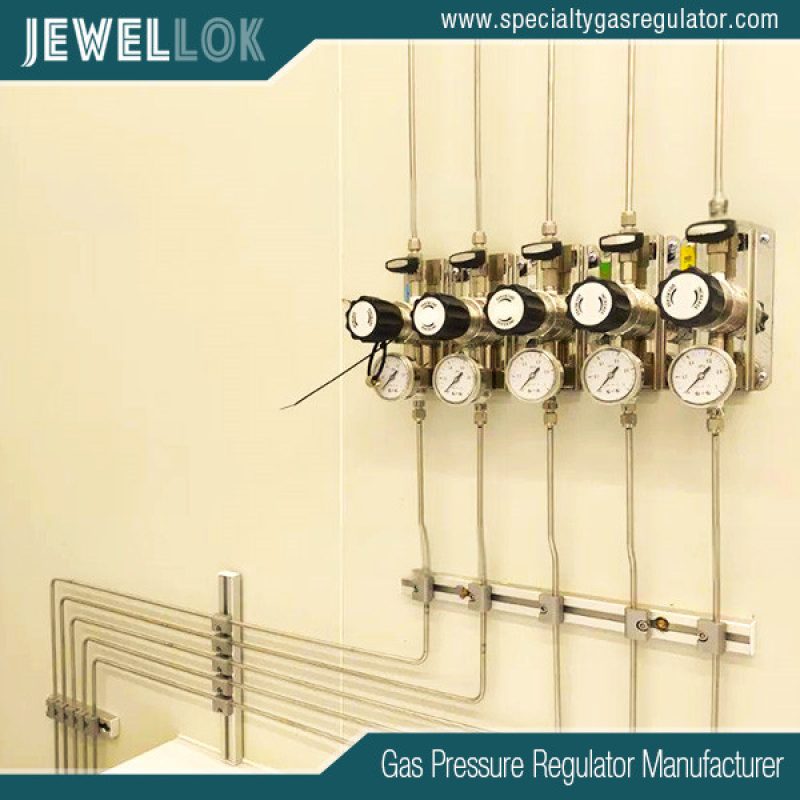
How to Choose the Right Gas Manifold Regulator for Your Application
Choosing the right gas manifold regulator is critical for maintaining stable pressure, reliable gas delivery, and safe operation in industrial gas systems. A properly selected regulator can control inlet pressure, maintain consistent outlet pressure, reduce gas consumption, and protect downstream equipment from pressure fluctuations. An unsuitable regulator, however, may cause unstable flow, contamination, leakage, excessive pressure drop, or premature component failure.
Gas manifold regulators are widely used in semiconductor manufacturing, laboratories, medical gas systems, chemical processing, pharmaceutical production, welding, analytical instruments, and other industrial applications. Because different gases and operating conditions require different pressure-control solutions, regulator selection should be based on the complete system rather than simply choosing a regulator according to pipe size or maximum pressure.
This guide explains the key factors to consider when selecting a gas manifold regulator for your application.

1. Understand the Function of a Gas Manifold Regulator
A gas manifold regulator is a pressure-control device installed within a gas manifold or gas distribution system. Its primary function is to reduce a higher inlet pressure to a controlled downstream pressure suitable for the application.
For example, a gas cylinder may contain gas at several hundred bar, while the downstream process may require only a few bar. The regulator reduces and stabilizes the pressure before the gas enters the process line.
A typical gas manifold regulator system may include:
- Gas cylinders or bulk gas supply
- High-pressure inlet connections
- Isolation valves
- Pressure regulators
- Pressure gauges or pressure sensors
- Relief valves
- Purge lines
- Check valves
- Outlet connections
- Automatic or semi-automatic changeover controls
In a simple system, one regulator may control the outlet pressure. In a more sophisticated gas manifold, multiple regulators can be integrated into separate supply banks, allowing automatic cylinder changeover and continuous gas delivery.
The regulator must therefore match not only the gas pressure but also the required flow rate, gas properties, materials, connection standards, cleanliness requirements, and control method.
2. Determine the Gas Type
The first step is identifying exactly which gas will pass through the regulator.
Different gases have different chemical and physical properties. Inert gases such as nitrogen, argon, and helium are generally easier to handle, while oxygen, hydrogen, corrosive gases, toxic gases, and reactive specialty gases require more specific material and design considerations.
For example:
Nitrogen and argon: Commonly used in industrial and laboratory gas systems and generally compatible with stainless-steel pressure-control components.
Oxygen: Requires components and assemblies suitable for oxygen service. Oil, grease, particles, and unsuitable materials can create serious safety risks.
Hydrogen: Requires careful consideration of material compatibility, leakage, ignition risk, and sealing performance.
Corrosive gases: Materials such as stainless steel may require additional evaluation depending on the gas concentration, moisture content, pressure, and temperature.
Toxic or specialty gases: These applications typically require high-integrity components, low-leakage connections, appropriate exhaust or purge arrangements, and strict system safety controls.
For semiconductor applications, ultra-high-purity gas service may require electropolished stainless-steel wetted surfaces, specialized diaphragm designs, orbital-welded connections, and stringent helium leak testing.
Never select a regulator solely based on pressure rating. The regulator’s wetted materials must be chemically compatible with the gas.
3. Check the Inlet Pressure
The maximum and normal inlet pressure are fundamental selection parameters.
Gas cylinders can operate at very high pressures, while process equipment may require relatively low and stable pressure. The selected regulator must have an inlet pressure rating that safely accommodates the maximum possible supply pressure.
When evaluating inlet pressure, consider:
- Normal cylinder pressure
- Maximum cylinder filling pressure
- Temperature-related pressure variation
- Pressure spikes
- Regulator maximum inlet pressure
- Applicable design and safety standards
For example, if a manifold receives gas from a high-pressure cylinder, a regulator rated for only low-pressure service would not be appropriate even if its outlet pressure range matches the process requirement.
It is also important to distinguish between maximum rated inlet pressure and the pressure actually required by the application. Operating a regulator close to its maximum rating may affect performance and service life, depending on its design.
4. Select the Required Outlet Pressure
The next consideration is the required downstream pressure.
Gas manifold regulators are available with different outlet pressure ranges. Common applications may require low-pressure delivery, while industrial processes can require significantly higher outlet pressures.
The regulator should provide enough adjustment range to meet the required process pressure while maintaining stable control.
For example, if the application requires 6 bar outlet pressure, a regulator with an extremely broad 0–100 bar range may not provide the same practical control resolution as a regulator designed for a lower pressure range.
A useful selection principle is:
Choose an outlet pressure range that comfortably covers the required operating pressure without being unnecessarily oversized.
The pressure setting should also account for downstream pressure drop, tubing length, valves, filters, and other restrictions in the gas manifold.
5. Calculate the Required Flow Rate
Pressure alone does not determine whether a regulator is suitable. Flow capacity is equally important.
The regulator must deliver the required gas flow while maintaining a stable downstream pressure.
Flow requirements can be expressed in:
- SLPM
- NL/min
- SCFH
- Nm³/h
- kg/h
- Other application-specific units
The required flow should be determined under actual operating conditions.
A regulator that is too small may cause excessive pressure drop when demand increases. This can result in unstable downstream pressure and inadequate gas supply.
On the other hand, an excessively large regulator may provide poor adjustment sensitivity, particularly in low-flow applications.
When comparing regulators, review the manufacturer’s flow curves rather than relying only on nominal port size.
6. Consider Single-Stage vs. Two-Stage Regulation
Gas manifold regulators are commonly available in single-stage and two-stage configurations.
A single-stage regulator reduces pressure from inlet to outlet in one primary regulation step. It can be suitable for applications where moderate pressure variation is acceptable or where downstream equipment provides additional pressure control.
A two-stage regulator reduces pressure through two regulation stages. This design can provide improved outlet-pressure stability as the inlet pressure changes.
Two-stage regulation is often considered for applications where:
- Stable outlet pressure is important
- Cylinder pressure changes significantly during use
- Gas consumption varies
- Downstream equipment is sensitive to pressure fluctuations
- Higher pressure reduction is required
For precision applications, two-stage regulation can help minimize the effect of supply-pressure decay.
7. Choose the Correct Wetted Materials
The materials in contact with the gas must be compatible with the application.
Common regulator body materials include:
- 316 stainless steel
- 316L stainless steel
- Brass
- Nickel-plated brass
- Other specialty alloys
For general industrial gas systems, brass and stainless-steel regulators may both be appropriate depending on the gas.
For high-purity and semiconductor applications, 316L stainless steel is widely used because of its corrosion resistance and suitability for high-purity gas delivery.
Material selection should also consider:
- Corrosion resistance
- Gas compatibility
- Temperature
- Pressure
- Moisture exposure
- Cleaning requirements
- Internal surface finish
- Outgassing characteristics
For ultra-high-purity systems, internal surface quality can be just as important as the external regulator body material.
8. Evaluate Cleanliness Requirements
Gas purity is a major consideration in laboratory, pharmaceutical, analytical, and semiconductor applications.
A regulator designed for ordinary industrial gas service may not be suitable for ultra-high-purity gas.
High-purity gas regulators may incorporate:
- Electropolished stainless-steel surfaces
- Low-dead-volume internal designs
- Metal diaphragm seals
- High-integrity welded construction
- Controlled cleaning processes
- Low particle generation
- Low moisture retention
- Helium leak testing
For semiconductor manufacturing, even small quantities of contaminants can affect process performance and product yield. Therefore, regulators used in UHP gas delivery systems should be specified according to the required gas purity class and contamination-control requirements.
9. Select the Right Diaphragm or Piston Design
The pressure-sensing and regulating mechanism is another important consideration.
Regulators generally use diaphragm or piston-based mechanisms.
Diaphragm regulators are widely used where sensitive pressure control and low contamination are important. Metal diaphragms can provide high integrity and help isolate the process gas from the regulating mechanism.
Piston regulators can be advantageous in certain high-pressure or heavy-duty applications because of their robust construction and pressure-handling capabilities.
For high-purity applications, metal diaphragm regulators are often preferred because they can provide excellent sealing performance and reduce potential contamination associated with elastomeric components.
However, the appropriate design depends on pressure, flow, gas type, purity requirements, and application conditions.
10. Check Connection Type and Port Size
A regulator must integrate mechanically with the existing gas manifold.
Common connections include:
- NPT
- BSP
- VCR
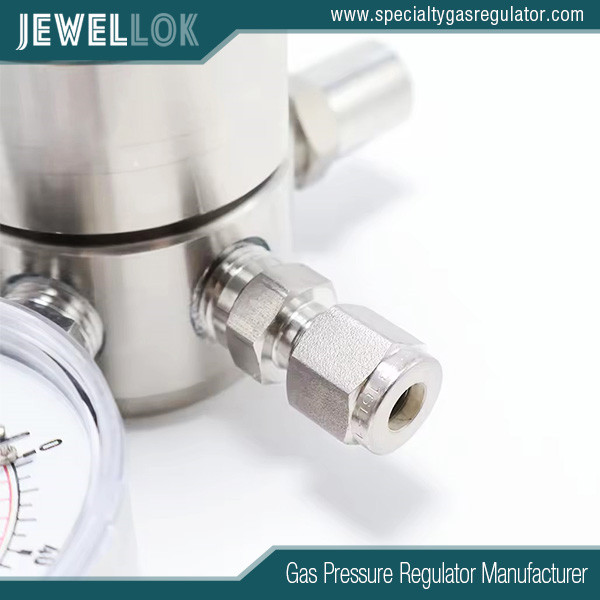
- Compression fittings
- Tube fittings
- Welded connections
- CGA cylinder connections
- DIN connections
- Other regional standards
Connection selection should match the cylinder valve, manifold tubing, downstream equipment, and applicable standards.
For semiconductor and high-purity applications, VCR fittings and orbital-welded connections are commonly used because they can provide high-integrity connections and support contamination-controlled systems.
Port size should also correspond to the required flow rate. Increasing port size does not automatically improve system performance if the regulator itself is not designed for the required flow.
11. Consider Automatic Changeover Requirements
In many industrial gas manifold systems, continuous gas supply is essential.
An automatic changeover manifold uses two or more gas banks. When the primary cylinder bank reaches a predetermined pressure, the system switches to the reserve bank.
This configuration can reduce manual cylinder changes and help prevent unexpected gas interruption.
When selecting a regulator for an automatic gas manifold, consider:
- Primary and reserve bank pressure
- Changeover pressure
- Outlet pressure
- Required flow
- Control method
- Pressure sensors
- Alarm functions
- Purge requirements
- Remote monitoring
For critical production systems, the regulator and changeover system should be evaluated as an integrated pressure-control solution.
12. Review Leakage and Safety Requirements
Gas leakage can create safety, environmental, and process risks.
The required leakage performance depends heavily on the application. High-purity, toxic, corrosive, and hazardous gas systems generally require much tighter leakage control than ordinary industrial applications.
Important specifications may include:
- External helium leak rate
- Internal leakage
- Seat leakage
- Pressure rating
- Relief protection
- Material compatibility
- Temperature rating
For hazardous gases, the complete manifold should also include appropriate ventilation, gas detection, emergency shutoff, pressure relief, and purge systems where required by the applicable codes and facility design.
13. Match the Temperature Range
Gas systems can operate across a wide range of temperatures.
Temperature affects gas pressure, sealing materials, regulator performance, and material behavior.
Before selecting a regulator, identify:
- Minimum operating temperature
- Maximum operating temperature
- Gas temperature
- Ambient temperature
- Potential temperature fluctuations
Elastomer seals must be compatible with the expected temperature and gas. For demanding applications, specialized sealing materials may be required.
14. Consider Standards and Certifications
Depending on the industry and installation location, the regulator may need to comply with specific standards or certifications.
Potential requirements can include:
- ISO standards
- CE requirements
- ASME-related requirements
- CGA standards
- EN standards
- SEMI-related requirements
- Industry-specific gas handling standards
Certification requirements should be confirmed according to the actual installation environment and applicable regulations.
For export projects, it is also important to verify connection standards and regulatory requirements in the destination country.
15. Common Gas Manifold Regulator Selection Mistakes
Several common mistakes can reduce system performance.
Choosing by port size alone: A 1/4-inch regulator is not automatically suitable for every 1/4-inch gas line.
Ignoring flow rate: A regulator may meet the pressure requirement but fail to maintain pressure at the required flow.
Using incompatible materials: Gas compatibility must be evaluated before selecting body, diaphragm, seal, and seat materials.
Oversizing the regulator: An excessively large regulator can make low-flow pressure adjustment difficult.
Ignoring cleanliness: Industrial regulators should not automatically be used in UHP semiconductor applications.
Forgetting pressure decay: Cylinder pressure decreases during operation, which can affect outlet pressure depending on regulator design.
Selecting only from catalog pressure ratings: Actual performance should be evaluated using flow curves, inlet pressure, outlet pressure, temperature, and gas type.
16. A Practical Selection Checklist
Before ordering a gas manifold regulator, collect the following information:
- Gas type: Nitrogen, oxygen, hydrogen, argon, CO₂, specialty gas, corrosive gas, etc.
- Gas purity: Industrial, laboratory, high purity, or UHP.
- Maximum inlet pressure: Including possible pressure spikes.
- Normal inlet pressure: Typical operating supply pressure.
- Required outlet pressure: Normal and maximum downstream pressure.
- Required flow rate: Minimum, normal, and maximum flow.
- Temperature range: Minimum and maximum operating temperatures.
- Body material: Brass, 316 SS, 316L SS, or specialty alloy.
- Diaphragm material: Based on gas compatibility and purity.
- Connection type: NPT, BSP, VCR, compression, weld, CGA, etc.
- Leakage requirement: Particularly for hazardous and UHP gases.
- Control configuration: Manual, semi-automatic, or automatic.
- Applicable standards: Based on industry and installation region.
- Maintenance requirements: Service intervals and replacement components.
Providing these parameters to the regulator manufacturer can significantly reduce the risk of selecting an unsuitable model.
Conclusion
Selecting the right gas manifold regulator requires more than matching an inlet and outlet pressure. Gas type, flow rate, pressure stability, material compatibility, cleanliness, connection type, temperature, leakage performance, and system configuration all influence regulator selection.
For general industrial applications, a properly sized stainless-steel or brass regulator may provide reliable pressure control. For semiconductor, pharmaceutical, laboratory, and other high-purity applications, additional requirements such as 316L stainless steel, metal diaphragm construction, low-dead-volume design, high-purity cleaning, and stringent leak testing may become essential.
For automatic gas delivery systems, the regulator should also be evaluated together with the manifold, changeover mechanism, valves, pressure sensors, alarms, and purge system.
The most reliable approach is to define the complete operating conditions first and then select the regulator based on verified technical data. By matching the regulator to the gas, pressure, flow, purity, and application requirements, engineers can achieve more stable gas delivery, improve system safety, reduce maintenance, and build a gas manifold system that performs reliably over its intended service life.
For more about how to choose the right gas manifold regulator for your application, you can pay a visit to Jewellok at https://www.specialtygasregulator.com/product-category/specialty-gas-cabinet/ for more info.
-
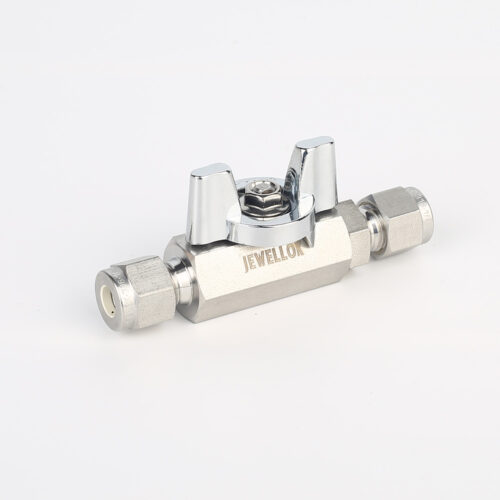
Stainless Steel High-Purity High Temperature Metal Seated Ball Valves JBV3 Series
-
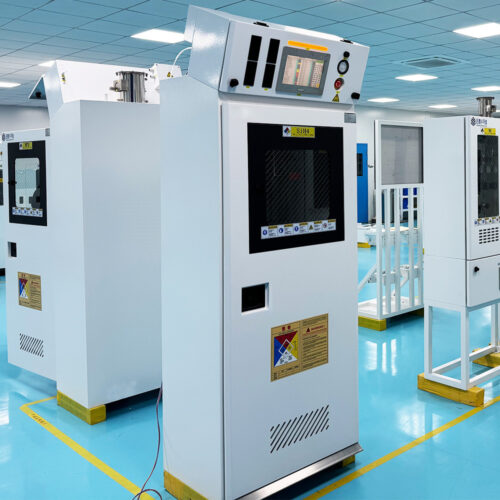
High Purity Bulk Gas Delivery Systems for Semiconductor Manufacturing and Advanced Chemical Distribution Infrastructure
-
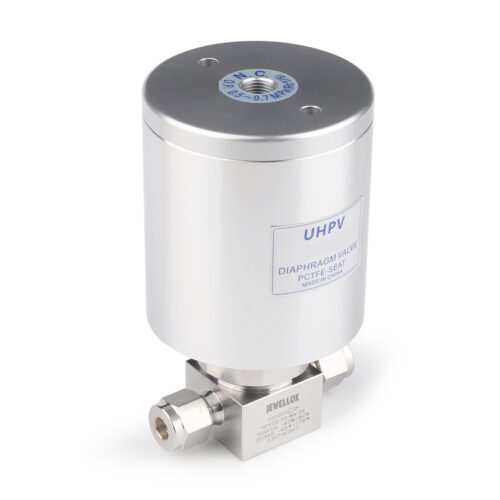
High Pressure High Temperature Pneumatic Ultrahigh Purity Stainless Steel Diaphragm Valves
-
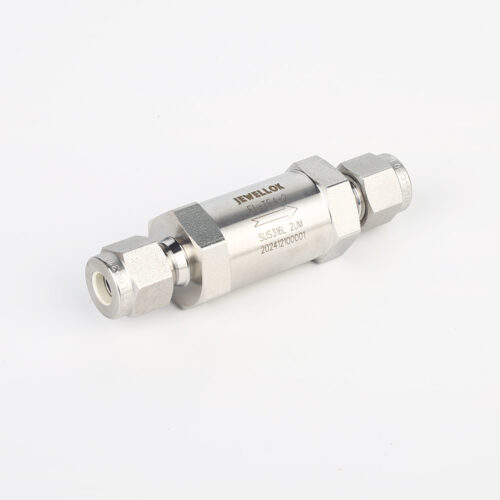
JF Series In-Line Gas Filters | High Purity High Precision High Flow Semiconductor Gas Filter Gas Filtration & Purification
-
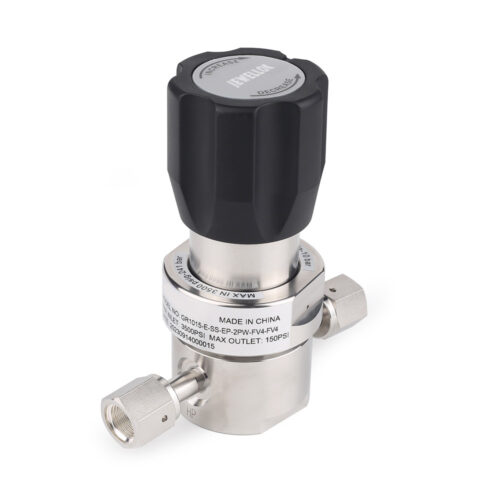
JR1000 Series UHP Ultra High Purity Single Stage Pressure Reducing Regulator And Low To Intermediate Flow
-
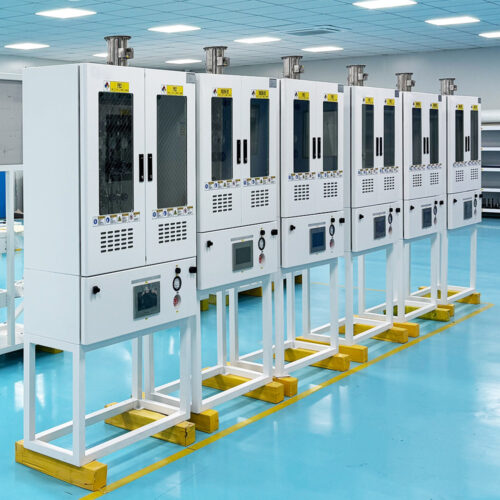
Precision Stainless Steel Valve Manifold Panel for Inert Gas Distribution in Cleanroom Manufacturing Environments
-
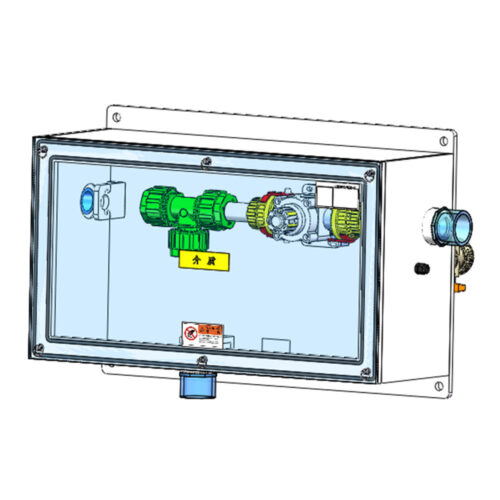
FT-BOX JW-FTB-C Valve Manifold Panels And Boxes With High Purity Configurable Systems
-
UHP Liquid Chemical Delivery Systems with Nitrogen Blanketing and Secondary Containment for Hazardous Industrial Chemical Processing