
Regulator Manufacturer Tel: +86 13380377051
Regulator Manufacturer Tel: +86 13380377051
How Does 316 Stainless Steel Tubing Work? The Unseen Engine of Modern Industry
We live in a world shaped and supported by unseen networks. Beneath our cities, inside our hospitals, across vast industrial plants, and in the depths of the ocean, critical fluids and gases flow silently through a labyrinth of tubes. At the heart of many of these demanding applications lies a material of remarkable resilience: 316 stainless steel tubing. But how does it actually work? Its function is not that of a machine with moving parts, but rather as a seamless, robust conduit whose “work” is defined by its passive existence in hostile environments. To understand its operation is to delve into materials science, corrosion resistance, and precision engineering.
The Foundation: Alloying for a Purpose
At its core, 316 stainless steel tubing works because of its carefully engineered chemical composition. It is an austenitic stainless steel, meaning its crystal structure is face-centered cubic, providing inherent toughness and ductility. While its base is iron, chromium (at least 16-18%), and nickel (10-14%), the defining element that elevates it from the more common 304 grade is molybdenum (2-3%).
- Chromium is the cornerstone of “stainlessness.” It reacts spontaneously with oxygen to form an ultra-thin, invisible, and adherent layer of chromium oxide on the surface—the passive layer. This layer is self-repairing; if scratched, it reforms in the presence of oxygen.
- Nickel stabilizes the austenitic structure, granting excellent formability, weldability, and toughness, even at cryogenic temperatures.
- Molybdenum is the special agent. It dramatically enhances resistance to pitting and crevice corrosion, particularly in chloride-bearing environments. It strengthens the passive layer, making it more resistant to breakdown by aggressive ions like chlorides found in saltwater, bleach, and industrial processes.
This alloy recipe is the first answer to “how it works”: it is intrinsically fabricated to create and maintain a protective shield.
The Core Mechanism: Passive Corrosion Resistance in Action
The primary “work” of 316 stainless steel tubing is to contain without corroding. This happens through the mechanism of passivation.
Imagine a section of 316 tubing carrying warm, chlorinated seawater. This is an extremely aggressive environment that would rapidly corrode ordinary steel.
- Initial Exposure: Upon exposure to the fluid and dissolved oxygen, the chromium in the steel surface instantly forms the chromium oxide layer (Cr₂O₃), only a few atoms thick.
- The Molybdenum Boost: The molybdenum atoms integrate into this passive layer and the underlying metal matrix. When chloride ions (Cl-) attack, seeking to penetrate the layer and initiate a corrosive pit, the molybdenum acts as a deterrent, raising the energy required for this breakdown.
- Self-Repair (Re-passivation): If the flow causes a minor abrasion or if the local environment temporarily depletes oxygen, damaging the layer, the process starts anew as soon as oxygen is available. The chromium from the bulk alloy diffuses to the surface to re-form the oxide layer.
This dynamic, invisible process is the continuous “operation” of the tubing. It doesn’t wear out; it perpetually regenerates its own defense system. This makes it ideal for:
- Chemical Processing: Handling acids, solvents, and caustics.
- Marine and Coastal Applications: Saltwater pipelines, boat fittings, and offshore rigs.
- Pharmaceutical & Food Production: Where purity is paramount, and cleaning agents (like chlorine-based sanitizers) are harsh.
The Physical Form: How Manufacturing Enables Function
The tubing form factor is not accidental; it is engineered for efficiency. The process of creating the tube directly impacts how it works:
- Seamless Tubing: Created by piercing a solid billet of 316 steel and extruding it. This results in a tube with homogeneous structure and superior strength, with no weak seam. It works under high pressure (e.g., hydraulic systems, oil & gas downhole applications, high-pressure steam lines) because the uniform grain structure distributes stress evenly.
- Welded Tubing: Formed from a rolled sheet (strip) of 316 steel, welded along its length (often using advanced techniques like TIG welding or laser welding). Modern welded tubing can be near-seamless in quality. It works excellently in structural applications, lower-pressure conveyance, and architectural uses (like handrails), offering cost-effectiveness and consistency in diameter and wall thickness.
Key physical properties that dictate its working performance include:
- Wall Thickness (Schedule): A Schedule 40 tube has a thicker wall than a Schedule 10, enabling it to withstand higher internal pressure.
- Surface Finish: A mechanically polished or electropolished interior surface (e.g., a Ra < 0.8 µm) reduces friction (improving flow), minimizes bacterial adhesion (critical for bio-pharma), and enhances the stability of the passive layer.
- Dimensional Tolerance: Precision OD (Outside Diameter) and ID (Inside Diameter) control ensure perfect fit in instrumentation, heat exchangers, and mechanical systems.
The Symphony of Applications: “Working” in Different Roles
The functionality of 316 tubing adapts to its environment:
- As a Conduit: Its most straightforward role. In breweries, it carries wort and beer without imparting taste or corrosion. In fuel systems, it safely transports hydrocarbons. It works by being inert and leak-proof.
- As a Pressure Vessel: In hydraulic systems for aircraft or machinery, seamless 316 tubing contains fluids at thousands of psi. It works through its high tensile strength and resistance to fatigue.
- As a Heat Exchanger: Bundles of thin-walled 316 tubes are used in shell-and-tube heat exchangers for desalination plants or chemical reactors. Here, it works by efficiently transferring heat while resisting scaling and corrosion from both the shell-side and tube-side media.
- As a Structural Element: In architectural facades, marine structures, or surgical implants. It works by providing aesthetic appeal (when polished) and maintaining structural integrity in corrosive atmospheres without needing paint or coatings.
- In Ultra-High Purity Systems: For semiconductor fabrication or pharmaceutical water-for-injection (WFI) systems. Here, electropolished 316L (low-carbon version) tubing works by presenting an ultra-smooth, cleanable surface that prevents particle generation and bacterial colonization.
The Limits of Performance: Where and Why It Can Fail
Understanding how 316 tubing works also requires knowing its failure modes, which occur when its passive mechanism is overwhelmed:
- Crevice Corrosion: In stagnant areas under gaskets, washers, or deposits, oxygen can be depleted. This local disparity can break down the passive layer, and chlorides can attack. Solution: Design to avoid crevices; maintain clean surfaces and fluid flow.
- Stress Corrosion Cracking (SCC): The combined presence of tensile stress (from pressure or installation), chlorides, and elevated temperature can cause hidden, brittle cracks. Solution: Use 316 in lower-stress applications in chloride environments or switch to even more resistant alloys like 316L (with lower carbon) or duplex steels for severe cases.
- Galvanic Corrosion: If 316 tubing is directly connected to a less noble metal (like carbon steel or aluminum) in an electrolyte, it can accelerate corrosion of the other metal, or in some configurations, suffer itself. Solution: Use insulating fittings or select compatible materials.
Conclusion
So, how does 316 stainless steel tubing work? It is not through combustion or computation, but through intelligent material design, a self-renewing protective mechanism, and precision engineering. It works as a silent, static sentinel, leveraging its molybdenum-fortified passive layer to defy corrosion, its austenitic structure to provide strength and formability, and its tubular geometry to enable efficient, safe, and pure conveyance.
Its “operation” is a testament to human ingenuity in materials science—a carefully balanced alloy that turns the inherent tendency of metals to oxidize into its greatest strength. From the depths of a chemical reactor to the sterile halls of a hospital, 316 stainless steel tubing performs its essential, unseen work, making possible the technologies and systems that define modern life. It is a fundamental component in the hidden circulatory system of our industrial world.
For more about how does 316 stainless steel tubing work? The unseen engine of modern industry, you can pay a visit to Jewellok at https://www.specialtygasregulator.com/product-category/ultra-high-purity-gas-regulators/ for more info.
-
Custom VMB Valve Manifold Boxes for Enhanced Tool Isolation and Maximum Uptime in Complex Chemical Distribution Networks
-
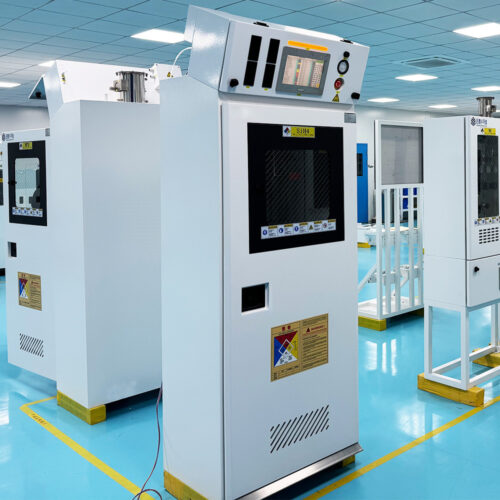
High Purity Bulk Gas Delivery Systems for Semiconductor Manufacturing and Advanced Chemical Distribution Infrastructure
-
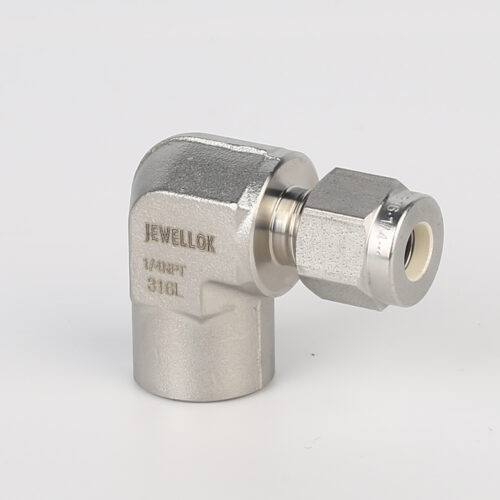
770L Female Elbow | Stainless Steel High Purity Weld Fittings Female Micro Elbow Fittings
-
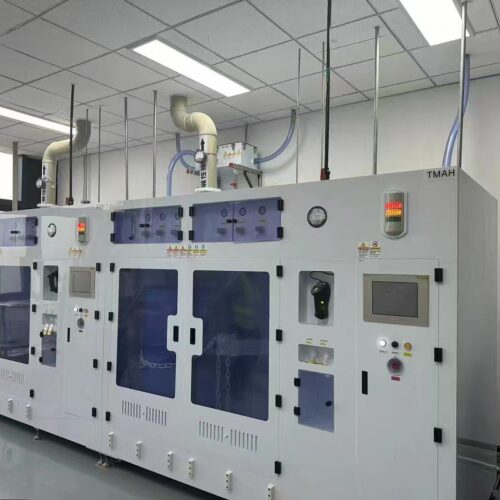
Liquid Bulk Chemical Delivery System with Automatic Chemical Dispense Unit (CDU) Featuring 316L Electropolished Stainless Steel Piping Components
-
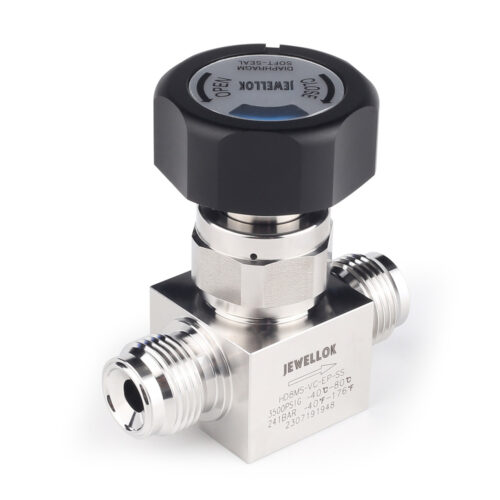
Stainless Steel Ultra High Purity (UHP) High Pressure Manual Diaphragm Valve
-
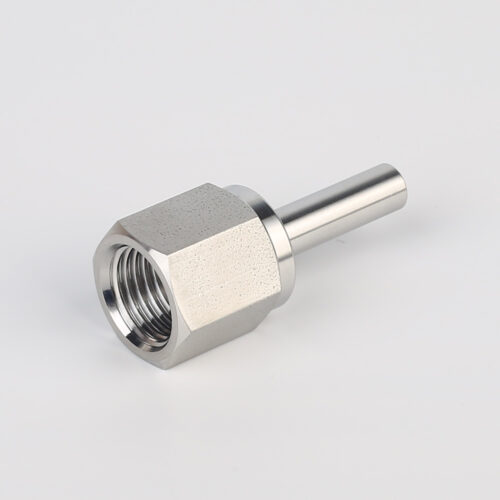
739LF High Purity Female Adapter Tube To Pipe Fittings And Connectors
-
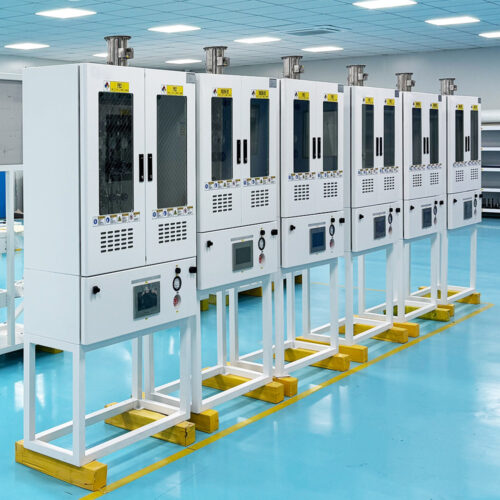
Integrated Gas Cabinets and Exhaust Gas Scrubber System for Ammonia and Hydrogen Chloride Industrial Emission Control
-
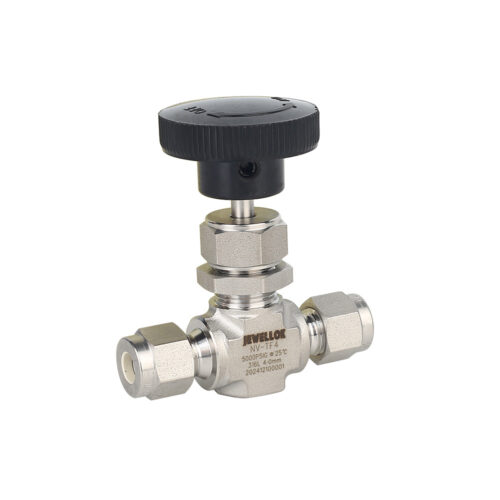
High Purity High Pressure Stainless Steel Needle Valve Natural Gas Flow Control Valve JNV Series