
Regulator Manufacturer Tel: +86 13380377051
Regulator Manufacturer Tel: +86 13380377051

Technical Analysis of UHP Tied-diaphragm Pressure Regulators in Advanced Gas Delivery Systems
- Introduction: The Critical Role of Pressure Regulation in UHP Environments
In the landscape of modern high-tech manufacturing—spanning semiconductors, photovoltaics, and aerospace—the integrity of gas delivery systems is paramount. At the heart of these systems lies the Ultra-High Purity (UHP) Tied-diaphragm Pressure Regulator. As device geometries shrink to the sub-5nm scale, the margin for error regarding gas contamination, pressure instability, and leakage vanishes.
The UHP Tied-diaphragm Pressure Regulator is not merely a valve; it is a precision instrument designed to bridge the gap between high-pressure bulk storage and delicate process chambers. This article provides an exhaustive technical exploration of its architecture, the mechanics of the tied-diaphragm design, material science considerations, and its indispensable role in global supply chains.
- Defining “Tied-diaphragm” Architecture
To understand the significance of the “tied” design, one must first understand the limitations of standard pressure-reducing regulators. In a conventional regulator, the diaphragm and the poppet (the internal component that regulates flow) are two separate entities held together by spring tension or gas pressure.
In a UHP Tied-diaphragm Pressure Regulator, the diaphragm is mechanically linked—or “tied”—to the poppet. This mechanical linkage ensures that when the diaphragm moves upward (due to a decrease in downstream pressure or manual adjustment), it physically pulls the poppet into the open position. Conversely, when the regulator is shut off, the diaphragm forces the poppet into the seat.
2.1 Benefits of the Mechanical Linkage
- Positive Shut-off:Standard regulators rely on spring force to close the poppet. If particulates or “seat creep” occur, the seal may fail. The tied design allows the user to manually force the poppet into the seat, ensuring a leak-tight seal even in the presence of minor contaminants.
- Handling Hazardous Gases:Many UHP processes involve pyrophoric, toxic, or corrosive gases (e.g., Silane, Phosphine, Hydrogen Chloride). The tied-diaphragm ensures that the regulator does not “fail open,” preventing catastrophic gas releases.
- Hysteresis Reduction:The direct link reduces “play” between components, providing a more linear and predictable response to pressure changes.
- Material Science and Surface Integrity
In the UHP world, the “wetted” surfaces—those in contact with the gas—must be chemically inert and physically smooth.
3.1 316L Stainless Steel and Electropolishing
The industry standard for the body of a UHP Tied-diaphragm Pressure Regulator is 316L Stainless Steel, often refined through Single Melt or Double Melt (VIM/VAR) processes to reduce inclusions. To achieve UHP status, these bodies undergo electropolishing. This electrochemical process removes the “peaks and valleys” of the metal surface at a microscopic level, achieving a surface finish of 10 Ra or lower. This prevents moisture and particulates from being trapped on the surface (outgassing).
3.2 Exotic Alloys for Corrosive Service
For gases like anhydrous HCl or HBr, even 316L stainless steel can succumb to pitting corrosion. In these instances, the diaphragm—the most stressed component—is typically constructed from high-strength alloys such as Hastelloy C-22 or Elgiloy. These materials offer superior fatigue life and resistance to chemical attack.
- Performance Metrics: Droop, Supply Pressure Effect, and Leak Integrity
When specifying a UHP Tied-diaphragm Pressure Regulator, engineers focus on three critical performance curves.
4.1 The Phenomenon of “Droop”
Droop is the decrease in outlet pressure as the flow rate increases. A high-quality UHP regulator is designed with a large sensing diaphragm to minimize this effect. The tied-diaphragm design assists in maintaining a stable “set point” across varying flow conditions, which is vital for processes like Atomic Layer Deposition (ALD).
4.2 Supply Pressure Effect (SPE)
SPE occurs when the inlet pressure (from a depleting gas cylinder) drops, causing the outlet pressure to rise. Because the tied-diaphragm mechanism provides better control over the poppet’s position, manufacturers can tune the internal geometry to achieve an SPE of less than 1%—meaning for every 100 PSI drop in the tank, the process pressure only fluctuates by 1 PSI.
4.3 Leak Integrity and Outgassing
Leakage in a UHP system is measured in two ways:
- Inboard Leakage:Atmosphere leaking into the gas stream.
- Across-the-Seat Leakage:Gas bypassing the poppet when closed.
UHP Tied-diaphragm Pressure Regulators are helium leak tested to rates as low as 1 x 10⁻⁹ atm cc/sec. This level of integrity is mandatory to prevent oxygen and moisture from entering the line, which would oxidize wafers and ruin entire production batches.
- Application Profiles
5.1 Semiconductor Fabrication (The “Fab”)
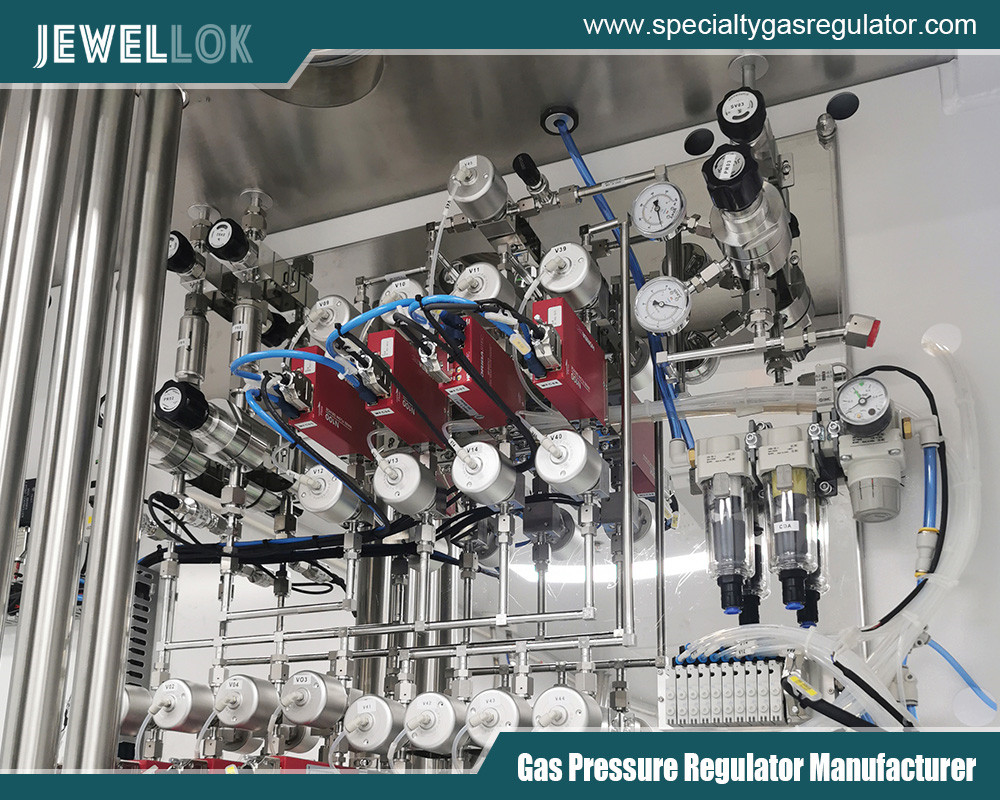
Inside the Fab, these regulators are found in Gas Cabinets and Valve Manifold Boxes (VMBs). They take high-pressure gas from the sub-fab and regulate it to precise levels for the tools. The tied-diaphragm is preferred here because it can handle the rapid cycling required by modern lithography and etching tools.
5.2 Analytical Labs and Instrumentation
In gas chromatography and mass spectrometry, the baseline noise of the instrument is often determined by the stability of the carrier gas. A UHP Tied-diaphragm Pressure Regulator provides the “dead-flat” pressure regulation required to detect parts-per-billion (ppb) levels of impurities.
- Installation and Maintenance Best Practices
To maintain the UHP status of a tied-diaphragm regulator, specific protocols must be followed:
- Purging:Before installation, the system must be purged with high-purity Nitrogen or Argon to remove atmospheric moisture.
- Cleanroom Assembly:Regulators should only be unpacked and installed within a Class 100 (ISO 5) or better cleanroom environment.
- Orbital Welding:Most UHP regulators feature fittings or tube stubs for orbital welding. This eliminates the need for threads, which are a primary source of particulate generation.
- Future Trends: Digital Integration and Miniaturization
As the industry moves toward “Industry 4.0,” we are seeing the emergence of “Smart” UHP Tied-diaphragm Pressure Regulators. These units incorporate integrated pressure transducers and IoT connectivity, allowing fab managers to monitor gas consumption and regulator health in real-time. Furthermore, as space within the Fab becomes more expensive, “mini-regulators” with the same tied-diaphragm reliability are being developed to fit into tighter tool footprints.
- Conclusion
The UHP Tied-diaphragm Pressure Regulator is a masterclass in mechanical engineering. By combining the safety of a mechanical linkage with the purity of electropolished exotic alloys, it enables the production of the microchips that power our modern world. For engineers and procurement specialists, selecting the right regulator—considering droop, material compatibility, and leak rates—is not just a technical choice, but a fundamental requirement for operational excellence in high-purity environments.
For more about technical analysis of uhp tied-diaphragm pressure regulators in advanced gas delivery systems, you can pay a visit to Jewellok at https://www.specialtygasregulator.com/product-category/ultra-high-purity-diaphragm-valves/ for more info.
-
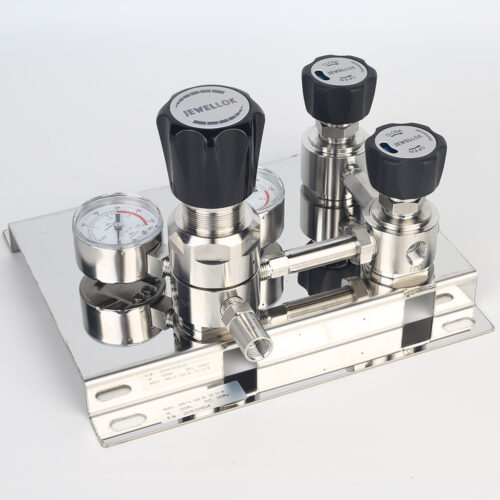
Stainless Steel 316L Single Stage Regulator Pressure Control Panels JSP-1E Series For Semiconductor Fluid Control
-
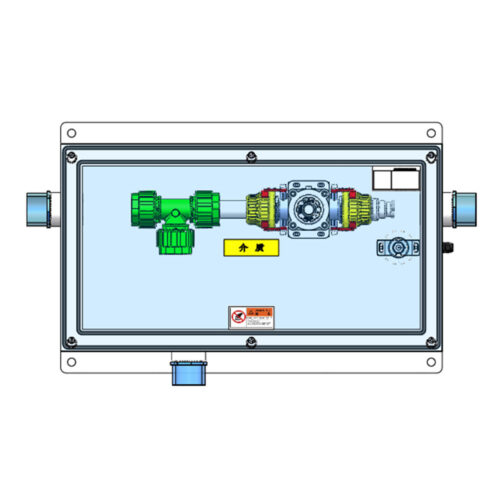
T-BOX JW-TB-C Special Gas Delivery System Gas Valve Manifold Boxes
-
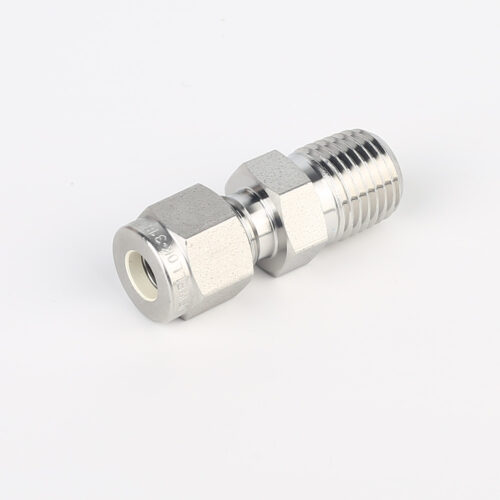
768L Stainless Steel Male Tube Butt Weld Connector | Clean Weld Fittings And Ultra-High Purity Fittings
-
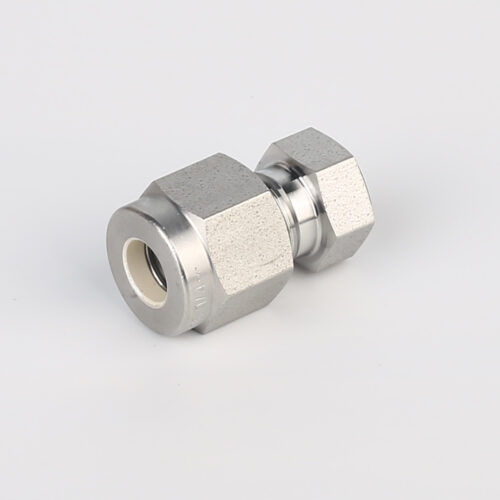
7108L Cylinder Cap Connectors For Ultra High Purity Gases
-
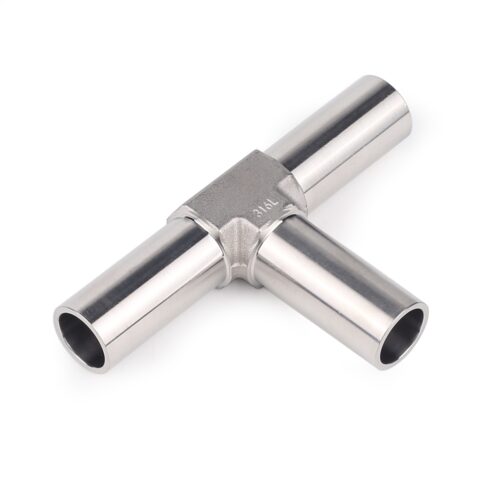
Stainless Steel Ultra Clean Welding Joint Fittings TW Series TRW Series & CW Series
-
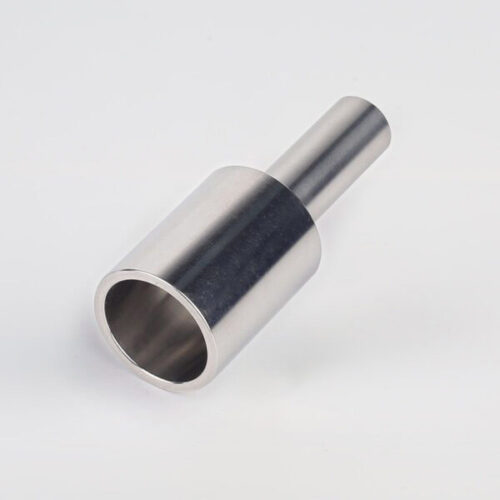
316L Stainless Steel Tube Butt Weld Reducing Fittings Union Reducer RW Series Ultrahigh Purity Process
-
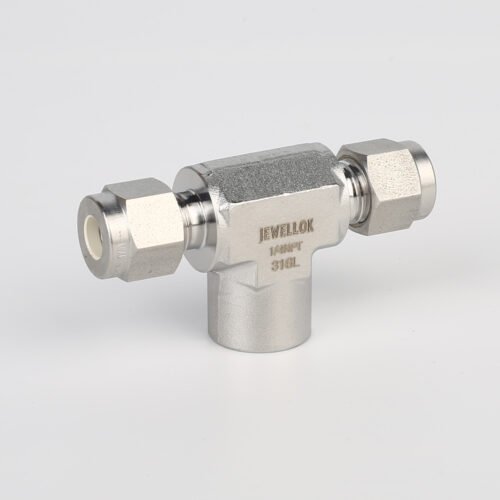
772 LF Female Branch Tee | Stainless Steel Tube Fitting Female Branch Tee 1/2 in. Tube OD x 1/2 in. Tube OD x 3/8 in. Female NPT
-
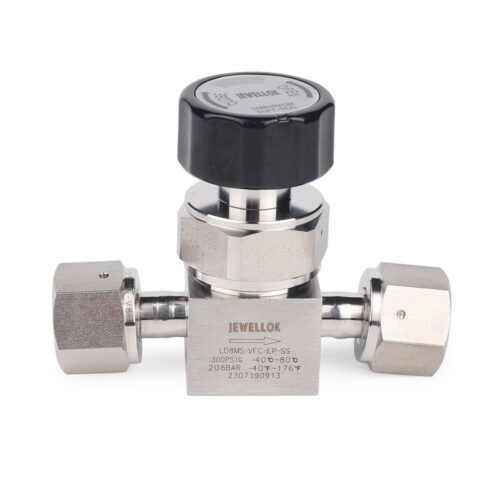
Flow Control Stainless Steel Low Pressure Manual Diaphragm Valve For High Purity And Ultra High Purity Gases