
Regulator Manufacturer Tel: +86 13380377051
Regulator Manufacturer Tel: +86 13380377051
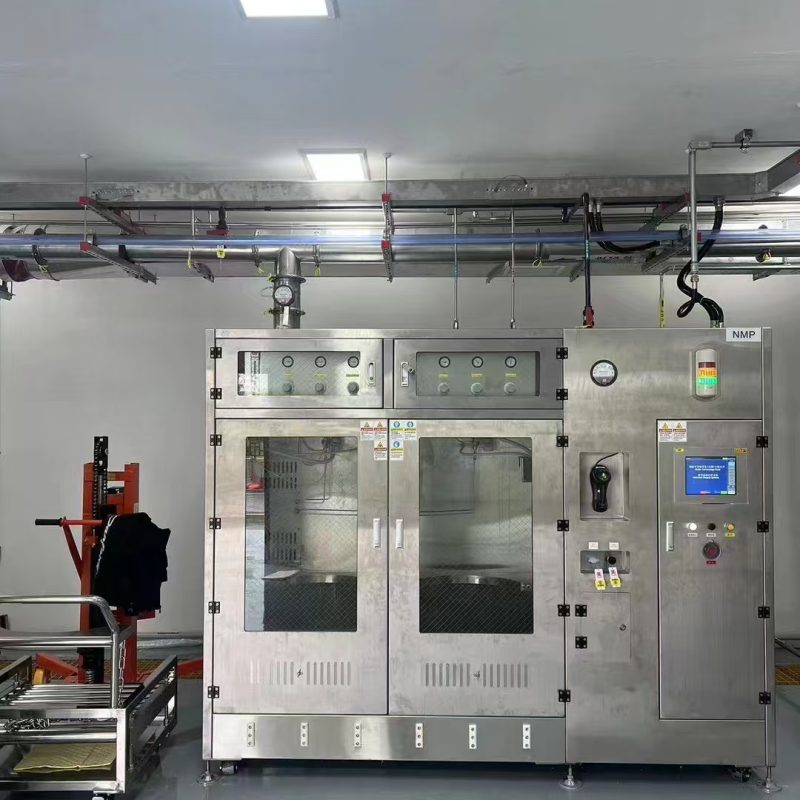
How to Choose the Material of Wet Scrubber Tail Gas Treatment in High Temperature, Highly Corrosive Exhaust Gas Environment?
Introduction
Wet scrubber systems are indispensable in modern industrial gas purification and pollution control. They are widely deployed across industries such as chemical manufacturing, semiconductor fabrication, metallurgy, municipal waste incineration, and power generation to neutralize acid gases (e.g., $\text{HCl}$, $\text{SO}_x$, $\text{HF}$, $\text{NO}_x$), capture fine particulate matter, and absorb hazardous air pollutants (HAPs).
However, wet scrubbers operate under some of the most aggressive working conditions encountered in process engineering. The internal environment frequently combines elevated temperatures, saturated water vapor (high humidity), acidic or alkaline chemical condenses, and high-velocity gas-liquid phase contact. Under these simultaneous stressors, improper material selection leads directly to premature equipment failure, catastrophic structural corrosion, stress corrosion cracking (SCC), severe wall thinning, and unplanned plant shutdowns.
Selecting the optimal material of construction for a wet scrubber—encompassing the shell, internal packing, liquid distribution spray headers, mist eliminators, and ductwork—requires a systematic balance of mechanical integrity, corrosion resistance, thermal tolerance, and life-cycle cost efficiency. This article provides an in-depth engineering guide to selecting materials for wet scrubbers operating under extreme high-temperature, high-humidity, and highly corrosive conditions.
1. Key Environmental Stressors in Wet Scrubber Operations
To make an informed material selection, engineers must first analyze the operating environment’s severe mechanical and chemical stress mechanisms.
                  +-----------------------------------+
                  |   Severe Operating Environment    |
                  +-----------------+-----------------+
                                    |
          +-------------------------+-------------------------+
          |                         |                         |
          v                         v                         v
+-------------------+     +-------------------+     +-------------------+
| High Temperature  |     |   High Humidity   |     | Highly Corrosive  |
|  & Thermal Shock  |     |  & Condensation   |     |    Chemicals      |
+-------------------+     +-------------------+     +-------------------+
| • Quench zone     |     | • Dew point drop  |     | • Halogens        |
|   thermal spikes  |     | • Concentrated    |     |   (Cl⁻, F⁻)       |
| • Polymer glass   |     |   acid condensate |     | • Sulfuric /      |
|   transition (Tg) |     | • Pitting / CVI   |     |   Nitric acids    |
+-------------------+     +-------------------+     +-------------------+
1.1 High Temperature and Thermal Shock
Exhaust gases entering a scrubber can range from ambient temperatures up to $300^\circ\text{C} – 800^\circ\text{C}$ (e.g., from incinerators, kilns, or metal smelting furnaces). While wet scrubbers typically utilize a quench section to cool incoming gases to their adiabatic saturation temperature (usually $45^\circ\text{C} – 85^\circ\text{C}$), the inlet nozzle, quench chamber, and emergency bypass systems experience high thermal exposure and severe thermal shocks during pump trips or water supply failures. High temperatures reduce the tensile strength of polymers, accelerate chemical reaction rates (doubling corrosion rates for roughly every $10^\circ\text{C}$ rise), and induce differential thermal expansion in lined metals.
1.2 High Humidity and Phase-Change Condensation
Inside the vessel, the exhaust gas is saturated ($100\%$ relative humidity). As the saturated gas contacts cooler scrubber walls or moves toward the stack, temperature drops below the moisture dew point and acid dew point. Acidic dew point condensation produces extremely concentrated liquid droplets on cold surfaces. Furthermore, liquid entrainment and wet-dry interface zones create localized evaporation regions where dissolved salts and acids concentrate into highly aggressive micro-environments.
1.3 Highly Corrosive Chemical Species
The specific corrosive agents present dictate the required chemical resistance:
-
Halogens and Halide Acids ($\text{HCl}$, $\text{HF}$, $\text{Cl}_2$, $\text{F}_2$): Highly reactive species that readily penetrate protective oxide films on standard stainless steels, triggering severe localized pitting, crevice corrosion, and chloride-induced stress corrosion cracking (CSCC).
-
Sulfur Oxides ($\text{SO}_2$, $\text{SO}_3$, $\text{H}_2\text{SO}_4$ mist): Condense into aggressive sulfuric acid solutions requiring specialized nickel alloys or non-metallic barriers.
-
Nitric Acid ($\text{HNO}_3$) and Oxidizing Acids: Require materials resistant to strong oxidation.
-
Alkaline Scrubber Liquors ($\text{NaOH}$, $\text{Ca(OH)}_2$, $\text{Na}_2\text{CO}_3$): Alkaline solutions used to neutralize acidic tail gases present caustic embrittlement risks to specific metals at elevated temperatures.
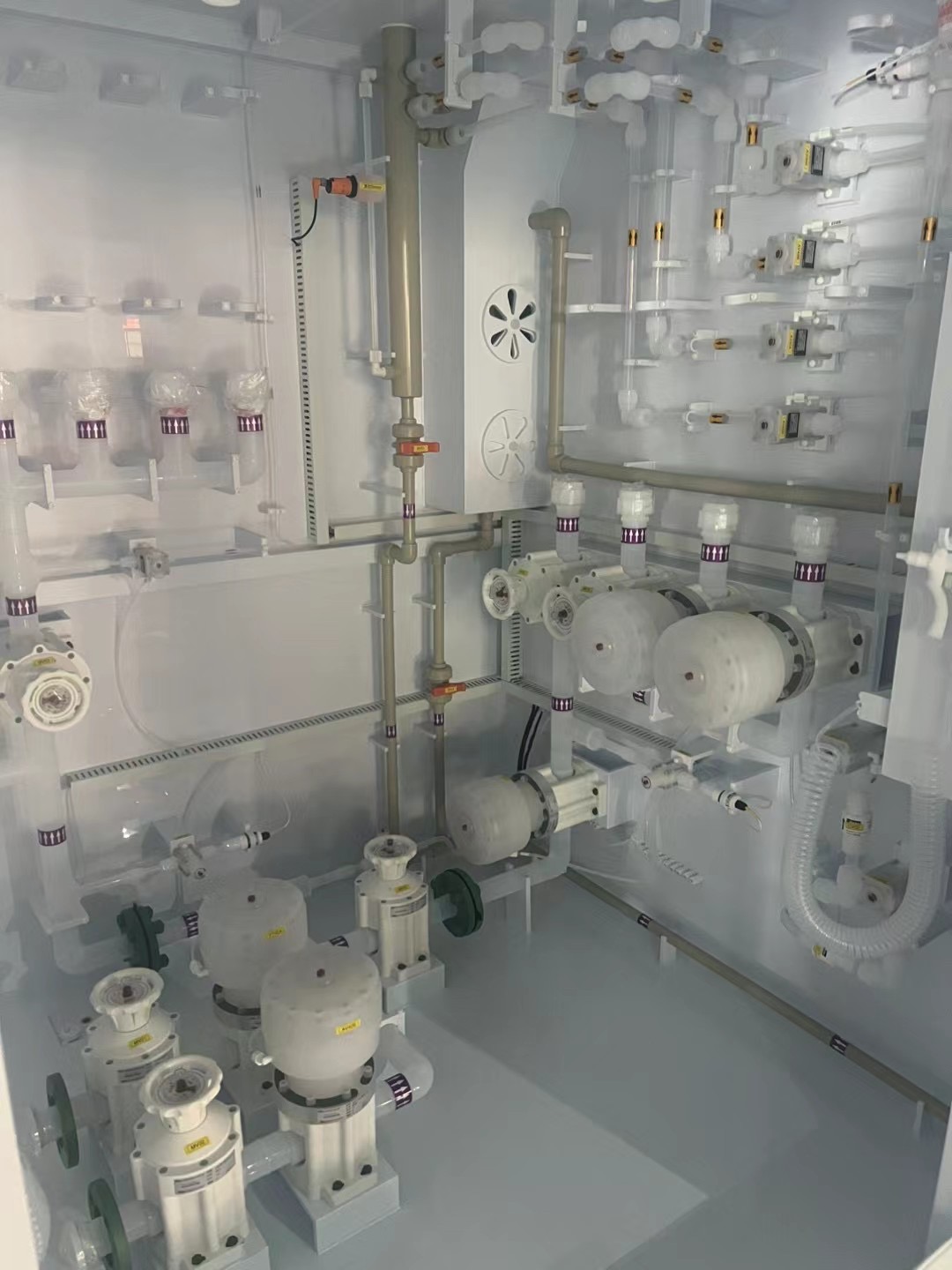
2. Material Categories for Wet Scrubber Construction
Materials for wet tail gas treatment scrubbers fall into three primary categories: Metallic Alloys, Thermoplastics and Fiber-Reinforced Plastics (FRP), and Linings/Coatings.
                           +-----------------------------------+
                           |    Scrubber Material Classes      |
                           +-----------------+-----------------+
                                             |
             +-------------------------------+-------------------------------+
             |                               |                               |
             v                               v                               v
   +-------------------+           +-------------------+           +-------------------+
   |  Metallic Alloys  |           |   Plastics / FRP  |           | Linings & Coatings|
   +-------------------+           +-------------------+           +-------------------+
   | • Austenitic SS   |           | • Thermoplastics  |           | • Rubber Linings  |
   |   (316L, 317L)    |           |   (PP, PVC, PVDF) |           | • Flake Glass     |
   | • Duplex SS       |           | • Thermoset FRP   |           |   Vinyl Ester     |
   |   (2205, 2507)    |           |   (Vinyl Ester)   |           | • PTFE / PFA      |
   | • Nickel Alloys   |           | • Dual-Laminate   |           |   Sheet Linings   |
   |   (C-276, C-22)   |           |   (Thermoplastic  |           |                   |
   | • Titanium (Gr 2) |           |    + FRP shell)   |           |                   |
   +-------------------+           +-------------------+           +-------------------+
2.1 Metallic Alloys
Metallic alloys offer exceptional mechanical strength, impact resistance, and structural stability across a wide temperature range. However, their performance in acid-laden scrubber environments depends heavily on chemical composition and passivating film stability.
A. Austenitic Stainless Steels (316L, 317L, 904L)
-
316L / 317L: Standard industrial choices for mild corrosive environments containing low concentrations of halides ($<100\text{ ppm}\text{ Cl}^-$) at moderate temperatures. However, in scrubbers handling flue gases with significant $\text{HCl}$ or $\text{SO}_2$, 316L quickly suffers from pitting corrosion and chloride stress corrosion cracking (CSCC). 317L contains higher molybdenum ($3-4\%$) and offers slightly improved pitting resistance compared to 316L ($2-3\%\text{ Mo}$).
-
Super Austenitic Stainless Steels (e.g., 254 SMO / 6% Mo alloys, 904L): Possess elevated chromium, molybdenum, and nitrogen contents, yielding a Pitting Resistance Equivalent Number ($\text{PREN} = \% \text{Cr} + 3.3\% \text{Mo} + 16\% \text{N}$) greater than 42. They provide high resistance to chloride pitting and crevice corrosion, filling the gap between standard stainless steels and high-cost nickel alloys.
B. Duplex and Super Duplex Stainless Steels (2205, 2507)
Duplex stainless steels combine a dual ferrite-austenite microstructure, providing twice the mechanical yield strength of austenitic grades alongside high resistance to stress corrosion cracking.
-
2205 Duplex ($\text{PREN} \approx 35$): Highly effective in moderately aggressive scrubbers with high vibration or structural loading requirements.
-
2507 Super Duplex ($\text{PREN} \ge 42$): Offers exceptional performance in warm, acidic chloride environments, making it suitable for mist eliminators, spray headers, and structural shell components exposed to wet-dry boundary zones.
C. Nickel-Base Superalloys (Hastelloy C-276, Alloy C-22, Alloy 59)
When exhaust gas environments contain wet chlorine, hot hydrohalic acids, or concentrated trace halogen compounds, nickel-chromium-molybdenum alloys are the gold standard.
-
Hastelloy C-276 (UNS N10276): Contains $16\%\text{ Mo}$, $16\%\text{ Cr}$, and $4\%\text{ W}$. It exhibits outstanding resistance to strong oxidizers, wet chlorine gas, hypochlorite, and ferric/cupric chlorides. It is virtually immune to chloride SCC and maintains structural strength at elevated temperatures.
-
Alloy C-22 / Alloy 59: Provide superior overall resistance to localized pitting and crevice attack in oxidizing acid mixtures compared to C-276.
-
Limitation: High material cost and complex welding/fabrication procedures.
D. Titanium (Grades 2 and 7)
Titanium forms a highly stable, self-healing oxide film ($\text{TiO}_2$). It is essentially immune to ambient or elevated-temperature wet chlorine, chlorine dioxide, and aqueous chloride solutions.
-
Limitation: Titanium is rapidly attacked by hydrofluoric acid ($\text{HF}$) even in trace quantities (ppm levels) and dry chlorine gas (which causes catastrophic combustion). It must never be selected if fluoride compounds are present in the tail gas stream.
2.2 Thermoplastics, Thermosets, and Composites
Non-metallic materials are inherently immune to electrochemical corrosion, rendering them popular for aggressive acid wet scrubbers operating at low-to-moderate temperatures.
A. Thermoplastics (PVC, CPVC, PP, PVDF, PFA)
-
Polypropylene (PP): Lightweight, economical, and highly resistant to a broad range of acids and alkalis. However, its maximum continuous operating temperature is limited to approximately $80^\circ\text{C}$, and it possesses a high coefficient of thermal expansion.
-
Polyvinyl Chloride (PVC) and Chlorinated PVC (CPVC): Excellent chemical resistance to mineral acids. PVC is limited to $60^\circ\text{C}$, whereas CPVC can operate up to $90^\circ\text{C}$. Commonly used for liquid piping, spray nozzles, and small vessel shells.
-
Polyvinylidene Fluoride (PVDF): A fluoropolymer providing high mechanical strength and exceptional chemical resistance to halogen gases, strong acids, and oxidizers. Capable of continuous operation up to $120^\circ\text{C} – 140^\circ\text{C}$.
-
Perfluoroalkoxy (PFA) / Polytetrafluoroethylene (PTFE): Virtually inert to all chemicals across operating temperatures up to $200^\circ\text{C}+$. Used primarily for spray nozzles, high-temperature packing supports, or internal liners.
B. Fiber-Reinforced Plastics (FRP) / Glass-Reinforced Plastics (GRP)
FRP is widely specified for full-scale scrubber vessel shells due to its high strength-to-weight ratio, structural versatility, and lower cost relative to nickel alloys. FRP vessels are constructed using an internal Corrosion Barrier Layer (chemical barrier) reinforced with synthetic veils (e.g., C-glass or polyester veil) over an acid-resistant resin, backed by an outer Structural Layer of continuous fiberglass strands.
Resin selection determines chemical and temperature performance:
-
Isophthalic Polyester Resins: Suitable for mild chemical environments and lower temperatures ($<65^\circ\text{C}$).
-
Bisphenol-A Epoxy Vinyl Ester Resins (e.g., Derakane 411 / Ashland Hetron): The industry standard for acidic tail gas scrubbers. Excellent resistance to acids, alkalis, and thermal shocks up to $100^\circ\text{C} – 120^\circ\text{C}$.
-
Novolac Epoxy Vinyl Ester Resins (e.g., Derakane 470): Formulated for high-temperature service (heat deflection temperatures exceeding $150^\circ\text{C}$) and aggressive solvent or oxidizing environments.
C. Dual-Laminate Structures (Thermoplastic Liner + FRP Armor)
Dual-laminate construction combines the chemical resistance of a solid thermoplastic inner liner (such as PVDF, ECTFE, FEP, or PFA) with the structural strength of a filament-wound FRP outer casing. The liner is thermoformed, welded, and mechanically or chemically bonded to the FRP structure. Dual-laminates are the premier non-metallic choice when tail gases combine extreme chemical aggressiveness (e.g., hot $\text{HCl}$ or wet $\text{Cl}_2$) with structural strength demands.
2.3 Linings and Coatings on Carbon Steel
For large scrubber vessels, constructing the shell entirely from solid high-alloy metals or solid fluoropolymers is often cost-prohibitive. Applying a chemical lining to a low-cost carbon steel shell offers an efficient balance of structural strength and chemical protection.
A. Flake Glass Vinyl Ester (FGVE) Coatings
Vinyl ester resin filled with overlapping glass flakes creates a labyrinth barrier that inhibits liquid vapor diffusion and acid penetration. FGVE coatings tolerate continuous temperatures up to $100^\circ\text{C} – 120^\circ\text{C}$ in wet gas streams and resist severe sulfuric and hydrochloric acid environments.
B. Rubber Linings (Natural, Chlorobutyl, EPDM)
Chlorobutyl and bromobutyl rubber sheet linings provide excellent impermeability and acid resistance. Rubber linings withstand mechanical abrasion from slurries (e.g., limestone scrubbing in Flue Gas Desulfurization) and absorb high mechanical vibration. Continuous temperature limits generally range between $85^\circ\text{C}$ and $105^\circ\text{C}$.
C. Fluoropolymer Sheet Linings (PTFE, PFA, ETFE)
Bonded fluoropolymer sheet linings provide complete resistance to almost all chemical species up to $160^\circ\text{C} – 180^\circ\text{C}$, though careful attention must be paid to thermal expansion differences and joint integrity to avoid disbondment.
3. Comprehensive Material Selection Matrix
The matrix below compares key engineering parameters across common scrubber materials:
| Material Class | Grade / Type | Max Continuous Operating Temp (Wet Gas) | Chloride & HCl Resistance | HF Hydrofluoric Acid Resistance | Sulfuric / Nitric Acid Resistance | Stress Corrosion Cracking (SCC) Immunity | Relative Cost Index |
| Austenitic SS | 316L / 317L | $300^\circ\text{C}+$ (Dry) / $80^\circ\text{C}$ (Wet) | Poor ($<100\text{ ppm}\text{ Cl}^-$) | Poor | Moderate | Low (Susceptible) | 1.0x (Baseline) |
| Super Austenitic | 254 SMO / 904L | $300^\circ\text{C}+$ (Dry) / $110^\circ\text{C}$ (Wet) | Good ($<10,000\text{ ppm}$) | Moderate | Good | Moderate | 2.5x |
| Super Duplex | 2507 Duplex | $250^\circ\text{C}$ | Very Good | Moderate | Good | High | 2.2x |
| Nickel Alloy | Hastelloy C-276 | $400^\circ\text{C}+$ | Excellent | Good | Excellent | Immunity | 6.0x – 8.0x |
| Reactive Metal | Titanium (Gr 2) | $300^\circ\text{C}$ | Excellent (Wet $\text{Cl}_2$) | Unusable (Severe Attack) | Good (Nitric) / Fair ($\text{H}_2\text{SO}_4$) | High | 4.5x – 5.5x |
| Thermoplastic | Polypropylene (PP) | $80^\circ\text{C}$ | Excellent | Excellent | Good | Immune | 0.6x |
| Thermoplastic | PVDF | $120^\circ\text{C}$ | Outstanding | Outstanding | Outstanding | Immune | 2.0x |
| Composite | FRP (Vinyl Ester) | $100^\circ\text{C} – 120^\circ\text{C}$ | Excellent | Excellent (with C-veil) | Excellent | Immune | 1.2x – 1.5x |
| Dual-Laminate | PVDF/FRP | $120^\circ\text{C}$ | Outstanding | Outstanding | Outstanding | Immune | 2.2x – 2.8x |
| Lined Steel | Carbon Steel + FGVE | $110^\circ\text{C}$ | Very Good | Good | Excellent | Immune (Lining) | 1.4x |
4. Selection Strategy for Specific Extreme Environments
+-----------------------------------------------------------------------------------+
|                         Tail Gas Environment Assessment                           |
+-----------------------------------------------------------------------------------+
                                          |
          +-------------------------------+-------------------------------+
          |                               |                               |
          v                               v                               v
+-------------------+           +-------------------+           +-------------------+
| High Temp Quench  |           | Wet Halogens      |           | High Fluoride     |
| (> 200°C Inlet)   |           | (HCl, Cl₂)        |           | (HF Streams)      |
+-------------------+           +-------------------+           +-------------------+
| • Solid Hastelloy |           | • Dual-Laminate   |           | • Vinyl Ester FRP |
|   C-276 / C-22    |           |   (PVDF/FRP)      |           |   with C-Glass /  |
| • Alloy 2507      |           | • Hastelloy C-276 |           |   Synthetic Veil  |
|   (Moderate Acid) |           | • Carbon Steel +  |           | • Solid PP / PVDF |
| • Brick-Lined CS  |           |   Flake Glass VE  |           | • Avoid Titanium! |
+-------------------+           +-------------------+           +-------------------+
4.1 High-Temperature Quench Zone Selection ($>200^\circ\text{C}$ Inlet Gas)
-
Challenge: High heat causes immediate failure of raw thermoplastics and degradation of FRP resin structures.
-
Engineering Solution:
-
Solid Nickel Alloy Construction: Specify Hastelloy C-276 or C-22 for the emergency bypass, gas inlet pipe, and upper quench ring.
-
Refractory / Acid-Brick Lining over Lined Steel: For ultra-high temperature gases ($>400^\circ\text{C}$), construct a carbon steel shell lined with a chlorobutyl rubber membrane, protected internally by a double layer of high-density acid-resistant ceramic bricks. The refractory bricks drop the temperature at the membrane interface down to safe levels ($<80^\circ\text{C}$).
-
4.2 High-Halide and Wet Chlorine Gas Streams
-
Challenge: Rapid pitting, crevice corrosion, and CSCC in standard stainless steels.
-
Engineering Solution:
-
For temperatures $<120^\circ\text{C}$: Dual-laminate PVDF/FRP or Novolac Vinyl Ester FRP. Ensure structural fasteners and internal supports are made of Hastelloy or fluoropolymer-coated alloys.
-
For elevated temperatures ($>120^\circ\text{C}$) or high-pressure requirements: Hastelloy C-276 or Titanium Grade 2 (strictly provided that NO hydrofluoric acid is present).
-
4.3 Fluoride-Containing Streams (Hydrofluoric Acid, $\text{HF}$)
-
Challenge: Hydrofluoric acid vigorously attacks silicates (glass fibers in standard FRP, ceramic packing media) and titanium.
-
Engineering Solution:
-
FRP Construction with Synthetic Surface Veils: When utilizing FRP in HF service, standard E-glass or C-glass surfacing veils in the corrosion barrier layer must be replaced with synthetic veils (such as polyester veils like Nexus) and graphite fillers.
-
Thermoplastics: PP, PVDF, and PFA are completely resistant to HF and serve as excellent materials for vessel internals, packing rings, and mist eliminators.
-
Metals: Use Hastelloy C-276 or Alloy 400 (Monel) for high-temperature zones; completely ban titanium.
-
5. Component-Specific Material Recommendations
A complete wet scrubber consists of distinct zones, each operating under varied thermal, chemical, and fluid dynamic conditions. Materials should be customized by component to optimize overall system cost:
                  +-----------------------------------+
                  |      Scrubber Gas Outlet Stream   |
                  +-----------------+-----------------+
                                    |
                                    v
                         +---------------------+
                         |   Mist Eliminator   | ---> PP, PVDF, 2507 Duplex
                         +----------+----------+
                                    |
                                    v
                         +---------------------+
                         | Packing Media &     | ---> PP, PFA, PVDF,
                         | Liquid Distributors |      Structured Ceramic
                         +----------+----------+
                                    |
                                    v
                         +---------------------+
                         | Scrubber Shell &    | ---> FRP (Novolac VE),
                         | Sump Base           |      Dual-Laminate, Lined CS
                         +----------+----------+
                                    |
                                    v
                         +---------------------+
                         | Hot Gas Inlet &     | ---> Hastelloy C-276,
                         | Quench Duct         |      Acid-Brick Lined Steel
                         +---------------------+
-
Scrubber Shell & Sump Base:
-
Primary Choice: Filament-wound Epoxy Vinyl Ester FRP or Flake Glass Vinyl Ester Lined Carbon Steel.
-
Severe Chemical Service: PVDF/FRP Dual-Laminate.
-
-
Packing Media (Random / Structured):
-
Low-to-Moderate Temp ($<80^\circ\text{C}$): Polypropylene (PP) or High-Density Polyethylene (HDPE).
-
High Temp / Oxidizing ($<130^\circ\text{C}$): PVDF, PFA, or 316L/Hastelloy structured packing.
-
Refractory / Extreme Aggression: Structured or random ceramic packing ( ensure zero $\text{HF}$ presence).
-
-
Spray Headers and Nozzles:
-
High fluid velocity and particulate slurries introduce droplet erosion-corrosion.
-
Optimal Materials: Silicon Carbide (SiC) or Reaction-Bonded SiC for spray nozzles (unmatched erosion resistance); PVDF or Hastelloy C-276 for spray piping headers.
-
-
Mist Eliminators (Chevron Vanes / Mesh Pads):
-
High surface area contact prone to chemical pooling and wet-dry interface scaling.
-
Optimal Materials: Polypropylene, PVDF, or 2507 Super Duplex Stainless Steel.
-
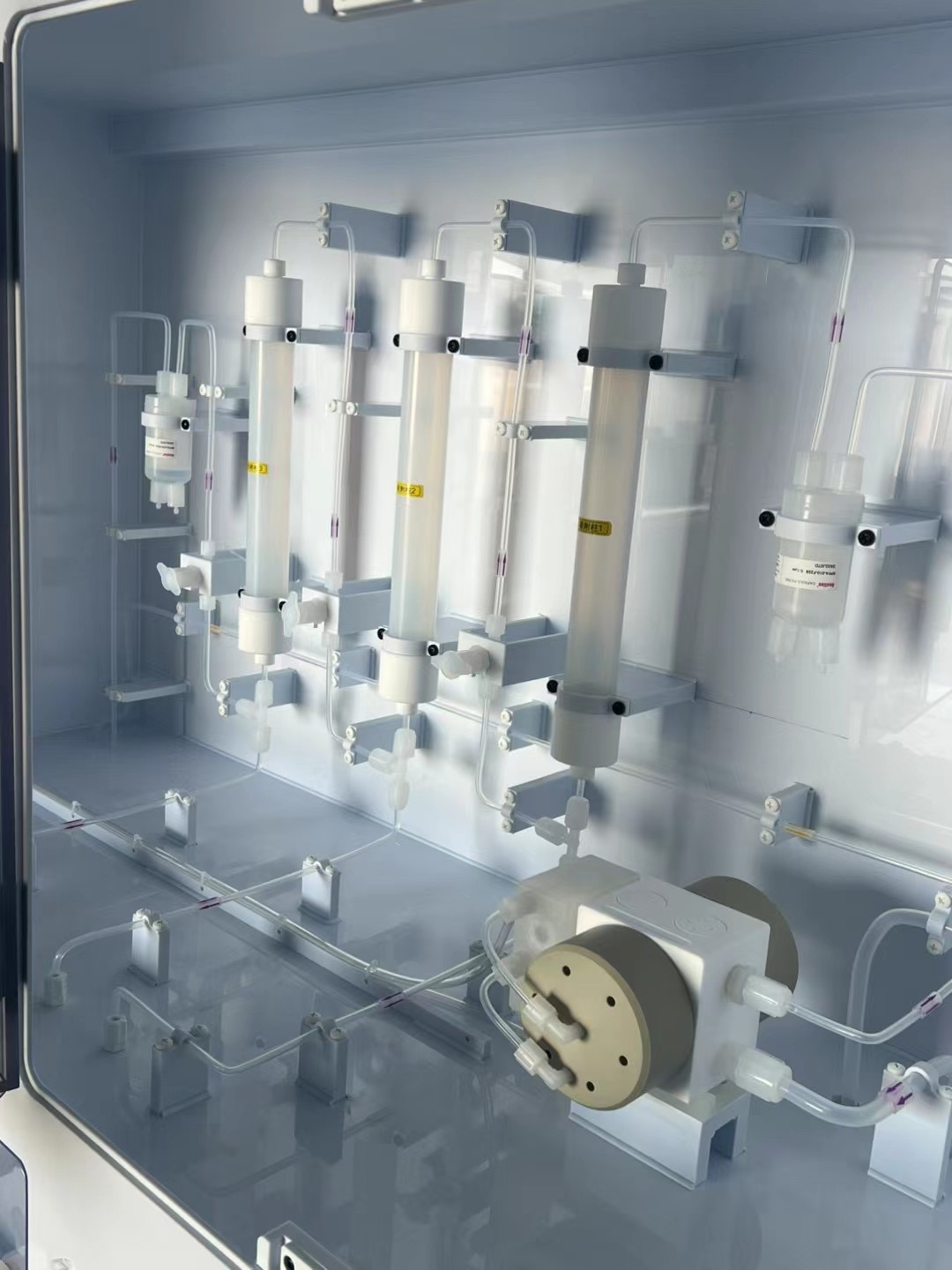
6. Key Engineering Recommendations and Summary Checklist
To ensure long-term operational reliability and avoid premature scrubber failure, observe the following engineering recommendations:
-
Perform Full Chemical Gas & Trace Element Analysis: Always analyze exhaust gas streams for trace contaminants (e.g., trace fluorides in $\text{HCl}$ gas, trace chlorides, mercury, or peroxides). Trace compounds frequently cause catastrophic corrosion in materials selected solely for primary gas constituents.
-
Design for Quench Failure Scenarios: Assume a quench pump failure will expose downstream non-metallic materials to uncooled gas. Implement automated high-temperature emergency bypass systems, emergency water quench lines, or specify temperature-resistant Novolac resins.
-
Mitigate Wet-Dry Interface Corrosion: The splash zone where hot dry inlet gas meets cold recirculating liquid is the most severe corrosion zone in any wet scrubber. Always specify a higher grade material (e.g., Hastelloy C-276 or dual-laminate) for this specific transition zone, regardless of the vessel’s primary shell material.
-
Match Surfacing Veils to Acid Chemistry: When selecting FRP, explicitly stipulate the chemical barrier layer construction in specification documents (e.g., 2-ply synthetic veil for HF/Fluoride service; C-glass veil for general acid service).
-
Evaluate Total Life-Cycle Cost (LCC): While non-metallic materials like FRP and thermoplastic linings lower initial capital expenditure (CAPEX), high-temperature or critical industrial scrubbers often realize lower operational expenditure (OPEX) and longer service life when constructed with premium nickel superalloys or high-end dual laminates.
By matching the chemical, thermal, and mechanical profile of the tail gas stream with the appropriate alloy, thermoset resin, or thermoplastic dual-laminate, process engineers can ensure long-term operational safety, maximum scrubbing efficiency, and reliable environmental compliance.
For more about how to choose the material of wet scrubber tail gas treatment in high temperature, high humidity or highly corrosive exhaust gas environment, you can pay a visit to Jewellok at https://www.specialtygasregulator.com/product-category/specialty-gas-cabinet/ for more info.
-
Advanced Bulk Specialty Gas Systems BSGS Gas Cabinet for Safe Handling of Toxic and Flammable Process Gases
-
Flow Control Stainless Steel Low Pressure Manual Diaphragm Valve For High Purity And Ultra High Purity Gases
-
Stainless Steel Mini Elbow Mini Tee Mini Cross Mini Tribow Ultrahigh Purity Mini Butt Weld Fittings
-
Integrated Gas Delivery Solutions with VMB Valve Manifold Box and Automatic Gas Switchover Systems for Industrial
-
Single Stage Wall And Cabinet Mounting Pressure Control Panels JSP-2E Series For High Purity Gases
-
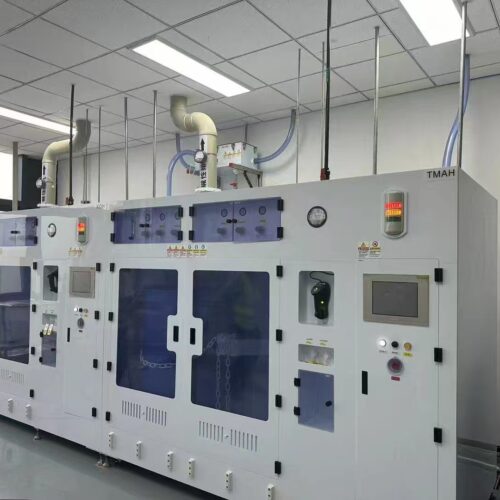
Automated Bulk Chemical Delivery System with Ultra High Purity CDU for Precise Industrial Fluid Control
-
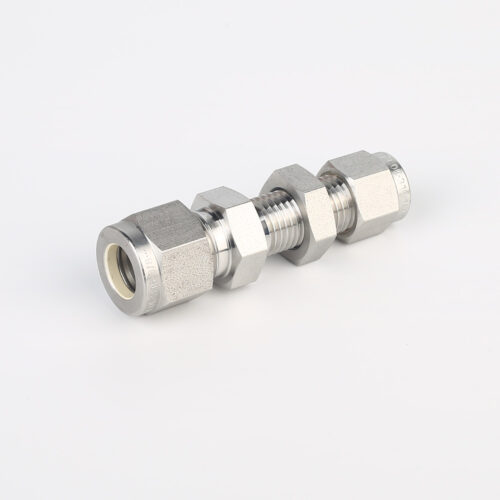
775L Bulkhead Reducing Union | Stainless Steel High Purity Double Ferrule Bulkhead Reducing Unions
-
Corrosion Resistant 316L Stainless Steel Exhaust Gas Scrubber System for Harsh Chemical Process Environments