
Regulator Manufacturer Tel: +86 13380377051
Regulator Manufacturer Tel: +86 13380377051

Fuel Gas and Oxygen Manifold Systems: Design, Components and Safety Requirements
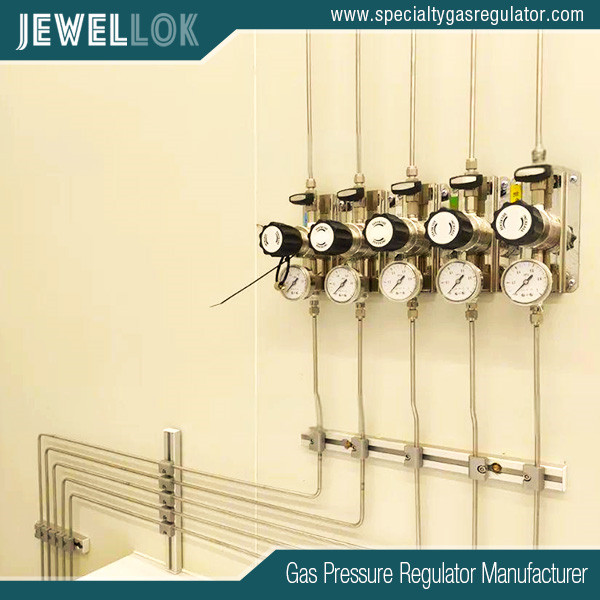
Fuel gas and oxygen manifold systems are critical gas distribution assemblies used in industrial manufacturing, laboratories, metal fabrication, welding and cutting operations, heating systems, and other applications where multiple gas cylinders or supply sources must be connected to a common distribution network. A properly engineered manifold system provides controlled, reliable gas delivery while reducing manual cylinder handling and improving operational safety.
Because fuel gases and oxygen have very different physical and chemical characteristics, their manifold systems require careful consideration of material compatibility, pressure control, flow capacity, ventilation, isolation, backflow prevention, and emergency shutdown. The objective is not simply to connect cylinders together, but to create a complete gas delivery system that operates safely under normal, abnormal, and maintenance conditions.
1. What Is a Fuel Gas and Oxygen Manifold System?
A gas manifold is a piping and control assembly that connects multiple gas cylinders or supply sources to one or more downstream gas users. Instead of supplying equipment directly from individual cylinders, the manifold combines the sources and distributes gas through a controlled outlet.
A typical system may include separate manifolds for oxygen and fuel gas. Oxygen can be supplied from multiple cylinders, while fuel gas may include acetylene, hydrogen, propane, natural gas, or other combustible gases depending on the application.
A manifold system can be designed as:
- Single-bank or dual-bank configuration
- Manual or automatic changeover
- High-pressure or low-pressure distribution
- Single-outlet or multi-outlet configuration
- Wall-mounted, rack-mounted, cabinet-mounted, or skid-mounted
- Indoor or outdoor installation
For continuous industrial operations, an automatic changeover manifold is particularly useful. When the primary cylinder bank becomes depleted, the system can automatically switch to the reserve bank, minimizing process interruption and allowing operators to replace empty cylinders without shutting down the gas supply.
2. Basic Design Requirements
The design of a fuel gas and oxygen manifold should begin with the actual operating requirements rather than simply selecting valves and regulators based on pipe size.
Important design parameters include inlet pressure, required outlet pressure, maximum flow rate, number of cylinders, gas type, operating temperature, installation environment, downstream equipment, and required gas purity.
The designer should also consider peak and continuous demand. A system that works adequately at average flow may experience excessive pressure drop during simultaneous high-flow operation.
Pressure
Cylinder pressure can be significantly higher than the pressure required by downstream equipment. Therefore, pressure regulation is one of the most important functions of the manifold.
A typical configuration may use a high-pressure regulator or pressure-reducing stage at the cylinder supply, followed by a distribution header and additional regulation where necessary.
The selected regulator must be rated for the maximum inlet pressure and compatible with the specific gas. Pressure relief devices should be incorporated where trapped pressure or regulator failure could create an unsafe overpressure condition.
Flow Capacity
Flow capacity should be calculated based on the maximum simultaneous demand. Undersized regulators, valves, or tubing can cause excessive pressure drop and unstable downstream pressure.
For larger systems, the manifold header and distribution piping should be sized according to expected flow, allowable pressure loss, gas properties, and the length and configuration of the piping network.
3. Major Components of a Manifold System
A professional fuel gas and oxygen manifold generally contains several critical components.
Gas Inlet Connections
Cylinder pigtails, flexible connections, or rigid tubing connect individual cylinders to the manifold header. Connections must be compatible with the cylinder valve outlet and the specific gas.
Gas-specific connection standards are important because they help prevent accidental cross-connection between incompatible gases.
Isolation Valves
Isolation valves allow individual cylinders, banks, or sections of the system to be shut off for maintenance or cylinder replacement.
For multi-cylinder systems, individual cylinder isolation can also help operators identify supply problems and maintain part of the system while servicing another section.
Check Valves
Check valves are used to prevent reverse gas flow. They are particularly important in multi-cylinder and dual-bank systems where pressure differences between sources could cause unwanted gas migration.
Backflow prevention is especially important when dealing with fuel gases and oxygen because mixing combustible gas with oxygen in an unintended location can create a serious fire or explosion hazard.
Pressure Regulators
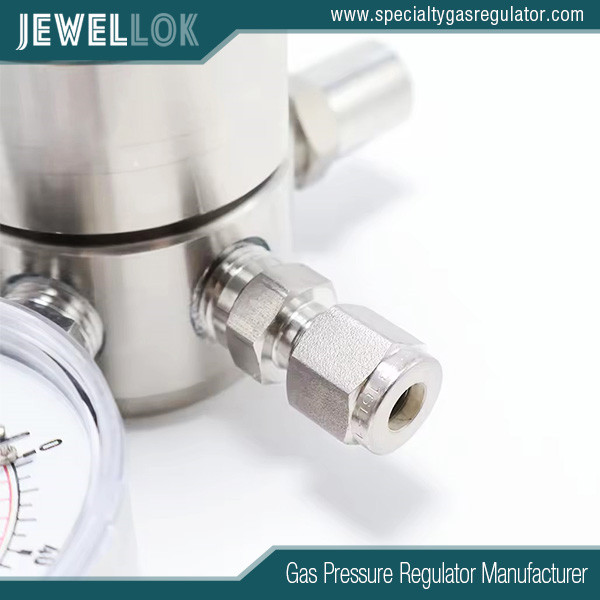
Pressure regulators reduce cylinder or supply pressure to a controlled downstream pressure. Regulator selection must consider gas compatibility, inlet pressure, outlet pressure, flow rate, temperature, and required accuracy.
Oxygen service requires components that are appropriately prepared and cleaned for oxygen use. Oil, grease, and other hydrocarbon contamination must be prevented because oxygen-enriched environments can dramatically increase combustion hazards.
Pressure Gauges and Sensors
Pressure gauges provide local visual indication of cylinder-bank and outlet pressure. More advanced systems may use pressure transducers connected to a monitoring or control system.
Pressure monitoring allows operators to determine cylinder status, detect abnormal pressure conditions, and manage automatic changeover systems.
Relief Devices
Pressure relief valves or other approved pressure-relief devices protect downstream components from excessive pressure when required by the system design.
Relief-device discharge should be routed or located in a manner that does not expose personnel or create another hazard.
Flexible Hoses and Pigtails
Flexible pigtails accommodate cylinder movement and simplify cylinder replacement. They must be rated for the gas, pressure, temperature, and installation conditions.
They should be protected from mechanical damage, excessive bending, abrasion, heat, and other conditions that could shorten their service life.
4. Oxygen Manifold Design Considerations
Oxygen is not itself a fuel, but it strongly supports combustion. Materials that may be acceptable for ordinary compressed-air or inert-gas service may not automatically be suitable for oxygen service.
Oxygen manifold design therefore requires particular attention to cleanliness, material compatibility, ignition sources, pressure-velocity relationships, and component preparation.
All oxygen-wetted components should be suitable for the intended oxygen service. Internal surfaces should be properly cleaned to remove oil, grease, particles, and other contaminants.
The use of oxygen-compatible lubricants and materials is also essential where lubrication is required. Ordinary petroleum-based lubricants should never be introduced into oxygen systems unless specifically approved for the application.
Valves should be operated appropriately, especially at high pressure. Rapid pressurization can generate heat and potentially create an ignition source under unfavorable conditions.
5. Fuel Gas Manifold Design Considerations
Fuel gases require a different approach because of their flammability.
The manifold should be designed to minimize the possibility of leakage and unintended gas accumulation. Connections, seals, valves, regulators, and flexible hoses must be compatible with the selected fuel gas.
Ventilation is particularly important for indoor installations. Depending on gas density and the specific installation, ventilation and gas detection arrangements may need to account for where leaked gas could accumulate.
Fuel gas systems may also require flashback arrestors, excess-flow protection, pressure relief, or other protective devices depending on the application and applicable codes.
The manifold should be installed away from ignition sources unless the installation has been specifically engineered for the environment.
6. Automatic Changeover Manifold Systems
Automatic changeover manifolds are widely used where uninterrupted gas supply is important.
A typical automatic system consists of a primary cylinder bank and a reserve bank. Pressure sensors or mechanical control elements monitor the supply pressure. When the primary bank reaches its changeover point, the system transfers supply to the reserve bank.
The operator can then replace the empty cylinders while the process continues to receive gas from the reserve bank.
For industrial applications, automatic changeover can provide several advantages:
- Reduced production downtime
- Fewer manual cylinder-switching operations
- Better gas supply management
- Improved operator convenience
- More consistent downstream pressure
- Easier integration with alarms and remote monitoring
The changeover system should be selected according to the required flow rate and gas service. For critical processes, local and remote alarms can indicate low supply pressure, bank status, or system faults.
7. Safety Requirements and Risk Control
Safety is the most important aspect of fuel gas and oxygen manifold design. The exact requirements depend on the gas, pressure, installation type, country, industry, and applicable standards and regulations.
A properly designed system should incorporate several layers of protection.
Prevent Gas Mixing
Oxygen and fuel gas manifolds should be completely separated unless a downstream process specifically requires controlled mixing in equipment designed for that purpose.
Gas identification, dedicated connections, proper labeling, and correct piping practices reduce the possibility of cross-connection.
Prevent Leakage
Leak prevention begins with correct component selection and installation. Threads, fittings, seals, tubing, valves, and flexible connections should be rated for the service.
After installation and during maintenance, appropriate leak-testing procedures should be followed.
Provide Adequate Ventilation
Cylinder storage and manifold locations should have suitable ventilation based on the gas characteristics and applicable requirements.
Ventilation design should prevent leaked gas from accumulating to hazardous concentrations.
Protect Cylinders
Gas cylinders should be properly secured to prevent falling or movement. They should be protected from impact, excessive heat, and unauthorized access.
Cylinders should also be clearly identified and stored according to the requirements applicable to the specific gas.
Provide Emergency Isolation
Emergency shutoff arrangements allow operators to isolate gas supplies rapidly when a leak, fire, equipment failure, or other hazardous event occurs.
The emergency isolation strategy should be considered during the initial system design rather than added after installation.
8. Materials and Piping Selection
Material selection depends on gas type, pressure, temperature, purity requirements, and environmental conditions.
Stainless steel is commonly used for industrial gas distribution because of its mechanical strength and corrosion resistance. Higher-purity applications may require carefully controlled stainless-steel tubing, specialized surface finishes, orbital welding, and stringent cleaning procedures.
For general industrial fuel gas applications, materials must be selected according to the specific fuel gas and relevant pressure and safety requirements.
The internal surface condition of piping is particularly important in high-purity oxygen or process-gas applications. Surface contamination, particles, moisture, and residues can affect system reliability and safety.
9. Installation, Inspection and Maintenance
Even a well-designed manifold can become unsafe if it is incorrectly installed or poorly maintained.
Installation should be performed by qualified personnel familiar with compressed-gas systems and the applicable local requirements.
Before commissioning, the system should be inspected for:
- Correct gas identification
- Correct cylinder connections
- Proper valve orientation
- Appropriate regulator ratings
- Leak-tight connections
- Correct pressure settings
- Functional relief devices
- Proper support and cylinder restraint
- Adequate ventilation
- Correct emergency shutoff operation
- Proper labeling and warning signs
Periodic inspection should include hoses, pigtails, valves, regulators, gauges, fittings, supports, and other components subject to wear.
Flexible connections deserve particular attention because repeated cylinder replacement, bending, vibration, and mechanical stress can contribute to deterioration.
10. Selecting a Professional Manifold Manufacturer
Choosing the right manifold manufacturer is as important as selecting individual components.
A qualified supplier should be able to provide a complete engineering solution based on the gas type, cylinder configuration, pressure, flow rate, installation environment, and downstream requirements.
For industrial users, useful supplier capabilities include:
- Custom manifold engineering
- Gas-specific component selection
- Automatic changeover solutions
- High-pressure regulation
- Oxygen-compatible system preparation
- Pressure and leak testing
- Factory assembly and inspection
- Documentation and test records
- Technical support and after-sales service
The supplier should also understand the difference between oxygen service and fuel gas service rather than treating all compressed-gas manifolds as interchangeable products.
Conclusion
Fuel gas and oxygen manifold systems are essential for safe and reliable gas distribution in industrial, laboratory, welding, cutting, heating, and manufacturing applications. Their performance depends on much more than the number of cylinders connected to a header.
Effective design requires careful consideration of gas properties, pressure, flow rate, material compatibility, regulator capacity, isolation, backflow prevention, relief protection, ventilation, cylinder security, and emergency shutdown.
Oxygen systems require rigorous cleanliness and ignition-risk control, while fuel gas systems require strong leakage prevention, ventilation, ignition-source control, and appropriate protective devices. Automatic changeover technology can further improve continuity and operational efficiency where uninterrupted gas supply is required.
Ultimately, the safest and most reliable manifold is one designed as a complete engineered system. By selecting gas-compatible components, following applicable codes and standards, using qualified installation practices, and establishing regular inspection and maintenance procedures, industrial users can achieve dependable gas delivery while significantly reducing operational and safety risks.
For more about fuel gas and oxygen manifold systems: design, components and safety requirements, you can pay a visit to Jewellok at https://www.specialtygasregulator.com/product-category/gas-changeover-system/ for more info.
-
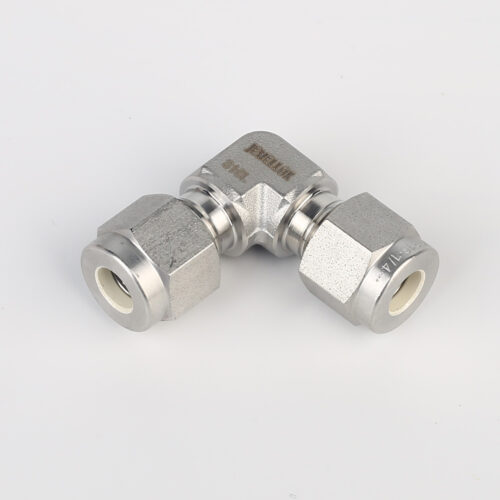
765L Stainless Steel Union Elbow Reducing High Purity Fitting Tubing Extension Tubing Connection
-
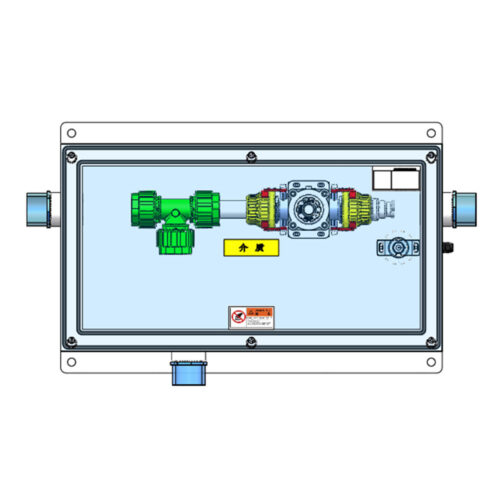
T-BOX JW-TB-C Special Gas Delivery System Gas Valve Manifold Boxes
-
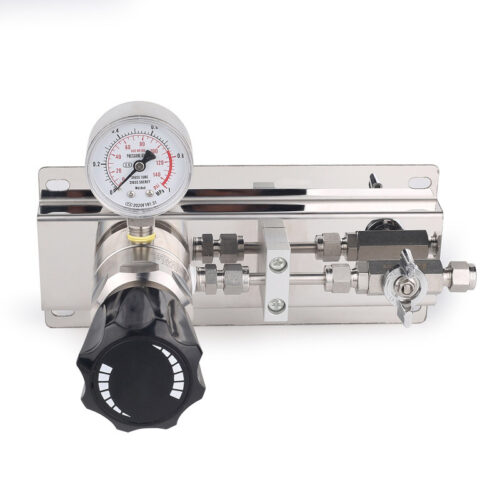
High Purity Gas Cylinder Semi Automatic Changeover Manifold Regulator Panel 3000psig Stainless Steel Gas Control Panel 1/8 Npt With Gauge
-
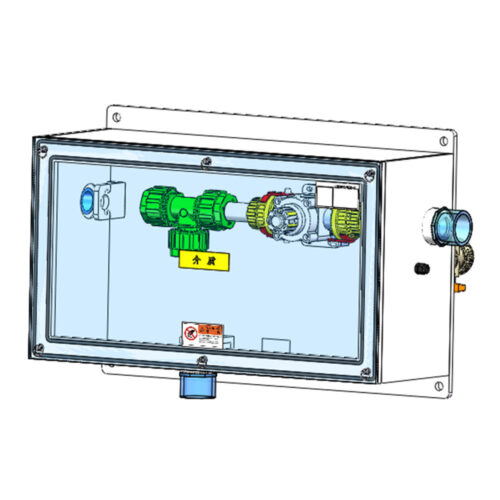
FT-BOX JW-FTB-C Valve Manifold Panels And Boxes With High Purity Configurable Systems
-
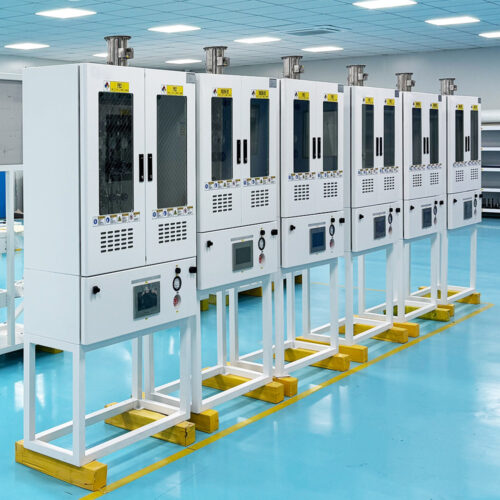
VMB Valve Manifold Panels And Boxes High Purity Configurable Systems JW-200-VMB & JW-100-VMB
-
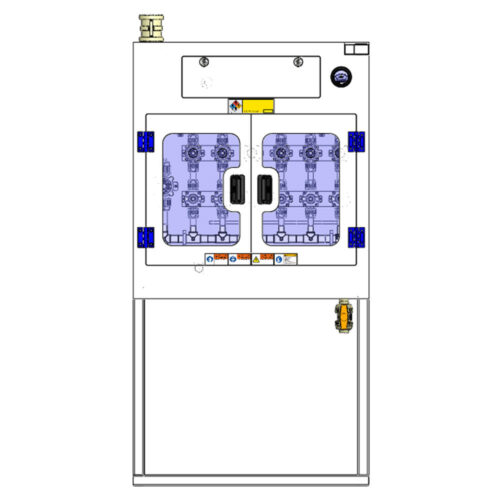
High Purity Configurable Systems VMB Valve Manifold Box JW-200-VMB-C & JW-100-VMB-C
-
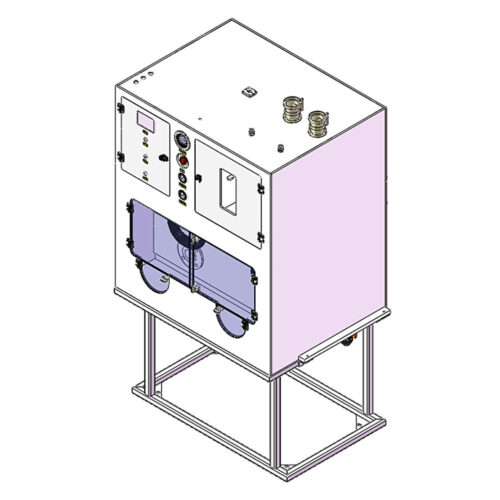
Clean Connection Cabinet JW-300-CCB Valve Manifold Box And Control Valve Box
-
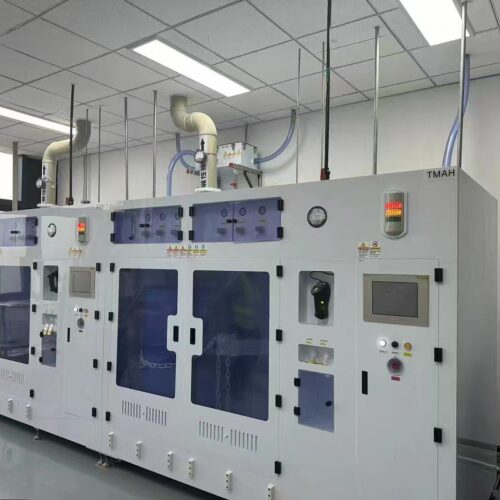
Liquid Bulk Chemical Delivery System with Automatic Chemical Dispense Unit (CDU) Featuring 316L Electropolished Stainless Steel Piping Components