
Regulator Manufacturer Tel: +86 13380377051
Regulator Manufacturer Tel: +86 13380377051

NFPA / OSHA Standards for Medical Gas Manifold Systems: Ensuring Safety and Compliance
In the modern healthcare environment, the administration of medical gases—such as oxygen, nitrous oxide, medical air, and carbon dioxide—is as critical as any surgical procedure or life-saving intervention. These gases are not stored in individual tanks at the bedside; instead, they are supplied through a centralized pipeline system originating from a source: the medical gas manifold.
A medical gas manifold is a sophisticated assembly designed to automatically switch over from a primary to a secondary supply bank of high-pressure cylinders, ensuring an uninterrupted flow of gas to critical care areas. However, the very nature of these systems—handling high-pressure gases, often in volatile environments—presents significant risks, including fire, explosion, asphyxiation, and system failure.
To mitigate these risks, strict regulations and standards have been established. In the United States, the two primary authorities governing the design, installation, operation, and maintenance of medical gas manifold systems are the National Fire Protection Association (NFPA) and the Occupational Safety and Health Administration (OSHA) . While NFPA provides the technical “how-to” for safe construction and installation, OSHA provides the regulatory “must-do” for workplace safety and employee health. Understanding the interplay between these two bodies is essential for facility managers, engineers, and healthcare safety officers.
This article provides a comprehensive overview of the key NFPA and OSHA standards that apply to medical gas manifold systems, detailing the technical requirements, safety protocols, and compliance strategies necessary to maintain a safe medical gas supply.

Part 1: The NFPA Framework – The Technical Standard
The primary publication governing medical gas manifold systems is NFPA 99: Health Care Facilities Code. While OSHA is a federal enforcement agency, NFPA 99 is a consensus standard that is often adopted into law by state and local jurisdictions (Authorities Having Jurisdiction, or AHJs). Therefore, compliance with NFPA 99 is typically mandatory.
NFPA 99 categorizes healthcare facilities based on risk. Most hospitals fall under Category 1, which carries the most stringent requirements due to the risk to life in the event of system failure. For manifold systems, the code dictates everything from location and construction to performance and signal activation.
1. Location and Physical Requirements (NFPA 99, Chapter 5)
One of the first decisions regarding a manifold system is its physical location. NFPA 99 is explicit about where these systems can be placed to minimize risk.
-
Exterior Installations: Manifolds are frequently located outdoors or in a dedicated, well-ventilated exterior enclosure. The structure must be non-combustible and secured against unauthorized entry. It must also be located away from ignition sources, building air intakes, and windows to prevent gas from entering the building in the event of a leak.
-
Interior Installations: If located indoors, the manifold room must be constructed as a one-hour fire-rated enclosure. It cannot open directly into a patient care area. The room must have self-closing doors and must be dedicated exclusively to medical gas storage and distribution. No combustible storage is permitted in these rooms.
-
Ventilation: Proper ventilation is non-negotiable. The area must have either continuous mechanical ventilation or gravity ventilation that provides at least two air changes per hour. For gases that are heavier than air (like nitrous oxide or carbon dioxide), the ventilation intake must be located near the floor level to evacuate gases that could cause suffocation.
2. Cylinder Banks and Automatic Changeover
The manifold’s primary function is to manage the transition between two separate cylinder banks (the primary and the secondary). NFPA 99 requires that each manifold has the capacity to store a specific reserve supply to ensure continuity of service.
-
Bank Configuration: The system must be designed so that when the primary bank is depleted, the manifold automatically switches to the secondary (reserve) bank. This switch must occur without any pressure drop or interruption in the pipeline.
-
Reserve Supply: Beyond the two main banks, NFPA 99 requires an independent reserve source for critical systems (Category 1). This is often a third bank of cylinders, a large cryogenic vessel, or a dedicated compressor. This reserve must be able to supply the facility for at least 24 hours at average usage until the primary source can be replenished.
-
Pressure Regulation: The manifold must include precision pressure regulators to reduce the high cylinder pressure (up to 2200 psi) down to the pipeline pressure (typically 50-55 psi for oxygen). Redundant regulators are usually required to ensure that if one fails, the other maintains control.
3. Master Alarm Systems
Visibility and notification are vital. NFPA 99 mandates specific alarm systems to alert staff to any issues with the manifold.
-
Location: A “Master Alarm” panel must be located in at least two locations: one at the manifold itself and another at a continuously monitored location (such as the security office, engineering shop, or nurses’ station).
-
Activation: The master alarm must activate (both audible and visual) for specific conditions:
-
When the system switches from the primary to the secondary bank (indicating the primary is low).
-
When the pressure in the main line falls above or below the required operating range (e.g., pressure drops below 50 psi or rises above 60 psi).
-
When the reserve supply is in use.
-
4. Piping, Materials, and Zone Valves
While the manifold is the source, NFPA 99 extends its requirements to the downstream piping connected to it.
-
Material: Piping must be specifically cleaned for oxygen service to remove hydrocarbons that could combust in a high-pressure oxygen environment. Standard steel or PVC pipe is strictly prohibited. Typically, Type K or L copper pipe is required, brazed with a high-temperature alloy (minimum 15% silver) to ensure the joint can withstand fire exposure without melting.
-
Testing: Before a system is put into service, NFPA 99 mandates rigorous testing, including pressure testing with an inert gas (like nitrogen) to check for leaks, followed by a cross-connection test to ensure oxygen outlets are not accidentally supplying medical air, and finally, a purity test to verify the gas meets medical standards.
Part 2: The OSHA Framework – The Regulatory Mandate
While NFPA dictates the physical plant requirements, OSHA dictates the workplace safety requirements. OSHA’s standards are federal law (found in Title 29 of the Code of Federal Regulations). Even if a facility meets NFPA 99, it can still be cited by OSHA for unsafe work practices regarding the manifold.
1. The General Duty Clause and Hazard Communication
OSHA’s primary leverage comes from the General Duty Clause, which requires employers to provide a workplace free from recognized hazards. For medical gas manifolds, this involves several specific standards.
-
Hazard Communication Standard (HCS) (29 CFR 1910.1200): Employees working with or near medical gas manifolds must be trained on the chemical hazards of the gases. Oxygen, while safe to breathe, is an oxidizing agent that accelerates combustion. Nitrous oxide is an anesthetic with potential reproductive hazards. OSHA requires that all cylinders have proper labels, and Safety Data Sheets (SDS) must be readily available to employees.
2. Compressed Gas Cylinder Handling (29 CFR 1910.101)
OSHA places a heavy emphasis on the physical handling of the compressed gas cylinders that feed the manifold. The agency references the standards of the Compressed Gas Association (CGA), making them enforceable.
-
Securing Cylinders: OSHA requires that cylinders be secured to prevent them from falling. In a manifold room, cylinders in the primary, secondary, and reserve banks must be individually chained or strapped to a wall, rack, or bulkhead. An unsecured cylinder can become a deadly projectile if its valve is knocked off.
-
Valve Protection: Cylinders must be moved with the valve protection cap screwed on. When cylinders are connected to the manifold, they are in use, but empty cylinders awaiting removal must have their caps replaced.
-
Storage Segregation: OSHA mandates that full cylinders be stored separately from empties to avoid confusion. Furthermore, oxidizers (like oxygen) must be stored at least 20 feet away from flammable gases (if such are present in the same storage area) or separated by a non-combustible barrier at least 5 feet high with a fire-resistance rating of at least 30 minutes.
3. Oxygen Cleanliness and Housekeeping (29 CFR 1910.22 & 1910.107)
One of the most overlooked OSHA intersections with NFPA is the concept of “oxygen clean.”
-
Contamination Prevention: OSHA’s housekeeping rules require that work areas be kept clean. In the context of an oxygen manifold, this is a life safety issue. Oil, grease, or hydrocarbon-based lubricants can spontaneously combust in the presence of high-pressure oxygen. OSHA inspectors will look for evidence of oily rags, lubricants, or cleaning solvents in the manifold area. Only oxygen-compatible lubricants and cleaning agents may be used.
-
Ignition Sources: Smoking, open flames, and even spark-producing tools are prohibited in manifold areas. OSHA will enforce this under general safety standards.
4. Employee Training and Competency
OSHA requires that only trained personnel handle compressed gases. This means that the biomedical engineers, facilities managers, and even security personnel who monitor the alarms must be competent in:
-
Recognizing the sounds and lights of the manifold alarm.
-
Understanding the procedure for changing out cylinders when the primary bank is depleted.
-
Knowing the emergency shutdown procedures.
-
Using Personal Protective Equipment (PPE) such as safety glasses and gloves when handling cryogenic or high-pressure connections.
Part 3: The Interplay and Potential Conflicts
Navigating NFPA and OSHA standards requires a nuanced understanding. Usually, they complement each other. For example, NFPA requires the manifold to have a specific alarm; OSHA requires that the employee monitoring that alarm knows what it means.
However, conflicts can sometimes appear to arise, often relating to access versus security.
-
NFPA might require a manifold room door to be locked to prevent unauthorized access (security and life safety).
-
OSHA requires that employees be able to access the area quickly in an emergency or to perform maintenance, and that exit routes remain unobstructed.
The solution is a door that is locked but equipped with “panic hardware” or a break-glass mechanism that allows immediate egress from the inside and access for authorized personnel from the outside.
Another point of intersection is the Permit-Required Confined Space (29 CFR 1910.146) . If a manifold room is small, has poor ventilation, and contains gases that could displace oxygen (like nitrogen or nitrous oxide), it could be classified by OSHA as a confined space. If entry is required for maintenance, the facility must have a permit program, conduct atmospheric testing before entry, and have rescue procedures in place. This goes above and beyond the NFPA ventilation requirements.
Part 4: Best Practices for Compliance and Safety
To ensure a facility meets the stringent requirements of both NFPA and OSHA, a proactive approach is necessary.
-
Integrated Risk Assessment: Do not view NFPA and OSHA compliance as separate checklists. Conduct a joint risk assessment that looks at the physical infrastructure (NFPA) and the human element (OSHA). For example, check if the manifold room is fire-rated (NFPA) and if the emergency lighting allows an employee to safely exit if they feel dizzy from a gas leak (OSHA).
-
Documentation is Key: Both NFPA and OSHA rely heavily on documentation. Maintain detailed records of:
-
Initial installation testing and verification.
-
Routine maintenance and calibration of pressure switches and alarms.
-
Cylinder inventory logs (tracking full vs. empty).
-
Employee training sessions on gas hazards and emergency procedures.
-
-
Regular Audits: The healthcare environment changes. A manifold that was once external might now be near a newly constructed building air intake. Regular internal audits—or third-party inspections—help catch these evolving hazards before an inspector does.
-
Maintain Clear Egress: The area around the manifold must remain clear. While NFPA focuses on not storing combustibles near the equipment, OSHA focuses on ensuring the path to the exit is not blocked by empty cylinders or tools.
Conclusion
Medical gas manifold systems are the silent workhorses of the healthcare facility, operating 24/7 to deliver the essential elements of care. The standards governing them—specifically NFPA 99 and OSHA 29 CFR 1910—are designed to ensure that this delivery is not only reliable but also inherently safe for patients, staff, and the facility itself.
NFPA provides the architectural and engineering blueprint, dictating how the system must be built, where it must live, and how it must perform under stress. OSHA enforces the human safety component, regulating how employees interact with the system, how they are trained, and how the hazards of the materials are communicated.
By understanding that NFPA focuses on the “system” and OSHA focuses on the “worker,” healthcare facilities can build a comprehensive safety culture. Compliance is not merely about passing an inspection; it is about recognizing that a failure in a manifold system—whether a pressure drop or a cylinder-related accident—can have catastrophic consequences. Adherence to these standards is the best defense against those risks, ensuring that the breath of life is delivered safely, every time.
For more about NFPA / OSHA standards for medical gas manifold systems: ensuring safety and compliance, you can pay a visit to Jewellok at https://www.specialtygasregulator.com/ for more info.
-
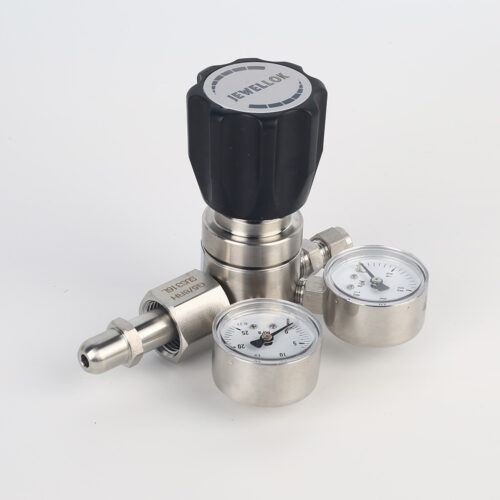
High Purity High Pressure Gas Cylinder Pressure Regulators Pressure Reducing Valve JSR-1E Series
-
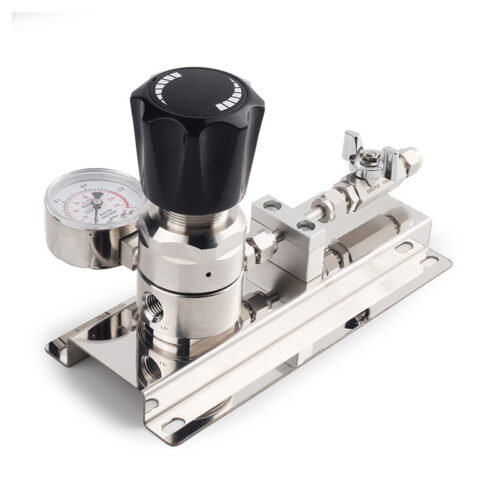
Ultra High Purity 316L Var Stainless Steel Compressed Gas Changeover Manifold Panel System For Integrated Gas Supply System
-
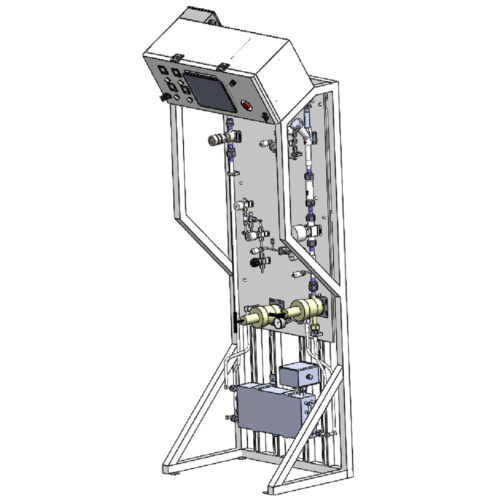
High Purity High Pressure Specialty Gas Bottle Gas Cylinder Storage Cabinet And Gas Pressure Regulating Cabinet For Semiconductor
-
768L Stainless Steel Male Tube Butt Weld Connector | Clean Weld Fittings And Ultra-High Purity Fittings
-
High Purity Liquid Chemical Delivery Systems Designed for Sub Micron Semiconductor Production
-
Automated Bulk Chemical Delivery System with Ultra High Purity CDU for Precise Industrial Fluid Control
-
Vertical Laminar Flow Workstation (VLF) With Chemical Concentration Monitor
-
772L Male Branch Tee | Stainless Steel High-Purity Tube Fitting Male Branch Tee