
Regulator Manufacturer Tel: +86 13380377051
Regulator Manufacturer Tel: +86 13380377051
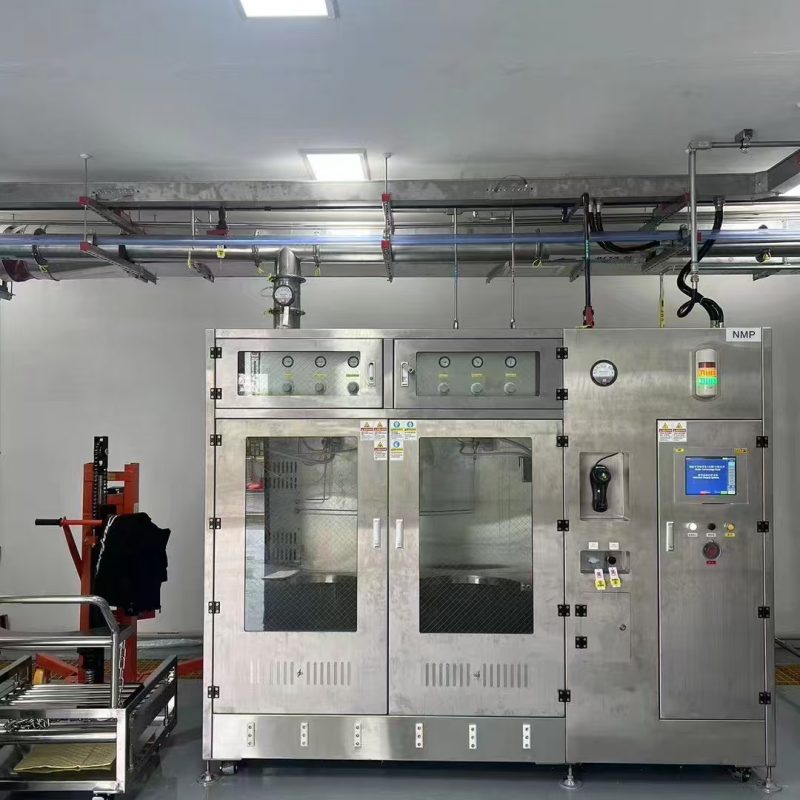
A Complete Guide to Chemical Delivery System (CDS) for Semiconductor Manufacturing
As semiconductor technology advances toward smaller process nodes, higher wafer yields, and increasingly complex manufacturing processes, chemical management has become one of the most critical factors in fab operations. Modern semiconductor fabrication relies on hundreds of highly reactive, corrosive, flammable, and ultra-high purity chemicals throughout lithography, etching, cleaning, deposition, CMP, and packaging processes. Even the slightest contamination or unstable chemical supply can significantly impact product quality and production yield.
A Chemical Delivery System (CDS) is specifically engineered to safely store, transfer, monitor, and distribute process chemicals from bulk containers to semiconductor manufacturing equipment with exceptional precision. Designed for fully automated operation, a CDS minimizes human intervention while ensuring consistent chemical purity, accurate flow control, and maximum operational safety.
As Industry 4.0 and smart semiconductor factories continue to evolve, advanced Chemical Delivery Systems have become an essential component of wafer fabrication facilities worldwide.
This article explores the working principles, components, advantages, applications, design considerations, and future trends of Chemical Delivery Systems used in semiconductor manufacturing.
What Is a Chemical Delivery System (CDS)?
A Chemical Delivery System (CDS) is an automated chemical management solution that transfers high-purity chemicals from storage containers to semiconductor process tools under carefully controlled pressure, flow rate, temperature, and filtration conditions.
The primary objectives of a CDS include:
- Maintaining ultra-high chemical purity
- Preventing particle contamination
- Delivering accurate chemical volumes
- Ensuring operator safety
- Reducing chemical waste
- Supporting continuous 24/7 production
- Providing real-time monitoring and diagnostics
Unlike conventional industrial chemical transfer systems, semiconductor-grade CDS equipment is designed with contamination control at the molecular level.
Why Chemical Delivery Systems Are Critical in Semiconductor Manufacturing
Modern semiconductor processes require extremely high chemical purity. Contaminants measured in parts per billion (ppb) or even parts per trillion (ppt) can damage integrated circuits.
Chemical Delivery Systems address several major manufacturing challenges:
Maintaining Chemical Purity
Ultra-high purity chemicals must remain uncontaminated during storage and transportation.
A properly designed CDS prevents contamination caused by:
- Atmospheric moisture
- Oxygen intrusion
- Metallic ions
- Organic residues
- Particle generation
- Cross-contamination between chemicals
Ensuring Process Consistency
Stable process parameters are essential for repeatable wafer production.
A CDS maintains:
- Constant flow rate
- Stable pressure
- Accurate dosing
- Temperature consistency
- Bubble-free chemical delivery
This consistency directly improves wafer yield.
Improving Workplace Safety
Many semiconductor chemicals present significant hazards.
Examples include:
- Hydrofluoric Acid (HF)
- Sulfuric Acid (H₂SO₄)
- Nitric Acid (HNO₃)
- Hydrochloric Acid (HCl)
- Ammonium Hydroxide (NH₄OH)
- Hydrogen Peroxide (H₂O₂)
- Tetramethylammonium Hydroxide (TMAH)
An automated CDS minimizes direct operator exposure by using enclosed transfer systems and intelligent safety interlocks.
Main Components of a Chemical Delivery System
A semiconductor-grade CDS typically consists of several integrated modules.
1. Chemical Storage Cabinet
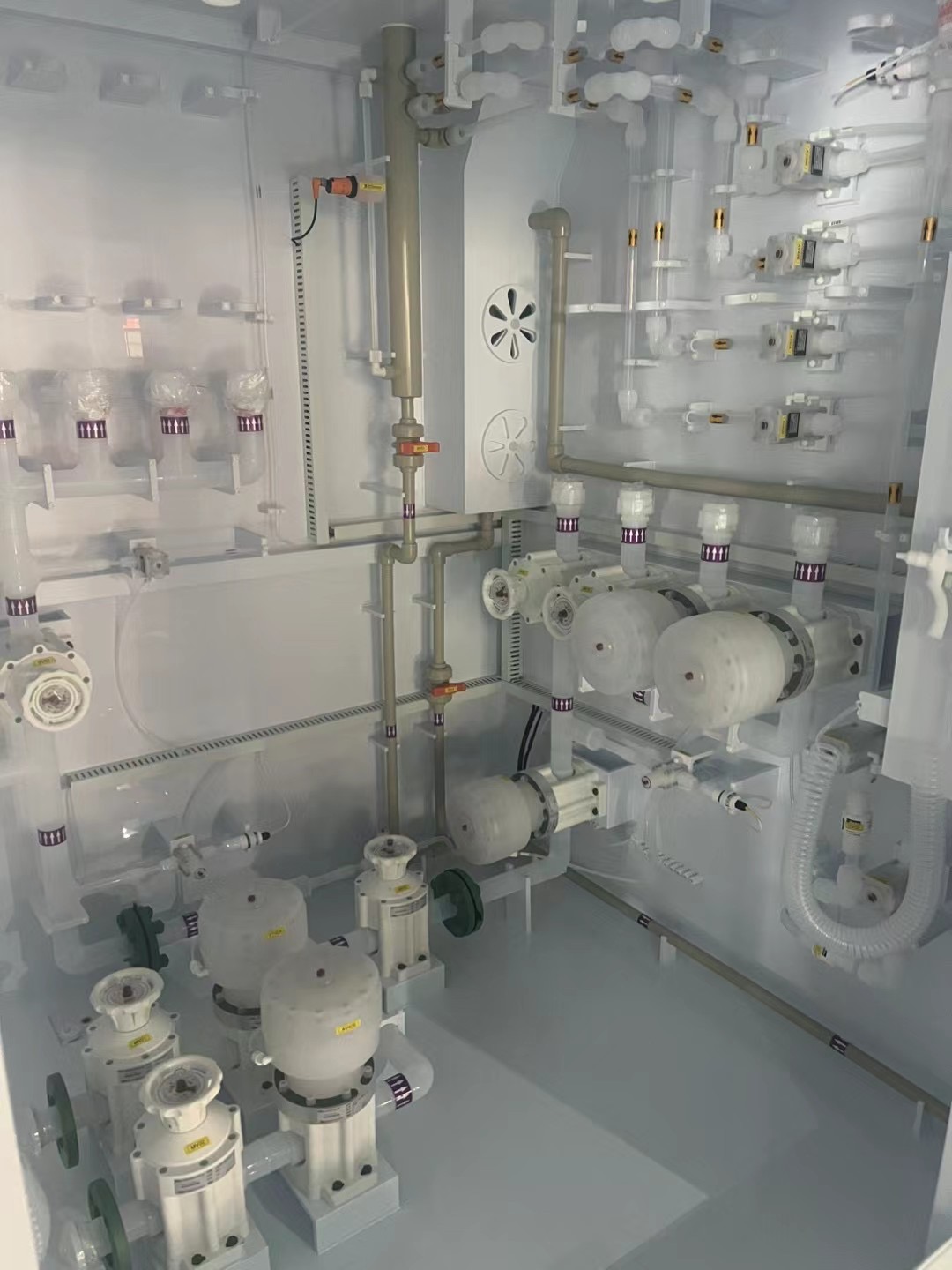
The storage cabinet safely houses chemical containers or drums.
Features include:
- Double containment
- Leak detection
- Ventilation system
- Fire-resistant construction
- Chemical compatibility
- Automatic container switching
2. Chemical Pumps
Specialized pumps transport chemicals while maintaining purity.
Common pump types include:
- Diaphragm pumps
- Bellows pumps
- Magnetic drive pumps
- Metering pumps
- Pneumatic pumps
Pump selection depends on chemical properties and required flow rates.
3. Filtration Module
Particles are among the leading causes of semiconductor defects.
High-performance filters remove:
- Metal particles
- Polymer residues
- Micro-particles
- Process contaminants
Typical filtration accuracy ranges from 0.003 μm to 0.1 μm.
4. Pressure Control System
Stable pressure is essential for precise chemical delivery.
The pressure control module includes:
- Pressure regulators
- Pressure transmitters
- Relief valves
- Automatic pressure control loops
5. Flow Control Module
Accurate flow regulation ensures process repeatability.
Components include:
- Mass flow meters
- Flow sensors
- Control valves
- Needle valves
- Precision metering devices
6. Chemical Mixing Module
Certain semiconductor processes require precise chemical blending.
Automated mixing systems maintain:
- Accurate concentration
- Uniform mixing
- Temperature stability
- Real-time ratio control
7. PLC and HMI Control System
Modern CDS platforms are fully automated.
Typical control functions include:
- Recipe management
- Alarm monitoring
- Data logging
- Remote operation
- Predictive maintenance
- Automatic startup and shutdown
Industrial communication protocols include:
- Ethernet/IP
- PROFINET
- Modbus TCP
- OPC UA
- SECS/GEM integration
Working Principle of a Chemical Delivery System
The CDS follows a carefully controlled process:
Step 1
High-purity chemicals are stored inside approved chemical containers.
Step 2
The chemical is transferred through high-purity tubing using precision pumps.
Step 3
Inline filtration removes particles before delivery.
Step 4
Pressure and flow sensors continuously monitor operating conditions.
Step 5
Control valves regulate delivery according to process requirements.
Step 6
The chemical reaches the semiconductor processing equipment with stable flow and purity.
Throughout the process, the PLC monitors alarms, leakage, pressure deviations, tank levels, and pump status.
Materials Used in Semiconductor Chemical Delivery Systems
Material compatibility is essential.
Common materials include:
Fluoropolymer Materials
- PFA
- PTFE
- PVDF
- FEP
Advantages:
- Excellent chemical resistance
- Low particle generation
- High purity
- Long service life
Stainless Steel
Ultra-high purity 316L stainless steel is commonly used for compatible chemicals.
Features include:
- Electropolished surfaces
- Low surface roughness
- Corrosion resistance
- High mechanical strength
High-Purity Valves
Critical valves include:
- Diaphragm valves
- Ball valves
- Check valves
- Solenoid valves
All wetted surfaces are selected for chemical compatibility.
Applications of Chemical Delivery Systems
Chemical Delivery Systems are widely used throughout semiconductor manufacturing.
Wet Cleaning
Delivering:
- SC-1 chemicals
- SC-2 chemicals
- HF
- Ozone water
- DI water
Photolithography
Supplying:
- Photoresist
- Developer
- Edge bead remover
- Solvents
Chemical Mechanical Planarization (CMP)
Providing:
- Slurries
- Oxidizers
- Cleaning agents
- Additives
Etching
Handling aggressive chemicals including:
- Hydrofluoric Acid
- Nitric Acid
- Buffered Oxide Etch
- Sulfuric Acid
Advanced Packaging
Supplying:
- Flux chemicals
- Cleaning chemicals
- Electroplating solutions
Key Safety Features
Safety is one of the highest priorities in CDS design.
Advanced systems include:
Leak Detection
Multiple sensors identify:
- Liquid leakage
- Vapor leakage
- Chemical spills
Automatic emergency shutdown is initiated when necessary.
Secondary Containment
Double-wall piping and containment trays prevent chemical release.
Automatic Emergency Shutdown
Emergency logic isolates the chemical source when abnormal conditions occur.
Gas Exhaust Integration
Chemical cabinets connect to exhaust systems that safely remove hazardous vapors.
Chemical Identification
RFID or barcode systems prevent incorrect chemical loading.
Advantages of Automated Chemical Delivery Systems
Compared with manual chemical handling, automated CDS solutions offer significant benefits.
Higher Product Yield
Stable chemical delivery improves process repeatability.
Improved Safety
Reduced operator exposure lowers workplace risks.
Lower Operating Costs
Automation minimizes chemical waste and labor costs.
Better Chemical Utilization
Precise dispensing reduces overconsumption.
Continuous Production
Automatic chemical changeover minimizes downtime.
Enhanced Data Traceability
Every transfer event can be recorded for quality management.
Design Considerations
Selecting the appropriate Chemical Delivery System requires careful engineering evaluation.
Important considerations include:
- Chemical compatibility
- Required flow rate
- Pressure range
- Cleanroom classification
- Number of process tools
- Future production expansion
- Automation level
- Facility utility connections
- Maintenance accessibility
- Compliance with SEMI standards
Customized CDS solutions are often developed based on specific fab layouts and process requirements.
Future Development Trends
Semiconductor manufacturing is moving toward smarter and more sustainable production.
Future Chemical Delivery Systems will increasingly incorporate:
Smart Monitoring
Artificial intelligence enables predictive maintenance and early fault detection.
Digital Twin Technology
Virtual models help optimize system performance before implementation.
IIoT Connectivity
Cloud-based monitoring provides real-time equipment status from anywhere.
Automated Chemical Inventory Management
Smart inventory systems automatically schedule chemical replacement before shortages occur.
Green Manufacturing
Future CDS designs aim to reduce:
- Chemical waste
- Energy consumption
- Water usage
- Carbon emissions
These innovations support environmentally responsible semiconductor manufacturing.
Choosing the Right Chemical Delivery System Supplier
Selecting an experienced CDS manufacturer is essential for long-term reliability.
Key evaluation criteria include:
- Semiconductor industry experience
- Engineering customization capabilities
- High-purity manufacturing standards
- Cleanroom assembly facilities
- Comprehensive quality control
- Compliance with SEMI and international safety standards
- Factory acceptance testing (FAT)
- Site acceptance testing (SAT)
- Installation and commissioning support
- Global after-sales service
A reputable supplier should also provide complete documentation, validation reports, operator training, preventive maintenance programs, and technical support throughout the equipment lifecycle.
Conclusion
A Chemical Delivery System (CDS) has become a fundamental infrastructure component in modern semiconductor manufacturing. By ensuring ultra-high purity chemical transfer, precise flow control, intelligent automation, and comprehensive safety protection, a CDS directly contributes to higher wafer yields, improved process stability, and reduced operating costs.
As semiconductor technologies continue advancing toward smaller geometries and increasingly complex production processes, the demand for highly automated, intelligent, and contamination-free Chemical Delivery Systems will continue to grow. Manufacturers investing in advanced CDS solutions today will be better positioned to achieve greater production efficiency, enhanced safety, and long-term competitiveness in the rapidly evolving semiconductor industry.
For more about a complete guide to chemical delivery systems (CDS) for semiconductor manufacturing, you can pay a visit to Jewellok at https://www.specialtygasregulator.com/product-category/specialty-gas-cabinet/ for more info.
-
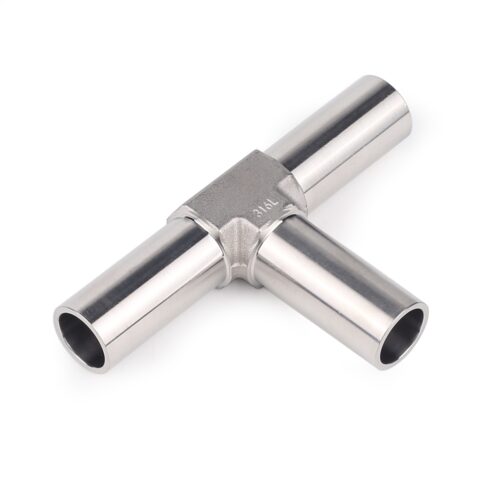
Stainless Steel Ultra Clean Welding Joint Fittings TW Series TRW Series & CW Series
-
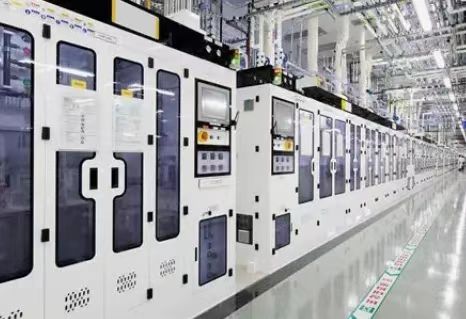
Automatic Chemical Delivery Module (CDM) and Chemical Delivery System (CDS) for Precise Point of Use Blending and Dilution
-
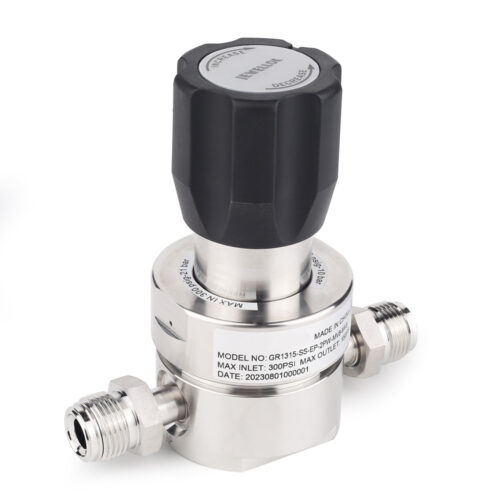
JR1300 Series Ultra High Purity Single Stage Regulator High Flow Line Regulator For Ultra High Purity Intermediate Flow
-
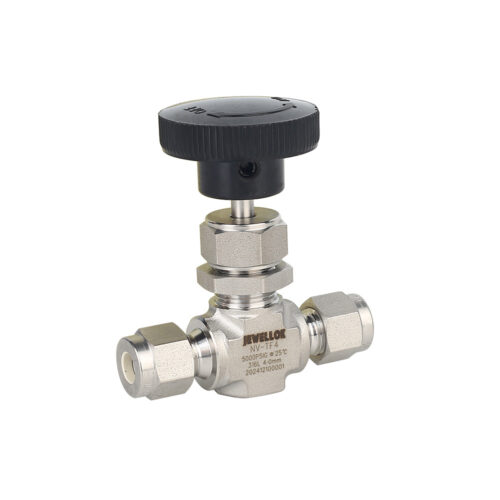
High Purity High Pressure Stainless Steel Needle Valve Natural Gas Flow Control Valve JNV Series
-
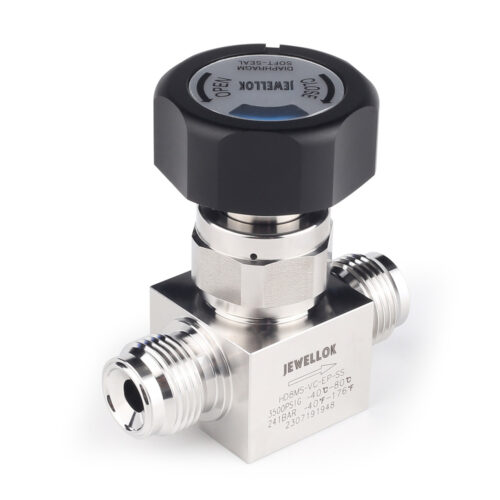
Stainless Steel Ultra High Purity (UHP) High Pressure Manual Diaphragm Valve
-
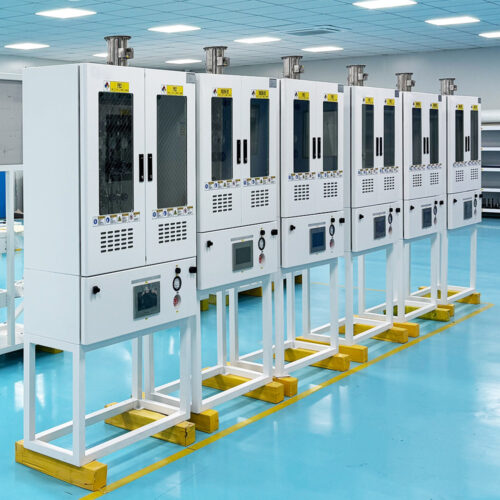
High Purity VMB Valve Manifold Box for Semiconductor Gas Distribution and Specialty Chemical Delivery Systems
-
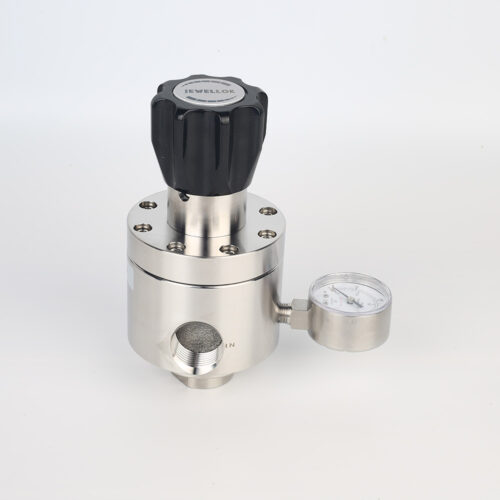
Low Pressure High Flow Line Pressure Regulators And Control Valves JSR-4L Series For Laboratory Pressure Control
-
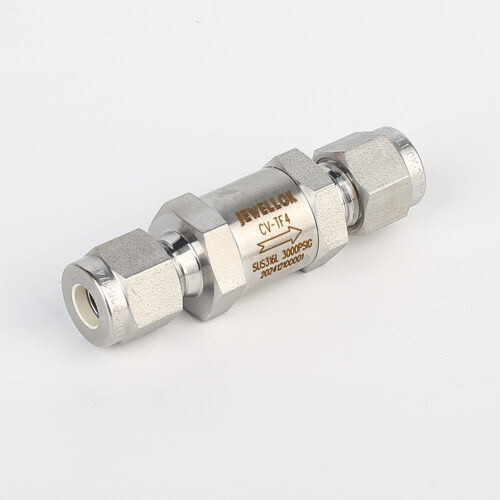
High Pressure High-Purity Welded Check Valves And Low Cracking Pressure Check Valve JCV1 Series