
Regulator Manufacturer Tel: +86 13380377051
Regulator Manufacturer Tel: +86 13380377051
How to Solve the Problem of pH Fluctuation in the Acid Gas Neutralization Scrubber
1. Introduction
Acid gas neutralization scrubbers are critical components in chemical process plants, power generation facilities, metallurgical refineries, and waste treatment plants. They are designed to absorb and neutralize acidic gas components—such as hydrogen chloride, sulfur dioxide, hydrofluoric acid , and nitrogen oxides —from flue or exhaust air streams before atmospheric discharge.
A central operational requirement of a wet chemical scrubber is maintaining the liquid absorbent’s pH within a tightly defined control band. However, process engineers and instrumentation technicians frequently encounter two interconnected operational challenges: severe pH fluctuation and automatic chemical dosing lag.
When pH control breaks down:
-
Under-dosing (Low pH) leads to incomplete acid gas absorption, regulatory environmental discharge violations, rapid equipment corrosion, and downstream ductwork degradation.
-
Over-dosing (High pH) results in severe chemical reagent waste (e.g., sodium hydroxide or lime slurry), scaling and precipitation inside spray nozzles and packing materials, increased wastewater neutralization costs, and potential chemical carryover.
Addressing these challenges requires a comprehensive understanding of physical scrubber dynamics, non-linear chemical titration kinetics, sensor response delays, and advanced control strategy implementations.
2. Root Cause Analysis: Why pH Fluctuation and Dosing Lag Occur
Solving process instability requires isolating its primary physical, chemical, and control system drivers.
+-----------------------------------------------------------------------------------+
|                                 ROOT CAUSES                                       |
+--------------------------+--------------------------+-----------------------------+
|    Chemical Dynamics     |    Physical Hydrodynamics|   Control System Delays     |
+--------------------------+--------------------------+-----------------------------+
| • Highly non-linear      | • Large sump volumes     | • Sensor transport lag      |
|   titration curve        | • Inadequate mixing      | • Electrode response drift  |
| • Low buffer capacity    | • Non-uniform liquid     | • Over-tuned PID parameters |
| • Acid load spikes       |   distribution           |   (Pure Feedback Lag)       |
+--------------------------+--------------------------+-----------------------------+
A. Non-Linear Chemical Kinetics and Buffering Capacity
The relationship between acid/base dosing and pH is inherently non-linear, governed by the logarithmic definition of pH:
pH = -log10[H+]
Near the neutral point, the titration curve exhibits an extremely steep slope (high process gain). A microscopic addition of caustic reagent causes a massive, exponential jump in pH. Conversely, at extreme pH ranges, large amounts of reagent yield negligible changes in pH. Furthermore, if the recirculating liquor lacks natural buffering agents (such as carbonates or bicarbonates), the process gain becomes excessively high and unpredictable, exacerbating oscillations.
B. Transport Delays and Hydraulic Dead Time
Dosing lag is primarily a physical and hydraulic transportation issue. The total dead time in a typical acid gas neutralization scrubber loop consists of:
-
Dosing Line Transport Time: The time taken for the dosing valve/pump to deliver chemical into the sump or recirculation line.
-
Mixing Time : The time required for the injected chemical to completely blend into the bulk liquid volume in the sump.
-
Recirculation Loop Delay: The time required for the treated liquid to pass through recirculation pumps, spray headers, packing media, and return to the sump.
-
Sample Line Transport Time: The time required for the liquid sample to reach the pH sensor probe.
When total loop delay exceeds 30-60 seconds, a conventional control loop operates on outdated information, leading to severe overshoot and undershoot.
C. Sensor Dynamics and Measurement Fouling
pH electrodes suffer from inherent measurement lag due to glass membrane impedance and reference junction diffusion limits. In industrial scrubbers, additional sensor lag is introduced by:
-
Biofouling, mineral scaling, or particulate coating on the glass sensing bulb.
-
Reduced sample line flow velocity.
-
Aged electrodes experiencing slow electromotive response (>15-30 seconds to reach 90 response).
D. Volatile Flue Gas Feed Disturbances
Upstream process fluctuations produce rapid, step-change variations in acid gas concentration and gas flow rate. A feedback-only controller cannot react to an incoming load spike until after the unneutralized acid has already lowered the sump pH, initiating a delay-driven process disturbance cycle.
3. Physical and Mechanical Modifications
Control algorithms cannot compensate entirely for poor hydraulic design. System modifications must be applied first to minimize physical transport delays and optimize liquid blending.
          +-------------------------------------------------------+
          |                   PACKED TOWER                        |
          |                   NEUTRALIZATION                      |
          |                      SCRUBBER                         |
          +-------------------------------------------------------+
                                    |
                                    | Flue Gas Outlet
                                    v
                          [ Spray Nozzles / Headers ]
                                    |
                            [ Packing Media ]
                                    |
                                    v
     +---------------------------------------------------------------+
     |                         SCRUBBER SUMP                         |
     |                                                               |
     |      +---------------------+      +--------------------+      |
     |      |  In-Tank Agitator   |      | Mechanical Baffling|      |
     |      +---------------------+      +--------------------+      |
     +---------------------------------------------------------------+
                                    |
                                    | Recirculation Pump
                                    v
                =========================================
                |     In-Line Static Mixer Insertion    |
                =========================================
                        ^                       ^
                        |                       |
               [ Chemical Dosing Injection ]   [ In-Line pH Sensor ]
In-Line Static Mixer Insertion
Injecting neutralizing chemicals directly into a large sump results in excessive mixing dead time.
-
Solution: Relocate the chemical injection point directly into the main liquid recirculation pipe upstream of a high-efficiency in-line static mixer. Static mixers generate turbulent shear forces that homogenize the chemical reagent into the bulk stream within milliseconds, virtually eliminating mixing lag before re-injection into the tower headers.
Sump Baffling and Agitation Optimization
Large rectangular or cylindrical sumps often develop unmixed dead zones and short-circuiting flow paths.
-
Install vertical anti-vortex baffles and high-efficiency mechanical top-entry agitators or liquid eductor nozzles inside the sump.
-
Ensure the turnover rate of the sump volume matches process dynamics (typically 3 to 5 volume turnovers per hour).
Optimized Sensor Placement and Sampling Loops
-
Place pH probes in a dedicated fast-sampling bypass loop off the main recirculation header immediately downstream of the static mixer (ensuring adequate distance for complete mixing, typically 10 to 15 pipe diameters).
-
Keep sample lines short (<1 meter) and maintain sample fluid velocities above 1.5m/s to minimize transport time and prevent solids settling on the electrode face.
4. Advanced Control System Strategies
Standard Single-Loop PID controllers are inherently ill-suited for processes dominated by non-linear gain and long dead times. To achieve stable, tight pH control, multi-layered control architectures are required.
+-----------------------------------------------------------------------------------+
|                        ADVANCED CONTROL ARCHITECTURE                              |
+-----------------------------------------------------------------------------------+
|                                                                                   |
|  [ Gas Flow Meter ] + [ Inlet Gas Analyzer ] ----(Feedforward signal)----+        |
|                                                                          |        |
|                                                                          v        |
|  [ Recirculation pH Sensor ] ------(Feedback)------> [ Controller ] ----> [ Dosing |
|                                                                    Pump ] |
|                                                                                   |
+-----------------------------------------------------------------------------------+
A. Feedforward Control with Mass Balance Strategy
Feedforward control takes preventive action before a pH disturbance reaches the sump.
-
Measure upstream disturbance variables in real time:
-
Exhaust gas flow rate
-
Inlet acid gas concentration
-
-
Calculate the theoretical stoichiometric chemical demand:
Freagent = k . Qg .Cacid
-
Feed this demand directly to the chemical dosing pump speed/stroke controller. The feedback pH controller then only needs to trim small errors caused by modeling inaccuracies or secondary reactions.
B. Adaptive PID and Gain Scheduling
Because process gain changes by orders of magnitude across the pH spectrum, fixed PID settings cause either sluggish response or continuous hunting/oscillation.
-
Gain Scheduling: Define different controller gain values for different pH bands.
-
Near setpoint : Low gain to prevent violent over-dosing due to the steep slope.
-
Far from setpoint : Higher gain to rapidly drive the system back toward neutrality.
-
-
Non-Linear PID Algorithms: Utilize a characterization function that modifies the error signal (e(t)) dynamically:
emodified (t) = f(e(t))
This linearizes the controller’s internal response relative to the titration curve.
C. Smith Predictor and Model Predictive Control (MPC)
For systems where physical transport lag cannot be reduced below 30 seconds:
-
Smith Predictor: Implements an internal dynamic model of the process dead time within the controller. It predicts the future pH response before the physical sensor sees it, allowing higher feedback gains without triggering instability.
-
Model Predictive Control (MPC): Uses multivariable process models to calculate optimal dosing profiles, taking into account valve actuator limits, recirculation times, and multi-stage scrubber interactions.
5. Chemical Reagent and Buffer Optimization
Modifying chemical parameters can flatten steep titration curves and reduce dynamic process sensitivity.
| Factor | Standard Approach | Optimized Approach | Operational Benefit |
| Reagent Selection | 25%-50% Sodium Hydroxide (NaOH) | Dual-Reagent / Multi-stage Dosing (Na2\CO3 or Ca(OH)2) | Smoother neutralization curve; reduced risk of sudden pH spikes. |
| Reagent Concentration | Concentrated bulk dosing (50% NaOH) | In-line diluted caustic (5\%-10% NaOH) | Prevents localized over-saturation and high-gain concentration spikes. |
| Buffering | Unbuffered water makeup | Carbonate/Bicarbonate system (pH 6.5-7.5) | Creates a chemical buffer zone, drastically reducing slope steepness near setpoint. |
Dual-Reagent Dosing Concept
For high-concentration acid gas streams, implement a two-stage dosing scheme:
-
Coarse/Primary Stage: Uses a lower-cost, slower-reacting reagent or lower concentration stream to absorb 80-90% of acid load, driving pH from acidic levels up to sim pH 4.5-5.5.
-
Fine/Trimming Stage: Uses highly diluted caustic (NaOH5%) controlled via fine-pulse metering pumps to bring the liquor to the final setpoint (pH 7.0-7.5).
6. Sensor, Calibration, and Maintenance Protocols
Instrumentation integrity is fundamental to eliminating artificial measurement lag and signal drift.
1. Probe Selection and Installation
-
Flat-Glass / Flush-Bulb Electrodes: High-velocity liquids clean flat bulb surfaces naturally, reducing particulate accumulation and biofouling.
-
Double / Triple Junction Reference Cells: Protects against poisoning from sulfide , chloride, or heavy metal ions.
-
Integrated Temperature Compensation (Pt100/Pt1000): Real-time automatic temperature compensation (ATC) is mandatory, as liquid temperatures in scrubbers fluctuate significantly with gas load changes.
2. Automated Cleaning and Diagnostic Maintenance
-
Ultrasonic / Water-Jet Auto-Cleaning: Install automated automated washing systems that pulse dilute acid or high-pressure water across the sensor tip every 4 to 8 hours to maintain fast response times.
-
Regular Buffer Calibration Routine: Conduct 2-point or 3-point automated buffer calibrations (e.g., pH 4.01, 7.00, 10.01) at bi-weekly intervals. Replace probes when slope efficiency drops below 85%-90% of theoretical Nernstian slope (59.16 mV/p H unitat 25℃).
7. Implementation Roadmap and Troubleshooting Guide
To systematically resolve pH volatility and dosing lag in existing operational facilities, follow this step-by-step diagnostic matrix:
                  +-----------------------------------+
                  |  OBSERVED SYMPTOM DIAGNOSIS       |
                  +-----------------------------------+
                                    |
          +-------------------------+-------------------------+
          |                                                   |
          v                                                   v
[ Constant pH Cycling/Oscillation ]               [ Slow pH Recovery / Lag ]
          |                                                   |
          +---> Check for high loop dead time                 +---> Inspect sensor for fouling
          +---> Verify gain scheduling is active              +---> Verify dosing pump sizing
          +---> Dilute caustic reagent concentration          +---> Add feedforward controller
Comprehensive Step-by-Step Implementation Steps
-
Step 1: Audit System Dead Time: Measure the time interval between a manual step-change in dosing pump output and the initial response observed at the pH transmitter. If dead time exceeds 30 seconds, prioritize physical mixing changes (in-line mixer, sample loop relocation).
-
Step 2: Linearize Control Dynamics: Implement gain scheduling or non-linear error functions in the PLC/DCS software to account for titration curve non-linearity.
-
Step 3: Integrate Disturbance Feeds: Connect inlet gas flow meters and acid gas analyzers to the controller to implement feedforward trim.
-
Step 4: Standardize Sensor Maintenance: Establish automated washing cycles and strict electrode slope tracking protocols.
8. Conclusion
Resolving pH fluctuations and automatic chemical dosing lag in acid gas neutralization scrubbers requires an integrated approach addressing fluid dynamics, chemical kinetics, and process automation. Mechanical enhancements—such as installing in-line static mixers and optimizing fast sensor loops—substantially eliminate physical transport dead time. Concurrently, advanced control architectures—combining feedforward loops, gain scheduling, and predictive models—effectively manage the non-linear titration behavior of neutralization processes.
By systematically applying these engineering solutions, plant operators can achieve tight pH control, eliminate regulatory emission exceedances, minimize chemical consumption, and prolong equipment operational lifespan.
For more about how to solve the problem of pH fluctuation in the acid gas neutralization scrubber, you can pay a visit to Jewellok at https://www.specialtygasregulator.com/product-category/specialty-gas-cabinet/ for more info.
-
Integrated Gas Delivery Solutions with VMB Valve Manifold Box and Automatic Gas Switchover Systems for Industrial
-
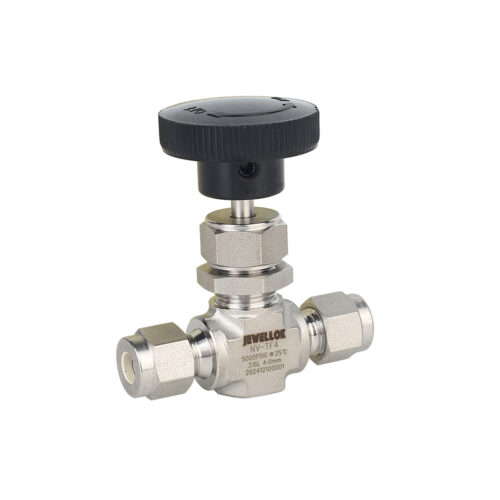
High Purity High Pressure Stainless Steel Needle Valve Natural Gas Flow Control Valve JNV Series
-
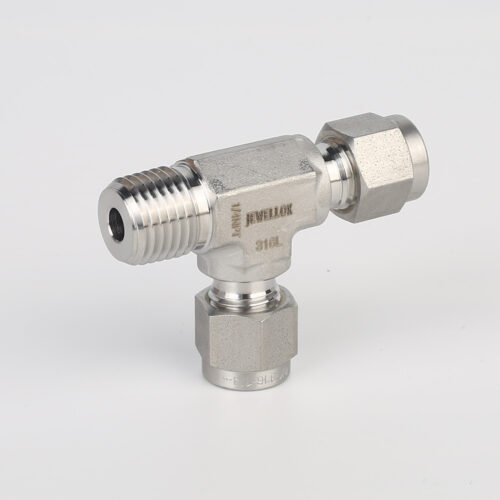
771L Male Run Tee | Stainless Steel High Quality High Purity Male Run Tee Branch Tee Pipe Fittings
-
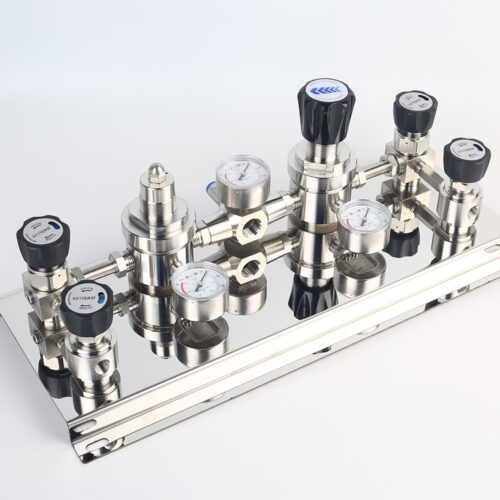
Stainless Steel Single Stage Semiconductor Grade Pressure Control Module Pressure Control Panels JSP-6A Series
-
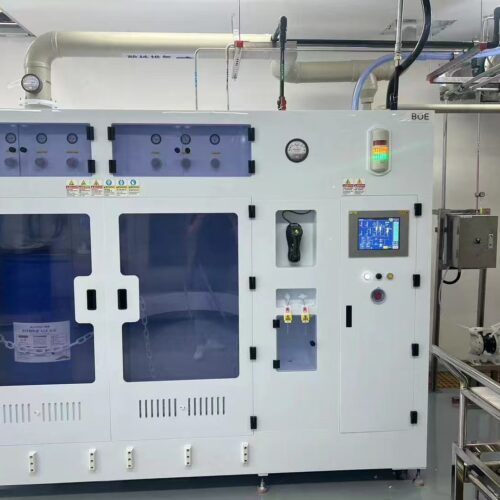
UHP Liquid Chemical Delivery Systems for Semiconductor Fabrication and Photovoltaic Manufacturing Processes
-
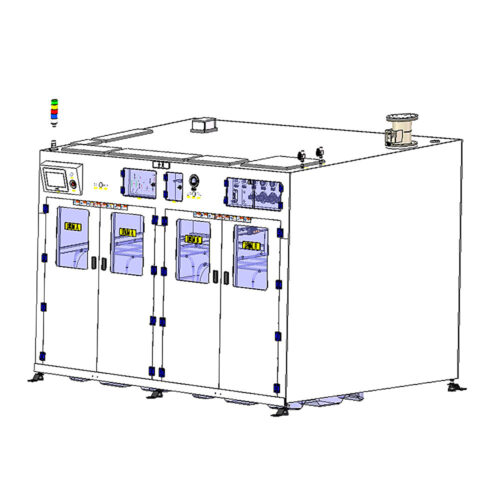
High Purity Chemical Dispense System & Packing System For Semiconductors JW-200L-CDM & JW-1000L-CDM
-
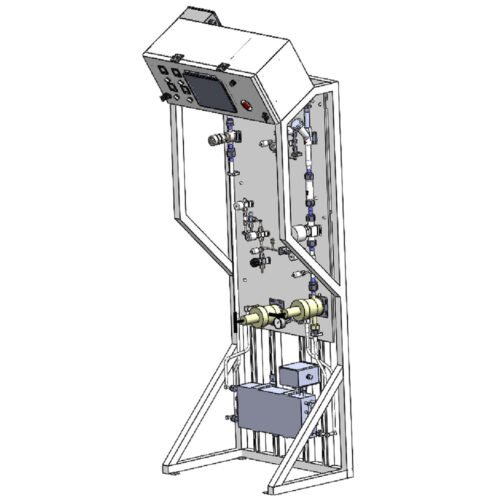
High Purity High Pressure Specialty Gas Bottle Gas Cylinder Storage Cabinet And Gas Pressure Regulating Cabinet For Semiconductor
-
Chemical Delivery Modules for Automated Blending and Precise Dilution in Modern Wafer Cleaning Applications