
Regulator Manufacturer Tel: +86 13380377051
Regulator Manufacturer Tel: +86 13380377051
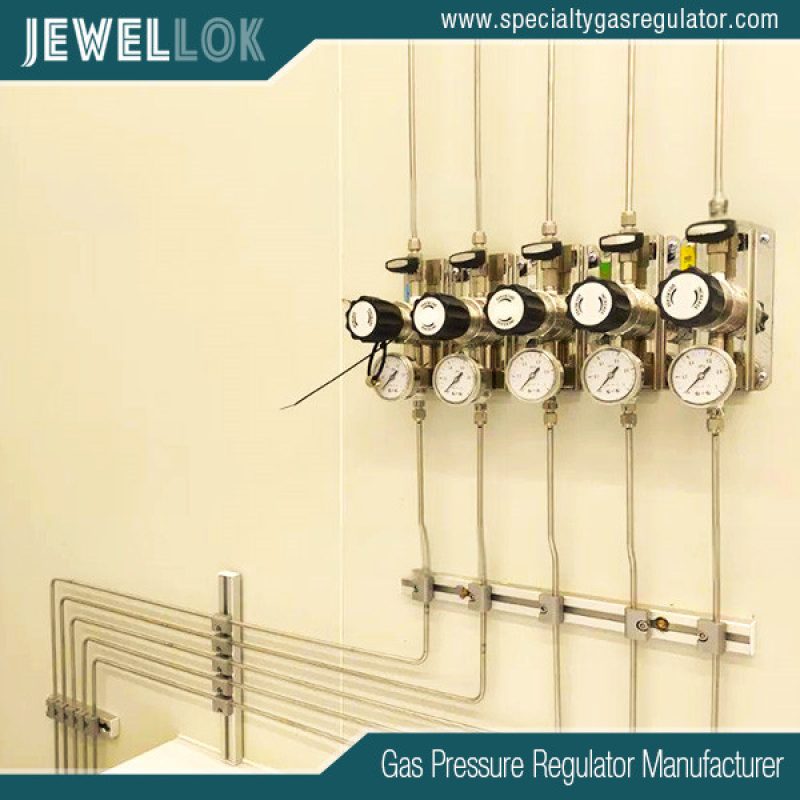
Why Is a Metal Diaphragm Essential for Ultra Clean Gas Pressure Regulators?
1. Introduction
In semiconductor manufacturing, photovoltaic production, pharmaceutical processing, laboratory applications, and other high-purity industries, gas pressure control is not simply a matter of maintaining a stable outlet pressure. The gas must also remain free from particles, moisture, hydrocarbons, and other contaminants that could affect product quality, process consistency, or equipment reliability.
Ultra clean gas pressure regulators are designed to control the pressure of high-purity and specialty gases while minimizing contamination throughout the gas delivery process. Among their critical internal components, the metal diaphragm plays an essential role. It separates the gas flow path from the regulator’s mechanical operating mechanism while responding precisely to pressure changes.
Compared with conventional elastomeric diaphragms, a properly designed metal diaphragm offers advantages in gas compatibility, cleanliness, leak prevention, pressure stability, and long-term reliability. These characteristics make it particularly important in ultra-high-purity (UHP) gas systems.
This article explains why metal diaphragms are essential for ultra clean gas pressure regulators, how they work, which materials are commonly used, and what engineers should consider when selecting a regulator for demanding gas delivery applications.
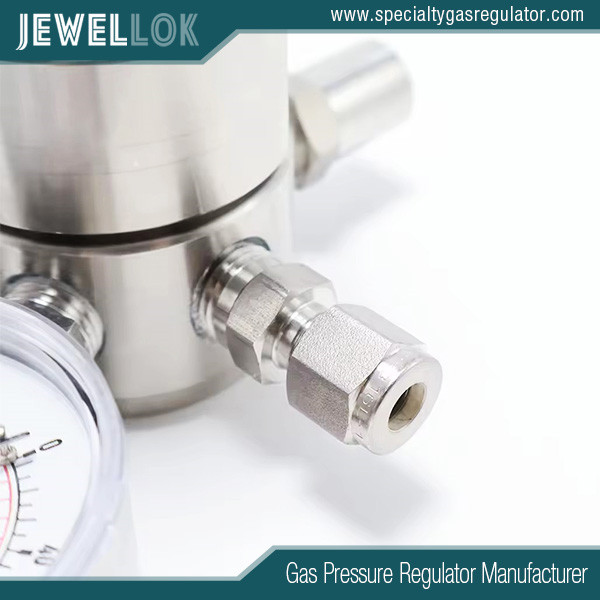
2. What Is a Metal Diaphragm in an Ultra Clean Gas Pressure Regulator?
A metal diaphragm is a thin, flexible metallic membrane installed inside a pressure regulator. It responds to pressure differences and transfers mechanical force to the regulator’s control mechanism without allowing the process gas to contact the external spring or adjustment components.
In a typical pressure regulator, the diaphragm works together with a spring, sensing chamber, valve stem, and seat assembly. These components continuously balance the gas pressure against the mechanical force applied by the adjustment spring.
When the downstream pressure changes, the diaphragm moves accordingly. This movement adjusts the valve opening and controls the amount of gas entering the downstream system.
In an ultra clean regulator, the diaphragm has an additional responsibility: protecting the gas from contamination generated by mechanical components, sealing materials, or environmental exposure.
The diaphragm therefore serves two important functions:
- Pressure sensing and control: It responds to pressure variations and helps maintain a stable outlet pressure.
- Contamination isolation: It separates the high-purity gas from non-wetted mechanical components, reducing potential contamination pathways.
The diaphragm is not simply a flexible sealing component. It is a critical part of the regulator’s pressure-control and gas-purity design.
3. Why Is a Metal Diaphragm Essential for Ultra Clean Gas Regulators?
3.1 Minimizing Gas Contamination
Gas purity is one of the most important requirements in semiconductor and other high-purity manufacturing environments.
Even trace amounts of moisture, hydrocarbons, particles, or metallic contaminants can affect sensitive processes. For example, semiconductor fabrication uses specialty gases in deposition, etching, cleaning, and other processes where contamination may cause defects or reduce production yield.
Traditional elastomeric diaphragms may introduce contamination risks through material outgassing, permeation, aging, or chemical interaction with certain gases.
A suitable metal diaphragm can reduce these risks because it generally has lower gas permeability and lower outgassing potential than many elastomeric materials.
This helps maintain the purity of gases such as:
- Ultra-high-purity nitrogen (N₂)
- Argon (Ar)
- Helium (He)
- Hydrogen (H₂)
- Oxygen (O₂)
- Specialty process gases
- Selected corrosive or reactive gases, when the material and regulator design are qualified for the application
However, a metal diaphragm alone does not guarantee ultra-high gas purity. The entire regulator must be designed and manufactured for clean service, including its body material, surface finish, internal geometry, cleaning procedures, assembly environment, and sealing components.
3.2 Reducing Permeation and Outgassing
Permeation occurs when gas molecules pass through a material. Outgassing refers to the release of trapped or absorbed gases from material surfaces.
Both phenomena can compromise gas purity.
Elastomeric materials may allow certain gases or atmospheric moisture to migrate through the diaphragm. They may also release volatile compounds under particular temperature, pressure, or vacuum conditions.
Metal diaphragms generally provide a much stronger barrier against gas permeation. Properly manufactured metal membranes also have low outgassing characteristics when cleaned and processed appropriately.
This is particularly valuable in systems that require extremely low moisture and oxygen levels.
For example, in a semiconductor gas distribution system, unwanted moisture entering the process gas may contribute to oxidation, surface contamination, or process instability. A suitable metal diaphragm helps reduce one potential source of contamination.
3.3 Improving Chemical Compatibility
Specialty gases used in industrial and semiconductor applications can have very different chemical properties. Some are inert, while others are corrosive, toxic, oxidizing, or highly reactive.
A diaphragm material must withstand the gas environment without excessive corrosion, deformation, embrittlement, or other forms of degradation.
Metal diaphragms can be manufactured from carefully selected alloys to meet specific gas compatibility requirements.
Common material options include:
- 316L stainless steel
- 316L stainless steel with controlled material processing
- Nickel-based alloys
- Other specialized corrosion-resistant alloys
The appropriate material depends on the gas type, concentration, operating temperature, pressure conditions, and exposure duration.
For example, 316L stainless steel is widely used in high-purity gas equipment because of its corrosion resistance and availability in controlled-purity grades. However, it is not universally compatible with every specialty gas. More aggressive chemical environments may require alternative alloys or additional compatibility testing.
Selecting the wrong diaphragm material can lead to corrosion, leakage, contamination, or premature failure.
3.4 Providing Reliable Pressure Control
An ultra clean gas regulator must maintain a consistent outlet pressure even when inlet pressure or downstream gas demand changes.
The metal diaphragm acts as the regulator’s pressure-sensing element. Its movement controls the valve assembly and helps maintain the desired pressure balance.
A properly engineered diaphragm provides predictable mechanical response and repeatable movement.
Important design characteristics include:
- Diaphragm thickness
- Diameter and effective sensing area
- Material elasticity
- Surface condition
- Corrugation or formed geometry
- Fatigue resistance
- Operating pressure range
If the diaphragm is too stiff, the regulator may become less responsive to small pressure changes. If it is too flexible or improperly designed, it may experience excessive movement, fatigue, or unstable pressure regulation.
Therefore, diaphragm geometry and material properties must be matched to the regulator’s intended operating range.
3.5 Reducing the Risk of External Leakage
Leak prevention is especially important when handling toxic, corrosive, flammable, or expensive specialty gases.
A properly designed metal diaphragm creates a barrier between the process gas and the regulator’s spring chamber. This can reduce leakage pathways associated with dynamic seals and moving components.
Unlike a conventional sliding seal, a diaphragm can flex to transmit force without requiring the same type of sliding contact across the gas boundary.
This design can improve sealing reliability and reduce the potential for external gas leakage.
However, actual leakage performance depends on the complete regulator construction, including diaphragm attachment, weld quality, valve-seat design, body connections, and manufacturing inspection.
For critical applications, buyers should request documented leak-test methods and acceptance criteria rather than relying only on general descriptions such as “leak-tight” or “zero leakage.”
4. How Does a Metal Diaphragm Work Inside an Ultra Clean Gas Regulator?
A metal diaphragm operates through the balance of gas pressure and mechanical spring force.
A typical pressure-control process involves the following steps.
Step 1: High-pressure gas enters the regulator
Gas flows from the cylinder, gas cabinet, or upstream supply line into the regulator inlet. The inlet pressure may be significantly higher than the required downstream operating pressure.
Step 2: The adjustment spring applies force
The regulator’s adjustment mechanism compresses the spring, applying a controlled force to the diaphragm assembly. This force establishes the desired outlet pressure setting.
Step 3: The diaphragm responds to downstream pressure
As gas enters the regulator’s sensing chamber, the downstream pressure acts on the diaphragm. The diaphragm moves according to the balance between gas pressure and spring force.
Step 4: The valve opening adjusts
The diaphragm movement is transferred to the valve mechanism. Depending on the pressure balance, the valve opens further or moves toward a more restricted position.
Step 5: Outlet pressure stabilizes
When downstream pressure reaches the required setting, the forces acting on the diaphragm approach equilibrium. The regulator then adjusts the gas flow as demand changes.
This continuous mechanical response helps maintain stable pressure delivery.
In a two-stage regulator, two pressure-reduction mechanisms work in sequence. This arrangement can improve outlet-pressure stability when inlet pressure decreases during cylinder depletion or when supply pressure fluctuates.
5. Common Metal Diaphragm Materials for Ultra Clean Applications
Material selection directly affects the regulator’s cleanliness, mechanical performance, corrosion resistance, and service life.
| Material | Main characteristics | Typical considerations |
|---|---|---|
| 316L stainless steel | Good corrosion resistance and cleanability | Widely used in high-purity gas equipment; compatibility must be checked for each gas |
| 316L VIM-VAR stainless steel | Controlled material processing and improved material consistency | Useful where stringent material quality and traceability are required |
| Nickel-based alloys | High resistance to selected corrosive environments | Suitable alloy selection depends on the gas chemistry and operating conditions |
| Other specialty alloys | Can provide specific chemical or mechanical properties | Requires application-specific qualification |
316L VIM-VAR refers to 316L stainless steel processed using Vacuum Induction Melting (VIM) followed by Vacuum Arc Remelting (VAR). These processes can help improve material cleanliness and consistency by controlling impurities and inclusions.
For demanding semiconductor gas applications, material traceability, surface condition, and manufacturing controls are important considerations.
Nevertheless, VIM-VAR processing does not automatically make a component suitable for every UHP application. The finished diaphragm must still meet the regulator manufacturer’s specifications for cleanliness, mechanical properties, and gas compatibility.
6. Metal Diaphragm vs. Elastomer Diaphragm
Both metal and elastomer diaphragms are used in pressure-control equipment. Their suitability depends on the application.
| Comparison | Metal diaphragm | Elastomer diaphragm |
|---|---|---|
| Gas permeation | Generally very low | Depends on elastomer type; may be higher |
| Outgassing | Generally low when properly processed | May release volatile compounds |
| Chemical resistance | Depends on alloy selection | Depends on elastomer formulation |
| Mechanical response | Depends on thickness and geometry | Often highly flexible |
| High-purity applications | Commonly preferred for demanding UHP service | Used in less demanding or specifically qualified applications |
| Temperature performance | Depends on alloy and design | Limited by elastomer temperature rating |
| Fatigue behavior | Requires control of cyclic stress and forming quality | Subject to aging, compression set, and chemical degradation |
For applications where gas purity is critical, metal diaphragms are generally preferred because they offer a more effective barrier against permeation and can reduce contamination risks.
However, metal diaphragms are not automatically superior in every operating condition. Elastomer diaphragms may provide advantages in certain low-pressure applications, cost-sensitive equipment, or designs requiring particular flexibility.
The final choice should be based on gas compatibility, pressure range, cleanliness requirements, response characteristics, and service-life expectations.
7. Important Design Requirements for UHP Metal Diaphragms
A metal diaphragm must satisfy more than basic pressure resistance. Several engineering factors determine whether it can perform reliably in an ultra clean regulator.
7.1 Surface Finish and Cleanliness
The gas-contacting surface should have a controlled finish suitable for the intended purity level.
A smooth, properly processed surface can reduce particle retention and make cleaning more effective.
Depending on the application, manufacturers may specify electropolishing, precision finishing, ultrasonic cleaning, or other controlled cleaning procedures.
The exact surface-finish requirement should be established by the equipment design and customer specification.
7.2 Welding and Sealing Quality
The diaphragm must be securely integrated into the regulator assembly.
Poor welding or joining quality may create leakage paths, stress concentrations, or contamination sources.
Manufacturing controls should address weld consistency, surface integrity, dimensional accuracy, and leak testing.
7.3 Fatigue Resistance
During operation, the diaphragm repeatedly flexes in response to pressure changes.
This repeated movement creates cyclic mechanical stress. If the diaphragm is poorly designed or operated beyond its specified range, fatigue cracks may develop.
Engineers should consider:
- Maximum inlet pressure
- Outlet pressure range
- Pressure cycling frequency
- Operating temperature
- Diaphragm thickness
- Material fatigue characteristics
A properly designed diaphragm should withstand the expected operating cycles without losing its pressure-control performance.
7.4 Low Particle Generation
Particle contamination can be especially damaging in semiconductor manufacturing.
The diaphragm should be manufactured and assembled to minimize particle generation caused by friction, deformation, corrosion, or surface damage.
A diaphragm-based design can reduce the need for certain dynamic sealing interfaces, but the entire regulator still requires suitable particle-control measures.
8. Applications of Metal Diaphragm Ultra Clean Gas Pressure Regulators
Metal diaphragm regulators are commonly used in applications where gas purity, pressure stability, and leak control are essential.
Semiconductor Manufacturing
Semiconductor fabrication uses high-purity and specialty gases in processes such as chemical vapor deposition (CVD), atomic layer deposition (ALD), plasma etching, and chamber cleaning.
Metal diaphragm regulators help control gas pressure while minimizing contamination risks in gas cabinets, valve manifold boxes (VMBs), and gas distribution panels.
Photovoltaic Manufacturing
Solar cell manufacturing uses process gases and controlled gas mixtures in several production stages.
Stable pressure delivery helps maintain repeatable process conditions, while clean gas handling helps protect sensitive manufacturing equipment.
Pharmaceutical and Biotechnology Production
Certain pharmaceutical and biotechnology processes require clean gas supplies for equipment operation, process control, or specialized manufacturing environments.
Regulator material selection and cleaning requirements should be matched to the gas and applicable process standards.
Laboratory and Analytical Equipment
High-purity gases are used in gas chromatography, mass spectrometry, calibration systems, and other analytical applications.
A suitable metal diaphragm regulator can help provide stable gas pressure while reducing contamination introduced by the pressure-control assembly.
9. How to Select the Right Metal Diaphragm Gas Pressure Regulator
Selecting an ultra clean regulator requires a complete understanding of the operating conditions.
1. Identify the gas type
Confirm the exact gas, concentration, and mixture composition. Check the compatibility of the diaphragm alloy, regulator body, valve seat, and other wetted components.
2. Confirm inlet and outlet pressure
Determine the maximum and minimum inlet pressures, required outlet pressure range, and expected downstream pressure.
Do not select a regulator based only on its outlet-pressure rating. Its maximum inlet pressure and flow capacity are equally important.
3. Determine the required gas purity
Establish the required purity level and acceptable contamination limits for moisture, oxygen, particles, and hydrocarbons.
Choose a regulator with documented materials, cleaning procedures, and cleanliness controls appropriate for the application.
4. Evaluate flow capacity
The regulator must deliver sufficient gas flow under actual operating conditions. Consider the required flow rate, pressure differential, gas properties, and downstream demand.
5. Check diaphragm material and construction
Request details about diaphragm material, manufacturing process, surface treatment, and compatibility testing.
For demanding applications, ask whether material certificates and traceability documentation are available.
6. Verify leakage and performance specifications
Review the manufacturer’s external leak-rate specifications, pressure stability data, operating temperature range, and maintenance recommendations.
Where necessary, request test reports for pressure cycling and long-term performance.
10. Common Problems Associated with Metal Diaphragms
Although metal diaphragms offer important advantages, they still require proper design, installation, and maintenance.
Common problems include:
- Diaphragm fatigue: Repeated pressure cycling can gradually damage the diaphragm.
- Corrosion: An incompatible alloy may deteriorate when exposed to reactive or corrosive gases.
- Pressure instability: Incorrect diaphragm dimensions, contamination, or valve-seat wear may cause outlet-pressure fluctuations.
- External leakage: Defective welds, damaged connections, or improper installation may compromise sealing.
- Reduced responsiveness: Mechanical damage, contamination, or incorrect regulator adjustment may affect pressure-control performance.
If a regulator shows unstable outlet pressure, unexplained pressure rise, leakage, or unusual operating behavior, it should be inspected according to the manufacturer’s maintenance procedure.
Regulators used with toxic, corrosive, flammable, or pyrophoric gases should be handled only by qualified personnel using appropriate isolation, purging, and safety procedures. A damaged diaphragm should not be repaired through improvised methods.
11. Conclusion
A metal diaphragm is an essential component of an ultra clean gas pressure regulator because it combines precise pressure sensing with effective isolation of the process gas from the regulator’s mechanical operating mechanism.
Compared with many conventional elastomeric diaphragms, a properly selected and manufactured metal diaphragm can provide lower gas permeation, reduced outgassing, improved chemical compatibility, reliable sealing, and stable pressure-control performance.
These advantages make metal diaphragm regulators particularly valuable in semiconductor manufacturing, specialty gas delivery, photovoltaic production, analytical laboratories, and other applications requiring stringent gas purity.
However, the diaphragm is only one part of a complete ultra clean regulator. Overall performance also depends on the regulator body, valve seat, wetted materials, surface finish, cleaning process, welding quality, and manufacturing controls.
When selecting a regulator, engineers should evaluate gas compatibility, maximum inlet pressure, outlet pressure range, flow capacity, cleanliness requirements, and documented leak performance.
A properly engineered metal diaphragm regulator helps protect gas quality, improve process consistency, and support the reliable operation of high-purity gas delivery systems.
For more about why is a metal diaphragm essential for ultra clean gas pressure regulators, you can pay a visit to Jewellok at https://www.specialtygasregulator.com/product-category/specialty-gas-cabinet/ for more info.
-
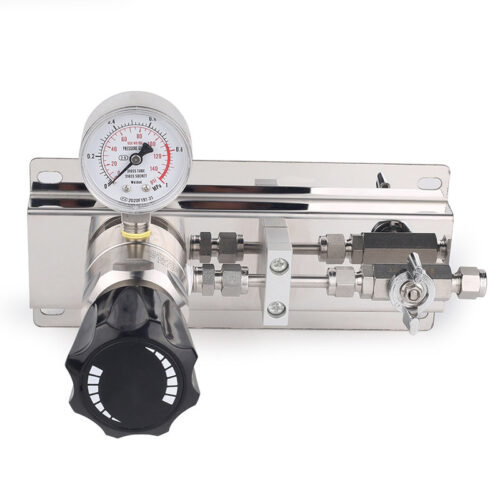
Medical Oxygen Single Stage Manual Gas Changeover Manifold Panel High-Purity Two-Stage Manual Gas Manifold Gas Pressure Control Panels
-
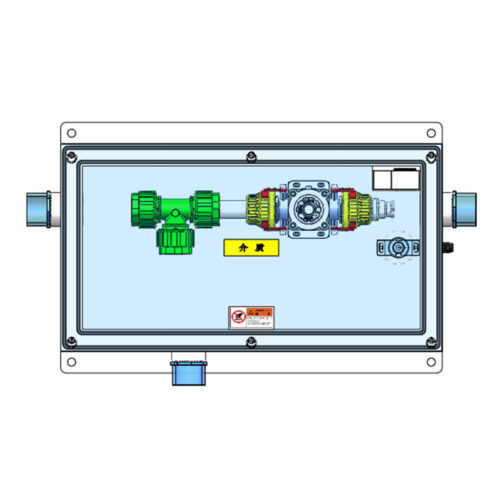
T-BOX JW-TB-C Special Gas Delivery System Gas Valve Manifold Boxes
-
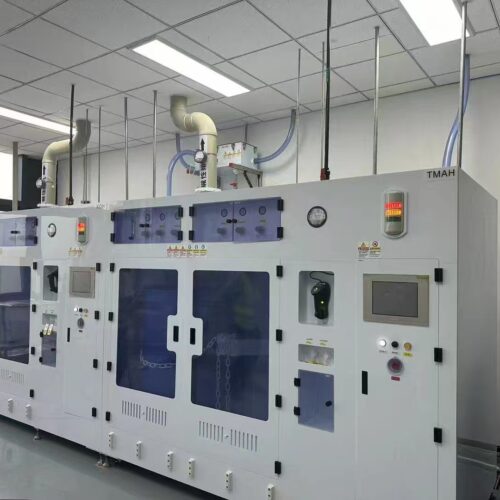
Integrated Bulk Chemical Delivery System and Automatic CDU Solutions for Safe Hazardous Chemical Fluid Handling
-
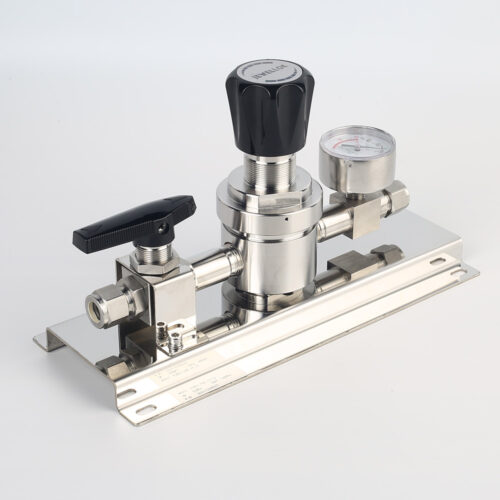
High Purity And Industria Gas Stick Assemblies Precise Pressure Control Gas Systems JSR-1ETG-BV Series
-
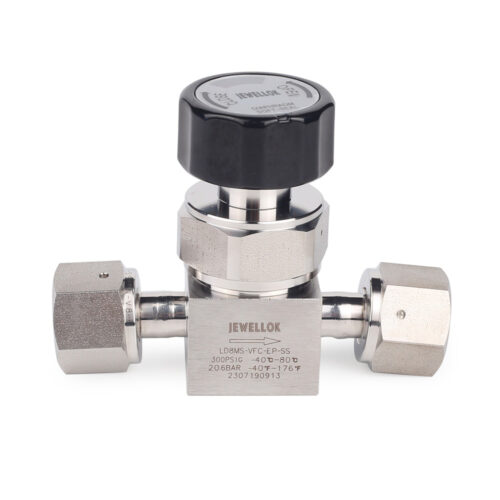
Flow Control Stainless Steel Low Pressure Manual Diaphragm Valve For High Purity And Ultra High Purity Gases
-
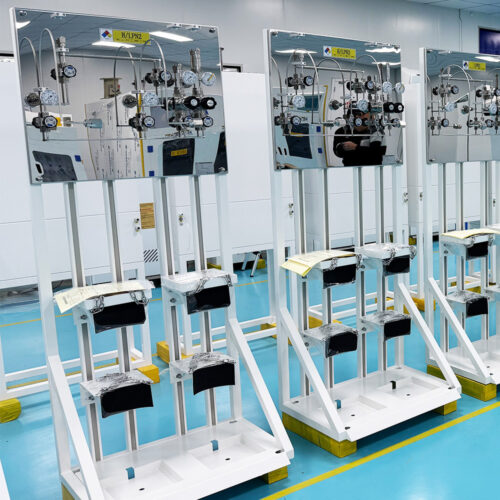
Fully Automated Gas Cabinet for Safe Ultra High Purity Specialty Gas Delivery in Semiconductor Manufacturing
-
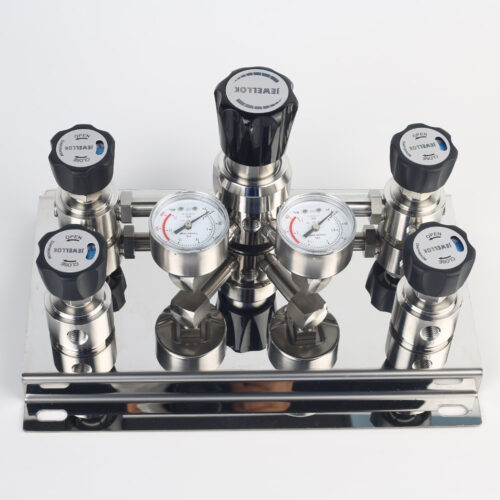
Single Stage Wall And Cabinet Mounting Pressure Control Panels JSP-2E Series For High Purity Gases
-

Semi Automatic Gas Changeover Manifold System Manual Changeover Manifold Panel Single Stage Automatic Switchover Board