
Regulator Manufacturer Tel: +86 13380377051
Regulator Manufacturer Tel: +86 13380377051
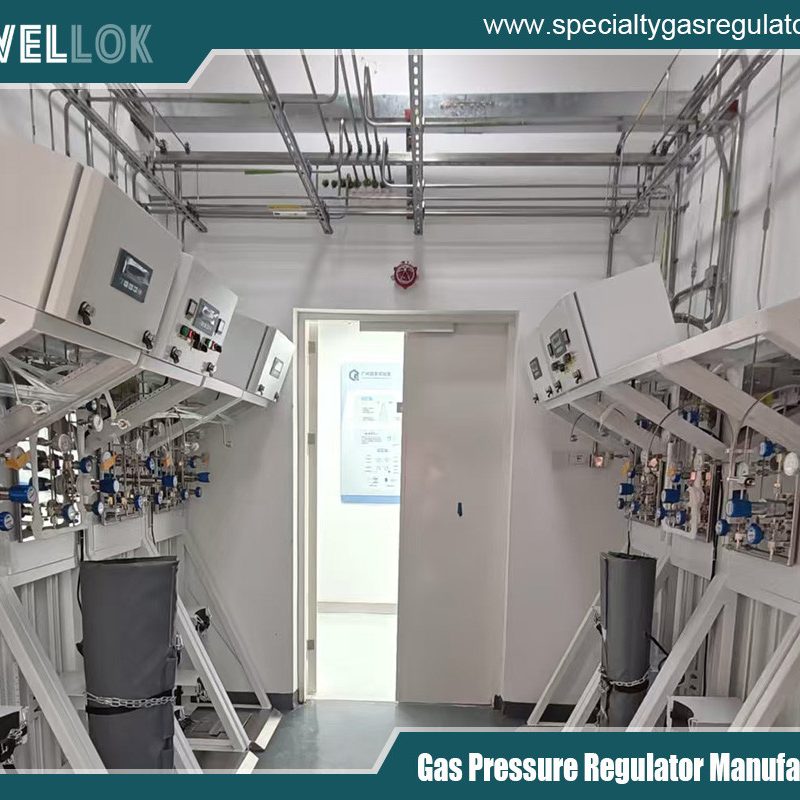
What Chemicals Are Used in Wet Scrubber Tail Gas Treatment Systems?
Introduction
Wet scrubber tail gas treatment systems are widely used in chemical manufacturing plants, semiconductor fabrication facilities, laboratories, pharmaceutical factories, metal processing industries, and other industrial applications to remove harmful gases, acidic pollutants, and particulate contaminants from exhaust streams.
Unlike dry filtration systems, wet scrubbers use liquid solutions to capture and neutralize pollutants through gas-liquid absorption, chemical reactions, and, in some applications, oxidation or reduction processes. The selection of chemicals used in a wet scrubber directly affects pollutant removal efficiency, operating costs, wastewater characteristics, and equipment service life.
Depending on the composition of the exhaust gas, wet scrubber systems may use sodium hydroxide, sodium carbonate, calcium hydroxide, sulfuric acid, sodium hypochlorite, hydrogen peroxide, and other specialized treatment chemicals.
However, there is no universal chemical solution suitable for every tail gas treatment application. The appropriate chemical depends on the target pollutant, gas concentration, temperature, required removal efficiency, and compatibility with the scrubber materials.
This article explains the major chemicals used in wet scrubber tail gas treatment systems, their chemical functions, typical industrial applications, and important considerations for selecting an effective scrubbing solution.
1. Sodium Hydroxide (NaOH) – The Most Common Alkaline Scrubbing Chemical
Sodium hydroxide, commonly known as caustic soda, is one of the most widely used chemicals in industrial wet scrubbers.
It is particularly effective for neutralizing acidic gases because it reacts with acidic contaminants to form water-soluble salts.
1.1 How Does Sodium Hydroxide Work?
When acidic exhaust gas enters the scrubber, it comes into contact with an alkaline NaOH solution.
The acidic components dissolve into the liquid phase and react with sodium hydroxide, reducing their concentration in the exhaust gas.
For example, hydrogen chloride (HCl) reacts with sodium hydroxide according to the following equation:
HCl + NaOH → NaCl + H2O
Sulfur dioxide (SO₂) can also be neutralized:
SO2 + 2NaOH → Na2SO3 + H2O
Hydrogen fluoride (HF) reacts with sodium hydroxide to form sodium fluoride:
HF + NaOH → NaF + H2O
These reactions demonstrate why sodium hydroxide is widely used in acid gas neutralization scrubbers.
1.2 Typical Applications
NaOH-based wet scrubbers are commonly used for treating:
- Hydrogen chloride (HCl).
- Hydrogen fluoride (HF).
- Sulfur dioxide (SO₂).
- Hydrogen bromide (HBr).
- Chlorine (Cl₂), under suitable operating conditions.
- Other acidic process exhaust gases.
In semiconductor manufacturing, sodium hydroxide scrubbers are frequently used in exhaust treatment systems handling acidic process gases.
1.3 Advantages and Limitations
Advantages include:
- High neutralization efficiency for many acidic gases.
- Fast chemical reaction rates.
- Easy integration with automatic dosing systems.
- Good availability and relatively straightforward handling.
- Compatibility with many industrial wet scrubber designs when materials are properly selected.
However, excessive NaOH dosing can increase chemical consumption, wastewater salinity, and dissolved salt accumulation.
Operators must monitor pH, conductivity, and blowdown conditions to maintain stable operation.
2. Sodium Carbonate (Na₂CO₃) – An Alternative Alkaline Neutralizing Agent
Sodium carbonate, also called soda ash, is another alkaline chemical used in industrial wet scrubber systems.
It can neutralize acidic gases while providing a different alkalinity profile compared with sodium hydroxide.
2.1 Chemical Reaction Mechanism
Sodium carbonate reacts with hydrochloric acid to produce sodium chloride, water, and carbon dioxide:
Na2CO3 + 2HCl → 2NaCl + H2O + CO2
It also reacts with sulfur dioxide under suitable conditions:
Na2CO3 + SO2 → Na2SO3 + CO2
The resulting salts remain in the scrubbing liquid and must be controlled through appropriate wastewater management.
2.2 Industrial Applications
Sodium carbonate may be used in:
- Acid gas neutralization systems.
- Chemical processing exhaust treatment.
- Certain industrial sulfur dioxide removal systems.
- Applications requiring moderate alkaline conditions.
2.3 Advantages
Compared with sodium hydroxide, sodium carbonate is generally less caustic and may be easier to handle in certain applications.
However, its dissolution characteristics, reaction kinetics, and operating pH must be considered during scrubber design.
It may not be the best option where rapid neutralization or high removal efficiency is required under demanding process conditions.
3. Calcium Hydroxide (Ca(OH)₂) – A Common Chemical for Acid Gas Removal
Calcium hydroxide, commonly known as hydrated lime or slaked lime, is frequently used in industrial gas treatment systems.
It is particularly important in applications requiring economical neutralization of acidic exhaust gases.
3.1 How Calcium Hydroxide Neutralizes Acid Gases
Calcium hydroxide reacts with sulfur dioxide to form calcium sulfite:
Ca(OH)2 + SO2 → CaSO3 + H2O
Under suitable oxidation conditions, calcium sulfite can be converted into calcium sulfate:
2CaSO3 + O2 → 2CaSO4
For hydrochloric acid:
Ca(OH)2 + 2HCl → CaCl2 + 2H2O
The reaction products may remain dissolved or form solids depending on their solubility and process conditions.
3.2 Typical Applications
Calcium hydroxide is commonly used in:
- Flue gas desulfurization.
- Industrial acid gas treatment.
- Waste incineration exhaust treatment.
- Certain chemical manufacturing processes.
- Industrial exhaust streams containing sulfur dioxide and other acidic contaminants.
3.3 Advantages and Limitations
Calcium hydroxide can offer relatively low chemical costs, particularly in large-scale industrial applications.
However, it has limited water solubility and is usually introduced as a slurry rather than a fully dissolved solution.
This creates additional engineering considerations:
- Slurry preparation and mixing.
- Pump and pipeline selection.
- Sedimentation prevention.
- Spray nozzle blockage.
- Solid reaction-product removal.
- Scaling and clogging control.
For this reason, calcium hydroxide systems require careful hydraulic design and effective solids management.
4. Sulfuric Acid (H₂SO₄) – Used for Alkaline Gas Neutralization
Although many wet scrubbers are designed to remove acidic pollutants using alkaline solutions, some exhaust streams contain alkaline gases that require acidic scrubbing solutions.
Sulfuric acid is sometimes used for this purpose.
4.1 Chemical Reaction Mechanism
Ammonia (NH₃) is a common alkaline gas found in chemical processing, fertilizer production, and certain semiconductor manufacturing operations.
Sulfuric acid reacts with ammonia to form ammonium sulfate:
2NH3 + H2SO4 → NH4 + 2SO4
Under different acid-to-ammonia ratios, ammonium bisulfate may also form.
4.2 Typical Applications
Sulfuric acid-based wet scrubbers may be used for:
- Ammonia exhaust treatment.
- Fertilizer production emissions.
- Certain chemical manufacturing processes.
- Industrial alkaline gas removal.
4.3 Important Operating Considerations
Sulfuric acid is highly corrosive, especially at elevated concentrations and temperatures.
The scrubber must use suitable construction materials, piping, seals, pumps, and instrumentation.
Operators should also monitor acid concentration, pH, temperature, and ammonium salt accumulation.
The acid concentration should be selected according to the process design rather than assuming that higher concentration always improves removal efficiency.
5. Sodium Hypochlorite (NaOCl) – An Oxidizing Chemical for Reactive Gas Treatment
Sodium hypochlorite is an oxidizing chemical commonly used in selected industrial wet scrubber applications.
It is particularly useful for treating certain reduced or chemically reactive pollutants that cannot be adequately removed through simple acid-base neutralization.
5.1 How Sodium Hypochlorite Works
Sodium hypochlorite produces active chlorine species in water, depending on solution pH and chemical conditions.
These species can oxidize certain pollutants into less volatile or more water-soluble products.
For example, sulfide-containing compounds may be oxidized under appropriately controlled conditions.
In some applications, sodium hypochlorite is also used in chlorine-related gas treatment systems.
5.2 Typical Applications
Potential applications include:
- Hydrogen sulfide (H₂S) treatment.
- Certain sulfur-containing odor compounds.
- Selected reduced inorganic gas contaminants.
- Specific chemical exhaust streams requiring oxidation.
5.3 Advantages and Limitations
Sodium hypochlorite can provide effective oxidation for suitable pollutants.
However, its application requires careful control of pH, oxidation conditions, chemical concentration, and contact time.
It must not be indiscriminately mixed with acids because acidification can release toxic chlorine gas.
Its compatibility with other process chemicals and scrubber materials must be assessed before use.
6. Hydrogen Peroxide (H₂O₂) – An Alternative Oxidizing Agent
Hydrogen peroxide is another oxidizing chemical used in certain wet scrubber tail gas treatment systems.
It can oxidize selected pollutants and convert them into products that are easier to retain in the liquid phase or manage through downstream treatment.
6.1 Chemical Reaction Mechanism
For hydrogen sulfide oxidation, a simplified overall reaction under suitable conditions is:
H2S + H2O2 → S + 2H2O
The actual reaction pathway and final sulfur-containing products depend on pH, peroxide dosage, catalysts, oxygen availability, and operating conditions.
Hydrogen peroxide may also be used in specialized treatment processes involving sulfur-containing compounds and other oxidizable contaminants.
6.2 Industrial Applications
Typical applications include:
- Selected hydrogen sulfide treatment systems.
- Odor control.
- Industrial wastewater and gas treatment.
- Specialized chemical exhaust oxidation processes.
6.3 Advantages
Hydrogen peroxide decomposes into water and oxygen under suitable conditions, avoiding the introduction of additional sodium or chloride ions associated with some other oxidants.
However, it is a reactive chemical that requires appropriate storage, dosing equipment, and process control.
Excessive dosing may increase chemical costs and create undesirable reactions. Its effectiveness should be verified through process testing.
7. Other Chemicals Used in Specialized Wet Scrubber Systems
Besides the major chemicals discussed above, several other treatment agents may be used depending on the exhaust gas composition.
7.1 Sodium Sulfite (Na₂SO₃)
Sodium sulfite is used in selected gas treatment processes as a reducing agent.
It may react with certain oxidizing contaminants and is also involved in some sulfur dioxide absorption systems.
Its application depends on the required oxidation-reduction conditions and the desired reaction products.
7.2 Sodium Bisulfite (NaHSO₃)
Sodium bisulfite is another reducing agent used in selected industrial gas and wastewater treatment applications.
It may be applied where controlled reduction reactions are needed to remove certain oxidizing compounds.
7.3 Ammonia Solution (NH₃·H₂O)
Ammonia solution can be used in certain sulfur dioxide absorption processes.
It reacts with sulfur dioxide to form ammonium sulfite and related compounds, depending on operating conditions.
However, ammonia slip must be carefully controlled to prevent secondary emissions.
7.4 Potassium Hydroxide (KOH)
Potassium hydroxide is a strong alkaline chemical that can neutralize acidic gases in a similar way to sodium hydroxide.
It may be selected for specialized processes where potassium-based reaction products are preferred.
Its higher chemical cost generally makes sodium hydroxide more common in conventional industrial scrubber applications.
8. How to Select the Right Chemical for a Wet Scrubber Tail Gas Treatment System
Chemical selection should begin with a detailed analysis of the exhaust gas rather than simply choosing the most commonly used reagent.
The following factors should be evaluated.
8.1 Identify the Target Pollutants
Determine which pollutants need to be removed.
| Target pollutant | Common treatment chemical |
|---|---|
| Hydrogen chloride (HCl) | Sodium hydroxide |
| Hydrogen fluoride (HF) | Sodium hydroxide |
| Sulfur dioxide (SO₂) | Sodium hydroxide, sodium carbonate, or calcium hydroxide |
| Hydrogen sulfide (H₂S) | Sodium hydroxide with suitable oxidation treatment, sodium hypochlorite, or hydrogen peroxide |
| Ammonia (NH₃) | Sulfuric acid |
| Hydrogen bromide (HBr) | Sodium hydroxide |
| Chlorine (Cl₂) | Suitable alkaline reducing treatment, depending on process chemistry |
These are general treatment options. Actual chemical selection depends on gas concentration, competing contaminants, reaction kinetics, and the required emission limits.
8.2 Evaluate Gas Concentration and Flow Rate
A scrubber treating low-concentration laboratory exhaust may require a different chemical dosing strategy from a large industrial system handling high pollutant loading.
Engineers should determine:
- Exhaust gas flow rate.
- Pollutant concentration.
- Gas temperature.
- Moisture content.
- Peak and average pollutant loading.
- Required removal efficiency.
These parameters are essential for calculating chemical consumption and sizing the circulation system.
8.3 Consider Chemical Consumption and Operating Costs
The cheapest chemical per kilogram does not necessarily produce the lowest total operating cost.
Consider:
- Chemical purchase price.
- Required dosage.
- Reaction efficiency.
- Wastewater treatment costs.
- Sludge generation.
- Chemical storage requirements.
- Maintenance and cleaning expenses.
For example, calcium hydroxide may have an attractive purchase price, but slurry handling and solids removal can increase maintenance costs.
8.4 Check Equipment Material Compatibility
The chemical solution must be compatible with the scrubber shell, packing, pumps, spray nozzles, pipelines, valves, and seals.
Common industrial materials include:
- PP (Polypropylene).
- PVDF (Polyvinylidene Fluoride).
- FRP (Fiber-Reinforced Plastic).
- Suitable stainless steel grades.
- Chemical-resistant elastomers.
Material selection must consider actual chemical concentration, operating temperature, pressure, and exposure conditions.
8.5 Evaluate Wastewater Treatment Requirements
Chemical reactions do not eliminate pollutants automatically. They often transfer contaminants from the gas phase into the circulating liquid.
The resulting wastewater may contain chlorides, sulfates, fluorides, dissolved metals, suspended solids, and other reaction products.
Before selecting a chemical, determine how the spent scrubbing liquid will be treated, recycled, discharged, or disposed of.
Wastewater management should be included in the original scrubber design.
9. How to Improve Chemical Dosing and Scrubber Performance
Even the correct chemical may produce poor results if the dosing and circulation systems are not properly controlled.
An effective industrial wet scrubber should include appropriate monitoring and control equipment.
Key operating parameters include:
pH monitoring: Maintains the required acid-base conditions for neutralization.
Conductivity monitoring: Helps identify dissolved salt accumulation and determine appropriate blowdown requirements.
Chemical dosing control: Adjusts reagent addition according to actual pollutant loading and process conditions.
Liquid circulation monitoring: Ensures adequate gas-liquid contact and uniform packing wetting.
Differential pressure monitoring: Helps identify packing fouling, scaling, and abnormal hydraulic conditions.
Outlet gas monitoring: Confirms that the scrubber achieves the required emission-control performance.
For demanding industrial applications, a PLC-based automatic control system can integrate these instruments and provide alarms for abnormal conditions.
Regular calibration and maintenance are essential to ensure reliable measurements.
Conclusion
Wet scrubber tail gas treatment systems use different chemicals depending on the pollutants present in the exhaust stream and the required removal efficiency.
Sodium hydroxide is one of the most widely used chemicals for neutralizing acidic gases such as HCl, HF, and SO₂. Sodium carbonate and calcium hydroxide provide alternative alkaline treatment options. Sulfuric acid is commonly considered for ammonia removal, while sodium hypochlorite and hydrogen peroxide are used in selected oxidation-based treatment applications.
Choosing the right chemical requires a comprehensive evaluation of exhaust gas composition, pollutant concentration, chemical reaction mechanisms, operating conditions, equipment material compatibility, and wastewater treatment requirements.
For chemical plants, semiconductor manufacturing facilities, laboratories, and other industrial operations, proper chemical selection combined with automatic dosing, pH monitoring, liquid circulation control, and regular maintenance is essential for achieving stable and efficient tail gas treatment.
A well-designed chemical dosing and wet scrubbing system not only improves pollutant removal efficiency but also helps reduce chemical consumption, prevent scaling and clogging, extend equipment service life, and maintain long-term environmental compliance.
For more about what chemicals are used in wet scrubber tail gas treatment systems, you can pay a visit to Jewellok at https://www.specialtygasregulator.com/product-category/specialty-gas-cabinet/ for more info.
-
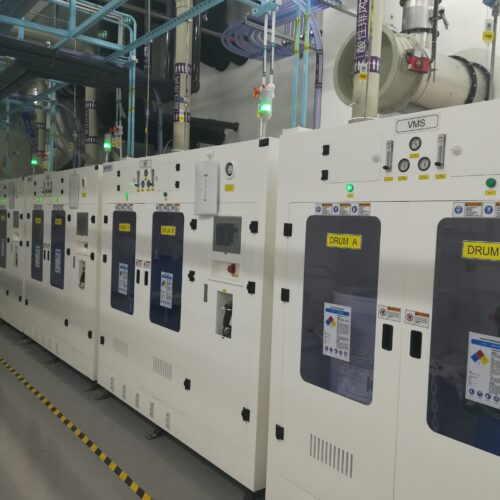
High Purity Liquid Chemical Delivery Systems Designed for Sub Micron Semiconductor Production
-
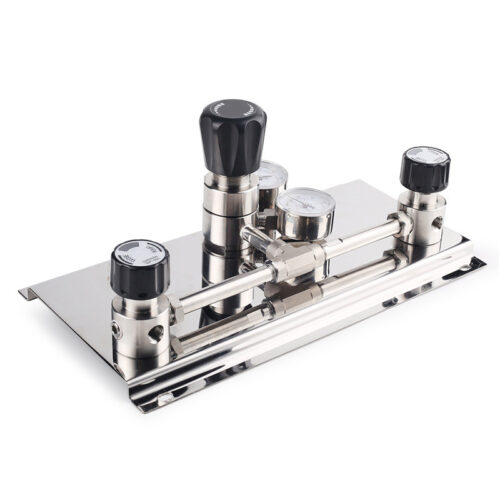
High Purity Semi-Auto Stainless Steel Changeover Manifold System, Nitrogen High Pressure Control Panel With Semiconductor Valve Manifold Box Diaphragm Valves
-
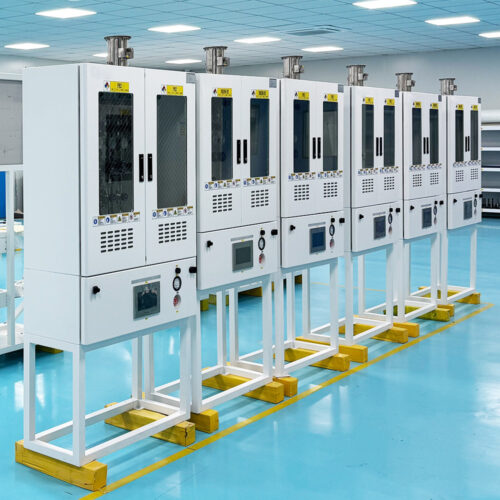
UHP Liquid Chemical Delivery Systems with Nitrogen Blanketing and Secondary Containment for Hazardous Industrial Chemical Processing
-
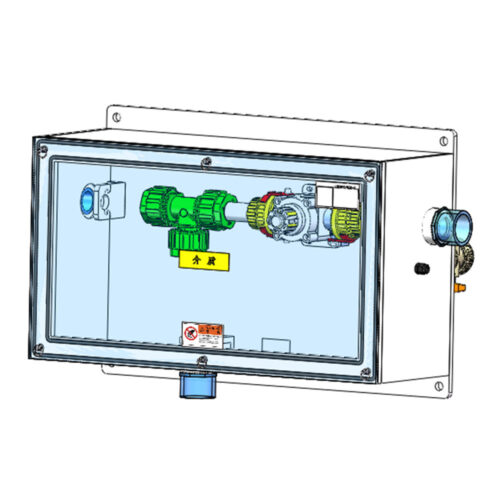
FT-BOX JW-FTB-C Valve Manifold Panels And Boxes With High Purity Configurable Systems
-
768L Stainless Steel Male Tube Butt Weld Connector | Clean Weld Fittings And Ultra-High Purity Fittings
-
767LP Port Connector Ultra High Purity VCJ Metal Gasket Face Seal Tube Fittings
-
767LT Reducer Pressure Reducing Valve Adjustment High purity Pressure Reducing Union Fittings And Tubing
-
High Purity Chemical Dispense System & Packing System For Semiconductors JW-200L-CDM & JW-1000L-CDM