
Regulator Manufacturer Tel: +86 13380377051
Regulator Manufacturer Tel: +86 13380377051

How Does a Specialty Gas Cylinder Fully Automatic Changeover Manifold Work?
In industries where a continuous supply of specialty gases is critical, such as semiconductor manufacturing, pharmaceutical production, and laboratory research, interruptions in gas flow can lead to costly downtime, compromised experiments, or even safety hazards. Specialty gases, including high-purity nitrogen, oxygen, argon, helium, and various mixtures, are stored in high-pressure cylinders. Managing these cylinders manually to ensure seamless transitions when one empties is inefficient and prone to human error. This is where a fully automatic changeover manifold comes into play.
A specialty gas cylinder fully automatic changeover manifold is an advanced gas distribution system designed to automatically switch between multiple gas sources—typically two banks of cylinders—without any manual intervention. It monitors gas pressure levels in real-time and initiates a switchover when the primary supply nears depletion, ensuring an uninterrupted flow to downstream applications. This technology integrates mechanical, electronic, and pneumatic components to provide reliability, safety, and efficiency. In this article, we will delve into the components, working principles, advantages, applications, and maintenance considerations of these systems, providing a comprehensive technical overview.
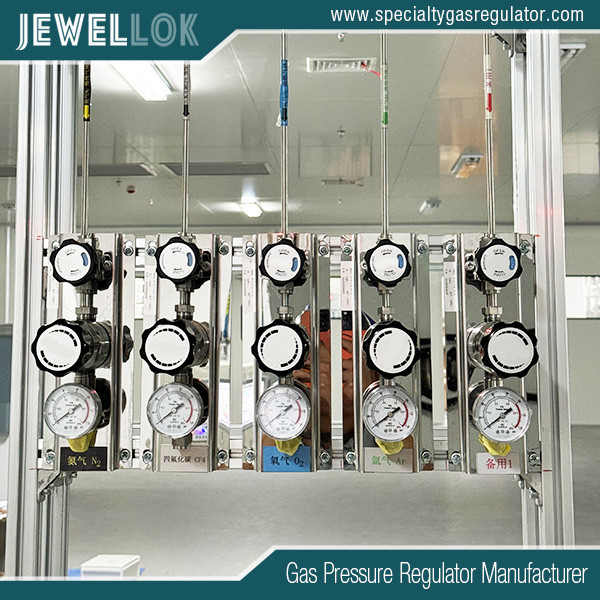
Key Components of the System
To understand how a fully automatic changeover manifold operates, it is essential to familiarize oneself with its core components. These systems are engineered with precision to handle high-pressure gases while maintaining purity and preventing contamination.
- Cylinder Banks: The manifold typically connects to two independent banks of gas cylinders. Each bank consists of one or more cylinders connected in parallel via a manifold header. The header is a piping assembly that collects gas from multiple cylinders and directs it to the main line. Cylinders are secured with flexible pigtails or hoses equipped with check valves to prevent backflow and ensure unidirectional gas movement.
- Pressure Regulators: Central to the system are dual-stage pressure regulators, one for each bank. These reduce the high cylinder pressure (often 2000-3000 psi) to a usable line pressure (e.g., 50-150 psi). Automatic manifolds often feature integrated regulators that adjust dynamically during switchover to maintain consistent output pressure.
- Changeover Valves and Actuators: The heart of the automation lies in the changeover valves, which are solenoid-operated or pneumatically actuated. These valves control the flow path, directing gas from the primary bank to the secondary (reserve) bank. In fully automatic systems, electric solenoids or pneumatic pilots respond to control signals for seamless switching.
- Pressure Sensors and Transducers: Electronic pressure transducers monitor the inlet pressure from each bank. These sensors provide real-time data to the control unit, detecting when pressure drops below a predefined threshold (e.g., 100-200 psi), signaling depletion.
- Control Unit or PLC: A programmable logic controller (PLC) or microprocessor-based control panel processes sensor inputs and executes the switchover logic. It includes alarms, displays for pressure readings, and interfaces for remote monitoring. Advanced units may incorporate digital communication protocols like Modbus for integration with SCADA systems.
- Relief Valves and Safety Devices: To prevent over-pressurization, burst discs or relief valves are installed. Filters and purifiers ensure gas purity, while isolation valves allow for safe cylinder replacement.
- Power Supply and Backup: Fully automatic systems require electrical power, often with battery backups to ensure operation during outages. Some designs include pneumatic backups for fail-safe switching.
These components are typically mounted on a wall panel or floor stand, constructed from corrosion-resistant materials like stainless steel to handle specialty gases without degradation.
Working Principle
The operation of a fully automatic changeover manifold can be broken down into a sequence of automated steps, governed by pressure-based logic and electronic controls.
Initially, the system is configured with one bank as the primary (active) source and the other as the reserve. Gas flows from the primary cylinders through the manifold header, into the regulator, and out to the application via the delivery line. The control unit continuously monitors the pressure in both banks using transducers.
When the primary bank’s pressure drops to a setpoint—indicating the cylinders are nearly empty—the control unit triggers the switchover. This involves:
- Detection Phase: Pressure sensors detect the low-pressure condition. The PLC compares the reading against the threshold and confirms it’s not a transient fluctuation.
- Valve Actuation: The control unit sends a signal to close the valve on the primary bank and open the valve on the reserve bank. In solenoid-based systems, this happens almost instantaneously, often within milliseconds, to avoid any drop in line pressure.
- Pressure Equalization: During switchover, the regulators ensure a smooth transition by momentarily drawing from both banks if needed, preventing pressure spikes or dips. Advanced systems use proportional control to ramp the flow.
- Alarm Activation: An audible or visual alarm alerts operators that a switchover has occurred, prompting them to replace the empty cylinders. The system may also send notifications via email or integration with facility management software.
- Reset and Reconfiguration: After replacing the empty cylinders and pressurizing the bank, the operator resets the system manually or automatically. Some manifolds alternate banks to ensure even usage.
This process repeats as needed, providing redundancy. In multi-cylinder banks, the manifold may include cascade logic, where cylinders empty sequentially to maximize utilization before full bank depletion.
Unlike semi-automatic systems, which require manual resetting after switchover, fully automatic ones handle the entire cycle electronically, making them ideal for 24/7 operations.
Advantages of Fully Automatic Changeover Manifolds
The adoption of fully automatic manifolds offers several technical and operational benefits:
– Uninterrupted Supply: By eliminating manual intervention, these systems minimize downtime, crucial in processes like gas chromatography or laser cutting where gas interruptions can ruin batches or damage equipment.
– Enhanced Safety: Automatic detection reduces exposure to high-pressure gases during cylinder changes. Features like leak detection and auto-shutoff prevent accidents.
– Efficiency and Cost Savings: Optimized gas usage through precise monitoring reduces waste. Remote monitoring allows predictive maintenance, lowering labor costs.
– Purity Maintenance: Closed-loop designs prevent atmospheric contamination, essential for specialty gases with purity levels exceeding 99.999%.
– Scalability: Systems can be expanded with additional banks or integrated into larger gas distribution networks.
However, these advantages come with higher initial costs compared to manual manifolds, and they require reliable power sources.
Applications in Various Industries
Fully automatic changeover manifolds find widespread use across sectors demanding reliable gas supply:
In semiconductor fabrication, they supply inert gases like argon for wafer processing, where even brief interruptions can halt production lines costing millions.
Pharmaceutical and biotechnology labs use them for calibration gases in analytical instruments, ensuring consistent results in drug development.
Medical facilities employ them for oxygen and nitrous oxide delivery in hospitals, supporting life-critical systems.
Industrial applications include welding with shielding gases and food packaging with modified atmospheres.
Environmental testing and calibration services rely on them for precise gas mixtures in emissions monitoring.
Maintenance and Safety Considerations
Proper maintenance is vital to ensure longevity and safety. Regular inspections should check for leaks using soap solutions or electronic detectors. Pressure sensors and valves need calibration annually, following manufacturer guidelines.
Cylinder replacement should occur in well-ventilated areas, with operators wearing PPE. Electrical components require grounding to prevent static discharge.
Common issues include sensor drift, valve sticking, or power failures; troubleshooting involves diagnostic tools on the control panel.
Adhering to standards like NFPA or ISO ensures compliance.

Conclusion
A specialty gas cylinder fully automatic changeover manifold represents a pinnacle of gas handling technology, automating the switch between cylinder banks to deliver seamless, safe, and efficient gas supply. By integrating sensors, valves, and intelligent controls, it addresses the challenges of manual systems, making it indispensable in high-stakes environments. As industries evolve toward automation, these manifolds will continue to play a key role in enhancing productivity and reliability.
For more about how does a specialty gas cylinder fully automatic changeover manifold work, you can pay a visit to Jewellok at https://www.specialtygasregulator.com/product-category/gas-changeover-system/ for more info.
-
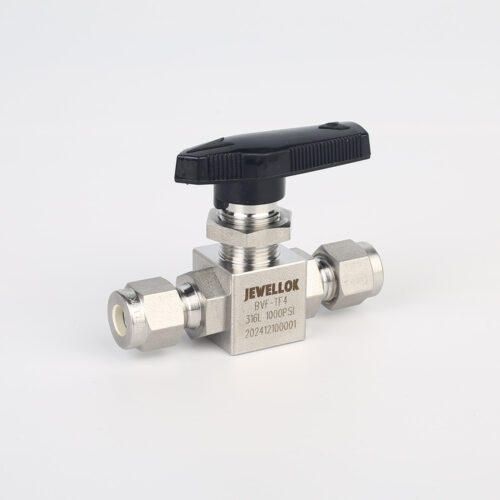
Stainless Steel High Purity High Temperature Pneumatic Actuated Ball Valves JBV2 Series
-
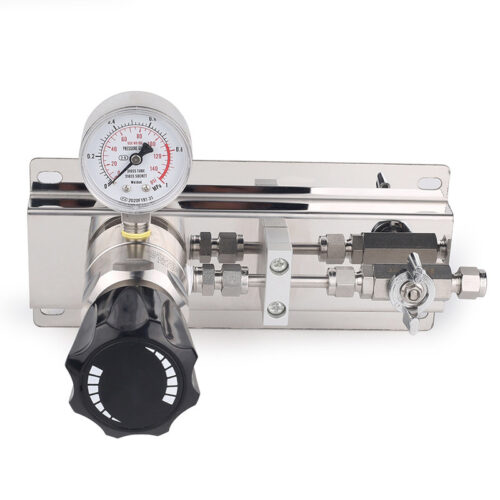
Medical Oxygen Single Stage Manual Gas Changeover Manifold Panel High-Purity Two-Stage Manual Gas Manifold Gas Pressure Control Panels
-
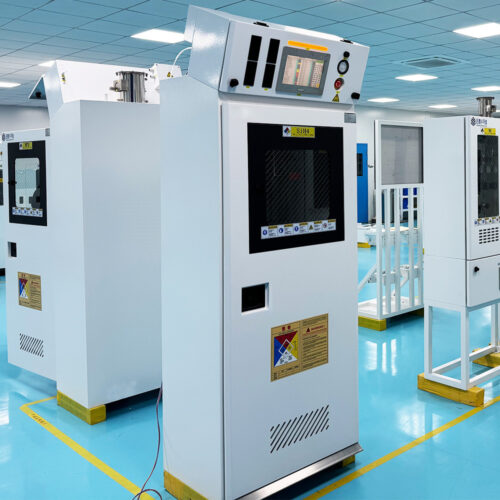
Fully Automated Gas Cabinet For Precise UHP Gas Delivery And High Purity Gas Delivery Systems JW-300-GC
-
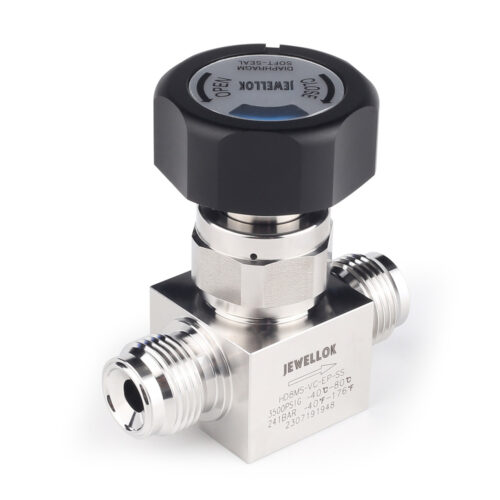
Stainless Steel Ultra High Purity (UHP) High Pressure Manual Diaphragm Valve
-
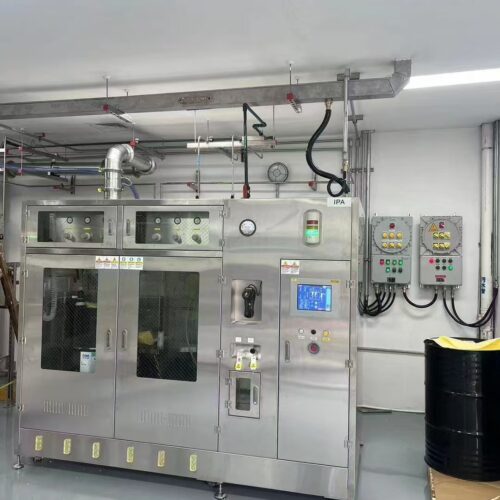
Ultra High Purity CDS Solutions Featuring 316L Electropolished Stainless Steel for Superior Chemical Integrity and Safety
-
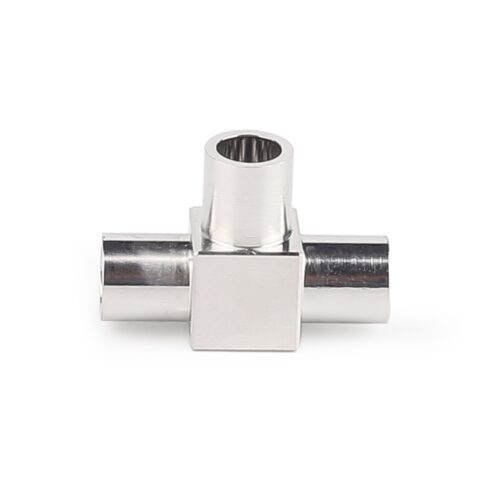
Stainless Steel Ultra High Purity Mini Butt Weld Mini Tee Reducer MTRW Series Fittings
-
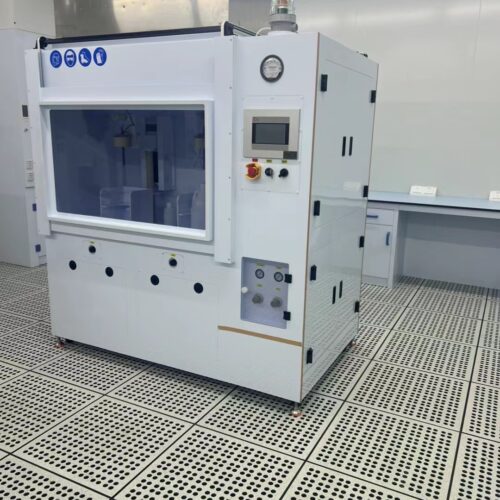
Custom VMB Valve Manifold Boxes for Enhanced Tool Isolation and Maximum Uptime in Complex Chemical Distribution Networks
-
Vertical Laminar Flow Workstation (VLF) With Chemical Concentration Monitor