
Regulator Manufacturer Tel: +86 13380377051
Regulator Manufacturer Tel: +86 13380377051
How Does a Stainless Steel Gas Pressure Regulator Work?
Gas pressure regulators are indispensable components in fluid control systems, ensuring safe, stable, and precise delivery of gases from high-pressure sources to application points. Among the various materials used in their construction, stainless steel stands out for its exceptional durability, corrosion resistance, and reliability in demanding environments. This 1800-word technical article delves into the operating principles, internal mechanics, and material advantages of stainless steel gas pressure regulators. It explores their functional components, the force balance mechanism that governs pressure reduction, and the specific applications where their robust construction is essential. The article also provides guidance on selection criteria and maintenance best practices.
The Critical Role of Pressure Regulation
In industrial, laboratory, and residential settings, gases are typically stored and transported in cylinders, pipelines, or tanks at pressures significantly higher than what most end-use equipment can safely tolerate. For instance, a standard industrial argon cylinder may store gas at 2000-3000 psi (138-207 bar), while a welding torch requires a working pressure of only 5-50 psi (0.3-3.4 bar). A direct connection would be catastrophic, leading to equipment failure, uncontrolled gas release, or fire.
The gas pressure regulator serves as the critical interface between the high-pressure source and the low-pressure application. Its primary functions are:
- Pressure Reduction: To lower the inlet pressure (from the source) to a safe, usable, and constant lower outlet pressure.
- Pressure Maintenance: To maintain this outlet pressure consistently, despite fluctuations in the inlet pressure or variations in downstream flow demand.
While regulators can be constructed from brass, aluminum, or plastic, stainless steel regulators are employed where superior performance is non-negotiable—in corrosive environments, with ultra-pure or aggressive gases, in high-purity applications, or under extreme pressure and temperature conditions.
Fundamental Operating Principle: The Force Balance System
At its core, a stainless steel gas pressure regulator is an automatic control valve that operates on a force balance principle. It uses the downstream (outlet) pressure as a feedback signal to modulate the gas flow, achieving a self-correcting, steady-state condition.
The fundamental components involved in this process are (see Fig. 1):
- Sensing Element: Typically a flexible diaphragm (in most common regulators) or a piston.
- Loading Element: A force that sets the desired outlet pressure. This can be a spring (spring-loaded regulator) or a gas pressure provided to a pilot (pilot-operated regulator).
- Restrictive Element: The valve seat and orifice, which control the flow area from the high-pressure inlet to the low-pressure outlet.
- Control Linkage: The stem connecting the diaphragm to the valve.
The Operation Cycle:
- At Rest (No Flow): The loading spring pushes the diaphragm down, which via the stem, forces the valve poppet open against its seat spring. Gas begins to flow from the high-pressure inlet to the low-pressure chamber.
- Pressure Rise & Equilibrium: As gas fills the low-pressure chamber (the outlet side and the space under the diaphragm), the pressure builds. This outlet pressure acts on the underside of the diaphragm, generating an upward force. When this upward force equals the downward force of the loading spring, the diaphragm stabilizes, and the valve poppet settles into a position that allows just enough flow to maintain the equilibrium pressure.
- Response to Demand (Flow Increase): When a downstream valve is opened, flow increases, causing a momentary drop in outlet pressure. The spring force now exceeds the reduced diaphragm force, pushing the diaphragm and valve poppet further open. This allows more gas to flow, restoring the outlet pressure to its setpoint.
- Response to Demand Decrease (Flow Shut-off): When the downstream valve is closed, flow stops, causing outlet pressure to rise momentarily. This increased pressure pushes the diaphragm upward, compressing the spring and allowing the valve seat spring to close the poppet more tightly, stopping inflow. Equilibrium is re-established at the set pressure with no flow.
Detailed Component Breakdown & Material Significance
The choice of stainless steel (common grades: 316L for superior corrosion resistance, 304 for general purpose) for each component brings distinct advantages.
- Body & Bonnet:
- Function: The body houses all internal components and contains the gas pressure. It has ports for inlet, outlet, and sometimes gauges. The bonnet encloses the spring and diaphragm assembly.
- Stainless Steel Advantage: Provides exceptional strength for high-pressure applications (e.g., cylinder regulators). It is highly resistant to corrosion from atmospheric moisture, chemical exposure, and harsh process gases (like chlorine, ammonia, or offshore environments). It prevents contamination of high-purity gases and is easily sterilized for food, beverage, and pharmaceutical uses.
- Diaphragm:
- Function: The critical sensing element that flexes in response to pressure changes. In stainless steel regulators, the diaphragm is often a elastomer (like PTFE, FKM) but is sometimes a thin, corrugated stainless steel diaphragm for extreme applications.
- Stainless Steel Diaphragm Advantage: Used in specialty regulators for ultra-high purity or highly aggressive media where elastomers could degrade, permeate, or leach contaminants. They offer long life but are less sensitive than elastomeric diaphragms.
- Valve Seat & Poppet:
- Function: This is the primary sealing and control point. The poppet (or valve stem tip) opens and closes against the seat orifice to modulate flow.
- Stainless Steel Advantage: The seat is often an elastomer (Viton, EPDM) for tight shut-off, but the poppet and seat holder are stainless. For high-pressure or high-temperature services, the sealing surface itself may be a hardened stainless steel or a combination like a stainless poppet against a PTFE seat. This ensures minimal wear, no galling, and resistance to erosion from high-velocity gas particles.
- Spring:
- Function: The loading element. Its compression force, adjusted by a screw, determines the set outlet pressure.
- Stainless Steel Advantage: Stainless steel springs (e.g., 302/316) are used to prevent corrosion that could change the spring constant over time, ensuring long-term calibration stability.
- Filters & Screens:
- Function: Often integrated upstream of the valve seat to protect it from particulate contamination in the gas stream.
- Stainless Steel Advantage: Sintered stainless steel filters provide excellent mechanical filtration, are cleanable, and will not corrode or shed particles into the gas stream.
Regulator Performance Characteristics & Stainless Steel’s Impact
- Droop (or Supply Pressure Effect): In a simple single-stage regulator, the outlet pressure will decrease slightly as the inlet pressure falls (e.g., as a cylinder empties). This is because the reduced inlet pressure exerts less force on the closed valve, altering the force balance. Precision stainless steel regulators, especially two-stage designs, minimize this effect.
- Creep (or Lock-up): The slight overshoot in outlet pressure that can occur as flow demand approaches zero. The precision machining possible with stainless steel allows for better valve seat design, minimizing creep and ensuring tight shut-off.
- Hysteresis: The difference in outlet pressure when the setpoint is approached from a higher vs. a lower pressure, often caused by friction in the moving parts. The smooth surfaces and robust construction of stainless steel components reduce internal friction.
- Flow Capacity: Determined by the size of the orifice (Cv or Kv value). Stainless steel regulators are available in a wide range of orifice sizes to handle everything from low analytical flows to high industrial volumes.
Types of Stainless Steel Regulators
- Single-Stage Regulators: Perform reduction in one step. Simpler, more economical, but exhibit more droop. Suitable for applications with stable inlet pressure or less stringent outlet consistency requirements.
- Two-Stage Regulators: Incorporate two regulating mechanisms in series. The first stage reduces pressure to an intermediate, stable pressure, and the second stage provides precise final regulation. They virtually eliminate droop and provide extremely stable outlet pressure, ideal for critical processes like analytical instrumentation or precision welding.
- Pilot-Operated Regulators: Used for very large flow requirements (e.g., pipeline or station regulation). They use the outlet gas pressure itself, amplified by a pilot regulator, to load the main diaphragm. Stainless steel construction is vital for the harsh, high-flow environments where these are used.
- Dome-Loaded Regulators: Use a regulated gas pressure (rather than a spring) applied to the top of the diaphragm to set the outlet pressure. This allows for remote or electronic control. Stainless steel is preferred for the dome cavity to ensure cleanliness and corrosion resistance.
Key Application Areas
Stainless steel regulators are not general-purpose items; they are specified for demanding conditions:
- Corrosive & Reactive Gases: HCl, Cl₂, H₂S, NH₃, SO₂ in chemical processing.
- High-Purity Applications: Semiconductor fabrication (with electropolished 316L bodies), pharmaceutical manufacturing, and analytical lab equipment (GC, MS) where even trace contamination from regulator materials is unacceptable.
- Marine & Offshore: High-humidity, salt-laden atmospheres that rapidly corrode brass or carbon steel.
- High-Pressure Services: Hydrogen fueling stations (H₂ at 700 bar), gas cylinder analysis, and hydraulic gas systems.
- Food & Beverage: Where cleanability and resistance to cleaning agents (CIP/SIP processes) are required for gases like CO₂, N₂, or O₂.
- High-Temperature Environments: Near engines, furnaces, or in processes where ambient heat is significant.
Selection and Maintenance Guidelines
Selection:
- Material Compatibility: Ensure wetted parts (body, seat, diaphragm) are compatible with the specific gas. 316L is the default for broad compatibility.
- Pressure Ratings: Maximum Inlet Pressure (P1 max) and Outlet Pressure (P2 max) must exceed system requirements.
- Flow Capacity (Cv): Select a regulator sized for the maximum required flow rate without excessive droop.
- Accuracy & Stability: Determine if a single-stage unit is sufficient or if a two-stage or pilot-operated regulator is needed.
- End Connections: Choose the correct thread type (NPT, BSP) and size, or face-seal fittings like VCJ® for ultra-high purity.
Maintenance:
- Inspection: Regularly check for external corrosion, leaks (using a leak detection solution), and gauge accuracy.
- Cleaning: For high-purity systems, follow strict cleaning and passivation procedures.
- Overhaul: Periodically, the regulator should be disassembled by qualified personnel, internal filters cleaned, diaphragms and seals inspected/replaced, and seats re-lapped or replaced if worn. The use of OEM repair kits is highly recommended.
- Safe Practice: Always depressurize a regulator fully before attempting any disassembly or adjustment.
Conclusion
The stainless steel gas pressure regulator is a masterclass in precision mechanical engineering, leveraging the simple yet elegant force balance principle to perform the vital task of safe, stable pressure control. Its operation—a continuous, automatic dance between spring force, diaphragm feedback, and valve positioning—is made profoundly more reliable and durable by the use of stainless steel. This material choice transforms it from a simple utility device into a critical component capable of performing in the most punishing and sensitive environments imaginable. From ensuring the purity of a microchip’s atmosphere to safely regulating corrosive gases in a chemical plant, the stainless steel regulator stands as a testament to the synergy between robust material science and fundamental physical principles. Understanding its inner workings is key to its proper selection, application, and maintenance, ensuring safety, efficiency, and process integrity.
For more about how does a stainless steel gas pressure regulator work, you can pay a visit to Jewellok at https://www.specialtygasregulator.com/product-category/specialty-gas-pressure-regulators/ for more info.
-
Custom Wet and Dry Exhaust Gas Scrubber System Technology for Effective Acid Gas Neutralization
-
Clean Connection Cabinet JW-300-CCB Valve Manifold Box And Control Valve Box
-
Medical Oxygen Single Stage Manual Gas Changeover Manifold Panel High-Purity Two-Stage Manual Gas Manifold Gas Pressure Control Panels
-
Low Pressure High Flow Line Pressure Regulators And Control Valves JSR-4L Series For Laboratory Pressure Control
-
Ultra High Purity Pressure Gauge For Laboratory And Semiconductor JR Series
-
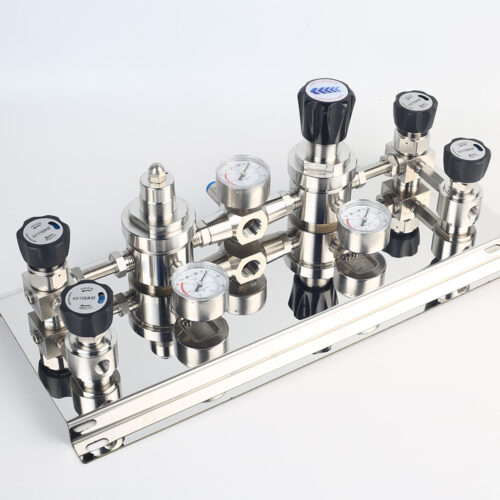
Stainless Steel Single Stage Semiconductor Grade Pressure Control Module Pressure Control Panels JSP-6A Series
-
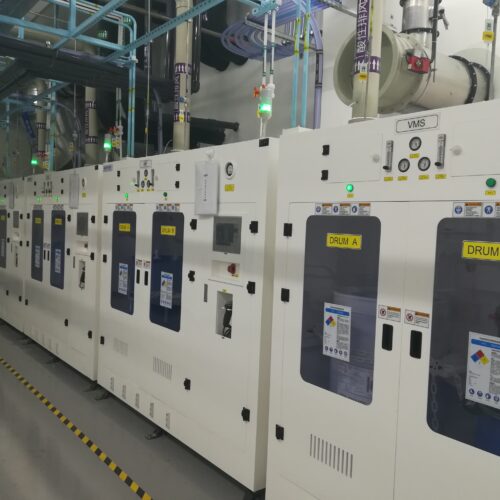
High Purity Liquid Chemical Delivery Systems Designed for Sub Micron Semiconductor Production
-
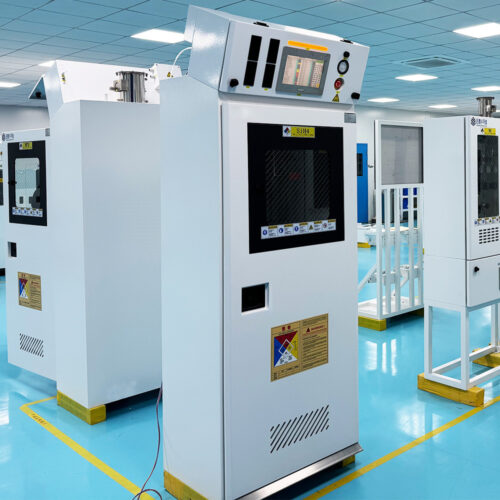
High Purity Bulk Specialty Gas Pressure Control And Filtration Bulk Gas Skid Systems JW-300-BSGS