
Regulator Manufacturer Tel: +86 13380377051
Regulator Manufacturer Tel: +86 13380377051
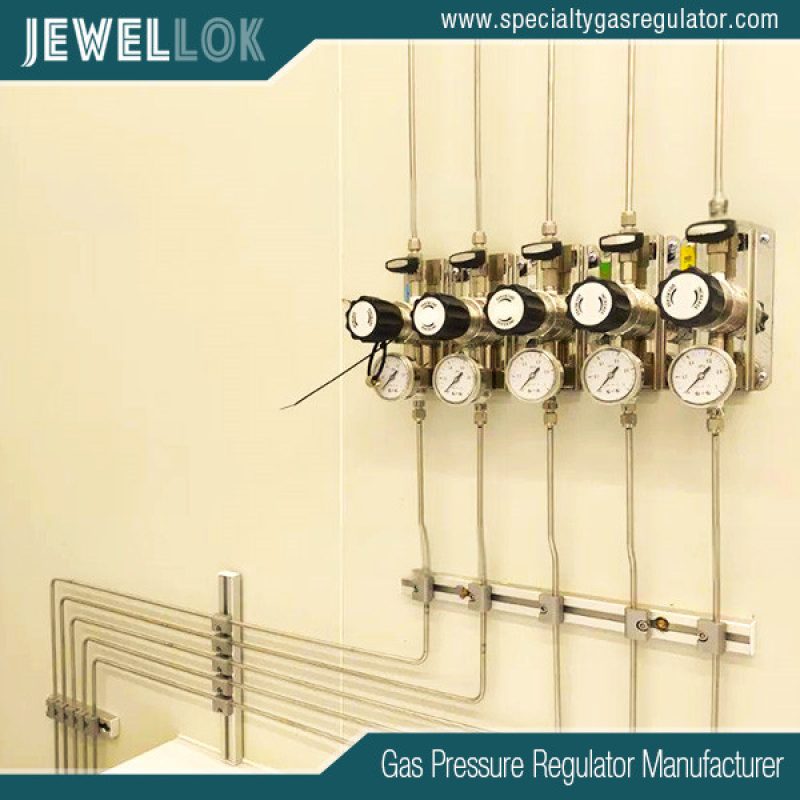
What Effect Does the Valve Seat Design of A Special Gas Pressure Regulator Valve Have on Sudden Changes in Downstream Pressure?
In the high-stakes world of critical process applications—from semiconductor thin-film deposition and pharmaceutical synthesis to advanced chemical research—gas delivery is not a matter of simple flow. It is an exercise in exquisitely precise dynamic control. Here, a sudden change in downstream pressure isn’t an anomaly; it’s an event that demands an immediate, measured, and stable corrective response from the special gas pressure regulator valve. The speed and quality of this response—the regulator’s response time—can mean the difference between a flawless wafer, a pure compound, or a ruined batch and costly downtime.
While factors like diaphragm sensitivity and internal volume play significant roles, the seat design—the precise interface where the regulator’s moving poppet seals against the valve body—is a paramount, yet often underappreciated, dictator of this performance. Far from being a passive seal, the seat is the dynamic fulcrum of control. Its geometry, material, and interaction with the poppet fundamentally govern how quickly and smoothly a regulator can react to downstream disturbances, balancing the conflicting demands of speed, stability, and leak-tight integrity.
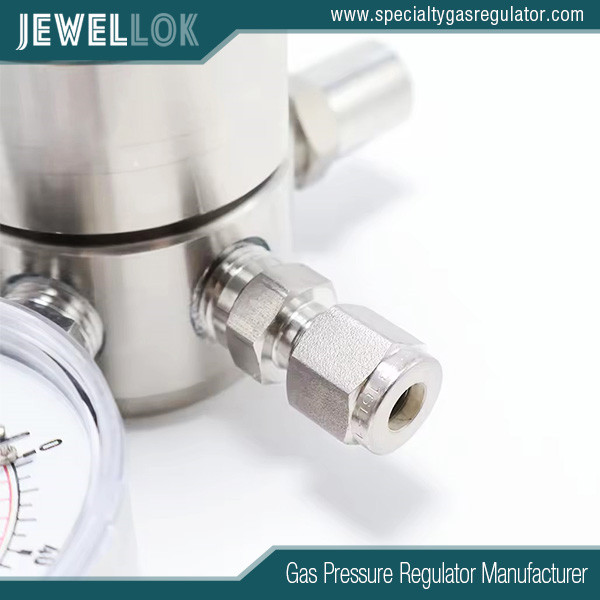
The Anatomy of Response: Why Seat Design Matters
To understand the seat’s influence, we must first define response time in this context. It is the time elapsed from a step-change in downstream demand (e.g., a valve opening quickly) to the point where the special gas pressure regulatior valve re-establishes the set pressure within a specified tolerance band. This involves a rapid sequence:
- Signal: Downstream pressure drops.
- Detection: The diaphragm senses the pressure imbalance and flexes.
- Actuation: The stem moves downward.
- Flow Modulation: The poppet lifts from the seat, increasing orifice area and gas flow.
- Correction & Stabilization: Flow increases, pressure recovers, and the system seeks a new equilibrium, ideally without overshoot or oscillation.
The seat design is the critical juncture between steps 3 and 4. It determines the relationship between poppet lift and the resulting flow area—the “gain” of the system. A poorly designed seat can make this relationship non-linear, sluggish, or prone to instability, directly degrading response time and control quality.
Key Seat Design Variables and Their Impact on Response
- Seat Geometry: The Shape of Control
The contour of the seat and the matching poppet tip defines the flow characteristic—the change in effective orifice area per unit of stem lift.
- Sharp-Edged (Knife-Edge) Seat / Poppet: This classic design features a poppet with a sharp, typically 90-degree, edge that seals on a small, flat or slightly angled seat land.
- Impact on Response: This geometry offers a highly non-linear flow gain. For the first few thousandths of an inch of lift, the flow area increases very slowly, providing excellent fine control and stability at very low flows. However, once the sharp edge clears the seat land, the flow area increases dramatically with minimal additional lift. This can lead to a “two-stage” response: initially sluggish correction, followed by a potential for over-correction and pressure overshoot if the lift is not meticulously controlled. It can be slower to initially respond to a large demand shift but offers superb shut-off.
- Contoured (V-Port, Parabolic) Seat: Here, the poppet or the seat itself is machined with a tapered, parabolic, or V-shaped profile.
- Impact on Response: This design aims for a more linear or equal-percentage flow characteristic. The flow area increases more proportionally with lift across a wider range. This provides a smoother, more predictable, and often faster initial response to a pressure drop, as even small initial stem movements yield a meaningful increase in flow. It reduces the risk of the “jump” associated with sharp-edged designs, leading to better stability and potentially faster settling times. This is often preferred for applications requiring rapid, stable modulation.
- Office Size (The Aperture): The diameter of the hole the poppet seals against sets the maximum potential flow. For critical, low-to-medium flow applications, asmaller seat orifice is standard. A smaller orifice means that a given amount of poppet lift results in a larger percentage change in flow area, making the regulator more sensitive and quicker to initiate a corrective flow change. It also reduces the “gain,” making the loop easier to stabilize, preventing hunting.
- Seat Material: The Balance of Sealing and Reaction
The material pairing of the poppet and seat determines friction, wear, and deformation—all critical to dynamic response.
- Elastomeric (Soft) Seats (PTFE, Kel-F, FFKM): A soft polymer seat mated against a metal (e.g., stainless steel) poppet.
- Response Advantages: Offers bubble-tight shut-off with low seating force, minimizing hysteresis. The elastomer can conform to microscopic imperfections, ensuring a consistent starting point for each actuation. This consistency aids predictable response.
- Response Drawbacks: The primary issue is compressibility and cold flow. Under constant load, the elastomer can slowly deform (cold flow), subtly changing the seat geometry and, over time, the regulator’s flow characteristic and null point. Furthermore, the material’s give can add a tiny, damped “spring” effect to the movement, potentially blunting the very initial crispness of response compared to an all-metal interface.
- Metal-on-Metal (Hard) Seats (Sapphire, Ceramic, Hardened Steel):
- Response Advantages: Provides exceptional rigidity and dimensional stability. There is no compression or cold flow. The relationship between lift and flow area remains constant over time and under pressure, leading to highly repeatable and predictable response. They excel in high-temperature or corrosive environments where elastomers would fail.
- Response Drawbacks: Achieving perfect shut-off is challenging. It requires ultra-high surface finishes and perfectly matched angles. Any microscopic imperfection can lead to minute creep or require higher seating forces, increasing stem friction and potentially creating stiction—a static friction that must be overcome before movement begins. This stiction can cause a delayed initial jump in movement, degrading response time and potentially causing small limit-cycle oscillations.
- Composite/Engineered Designs: The modern solution often combines materials. A common approach is a metal poppet with a sharp edge sealing into a replaceable soft seat insert. This aims for the tight shut-off of an elastomer with the precision and durability of a metal actuating component, optimizing for both response stability and long-term leak integrity.
- Interaction with System Forces: Friction and “Pop”
The seat is ground zero for mechanical forces that oppose rapid, smooth movement.
- Stiction and Friction: As mentioned, hard seats and excessive seating force can cause stiction. The stem must build enough force to “unstick” the poppet before any flow correction occurs. This lag directly increases response time to small disturbances. Designs mitigate this with ultra-smooth finishes, low-friction stem guides, and sometimes a deliberate, slight leak path to keep the poppet “floating” just off the seat at equilibrium.
- Pressure-Assisted vs. Pressure-Balanced Poppets: In a standard design, inlet pressure acts on the back of the poppet, pushing it into the seat (pressure-assisted closing). The force holding the valve shut increases with inlet pressure. This means the force the diaphragm must exert to open it also changes with supply pressure, varying the system gain and response. A pressure-balanced poppet uses seals or a stepped design to cancel out the effect of inlet pressure on the poppet. The opening force then depends only on the spring/diaphragm. This results in a consistent, predictable response time regardless of fluctuating cylinder pressure, a critical feature for stable process control.
The Seat in the Control Loop: Managing Instability
A regulator is a mechanical feedback loop. Like any control system, it can oscillate or “hunt” if the feedback is too aggressive or delayed. The seat’s flow characteristic is a key part of this loop gain.
- A seat with too high a flow gain (e.g., a large orifice with a sharp-edged poppet that suddenly opens fully) can cause the regulator to over-correct a pressure drop. It shoves too much gas into the system too quickly, causing pressure to overshoot the setpoint. The regulator then slams shut, leading to an undershoot, and the cycle repeats. This hunting destroys pressure stability.
- A well-designed seat with an appropriate, often more linear, gain allows for a proportional correction. The regulator meteres in gas at a rate more commensurate with the error, enabling a rapid yet damped approach to the setpoint without oscillation. This results in a faster settling time—the true measure of effective response.
Application Spotlight: Semiconductor ALD Processes
Consider an Atomic Layer Deposition (ALD) chamber. It requires ultra-precise, millisecond-scale pulses of precursor gas at low pressure. A downstream pulse valve opens violently, creating a near-instantaneous demand spike.
A regulator with a small-orifice, contoured seat and a pressure-balanced poppet is ideal. The small orifice provides high resolution for control. The contoured seat allows a smooth, rapid increase in flow the moment the stem moves, minimizing the initial pressure dip in the manifold. The pressure-balanced design ensures the response is identical whether the source cylinder is full or nearly empty. The seat material (often a high-purity, low-outgassing elastomer) ensures no particles are generated from the repeated sealing impact that could contaminate the process. The seat design enables the regulator to “keep up” with the violent downstream changes, maintaining a stable baseline pressure that is fundamental to achieving uniform, atomic-scale film layers.
Conclusion
In special gas pressure regulatior valve for critical processes, the seat is not merely a seal; it is a calibrated control element. Its geometry dictates the crucial lift-to-flow relationship, its material determines the consistency and friction of actuation, and its integration with poppet balancing defines the stability of the control loop across operating conditions.
Selecting a regulator based solely on pressure rating and material compatibility is insufficient for dynamic applications. Engineers must delve deeper, understanding that the choice between a sharp-edged elastomer seat and a contoured, balanced metal design is fundamentally a choice about system dynamics. The optimal seat design delivers the necessary speed of response while inherently promoting damping and stability, ensuring that the regulator doesn’t just react to change, but manages it with the swift, silent, and precise authority demanded by today’s most advanced industrial and research processes. It is in this microscopic interface that the macro-scale success of the entire critical process is so often secured.
For more about what effect does the valve seat design of a special gas pressure regulatior valve have on sudden changes in downstream pressure, you can pay a visit to Jewellok at https://www.specialtygasregulator.com/about/ for more info.
-
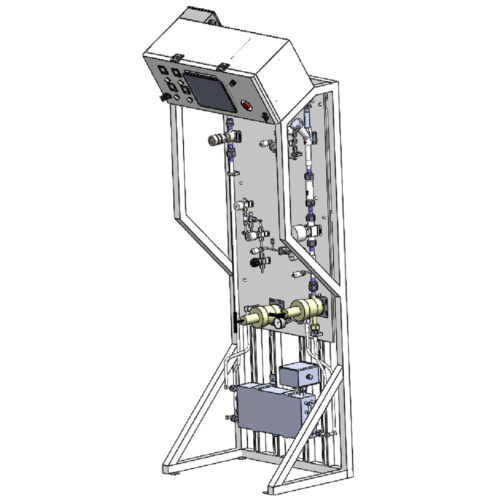
High Purity High Pressure Specialty Gas Bottle Gas Cylinder Storage Cabinet And Gas Pressure Regulating Cabinet For Semiconductor
-
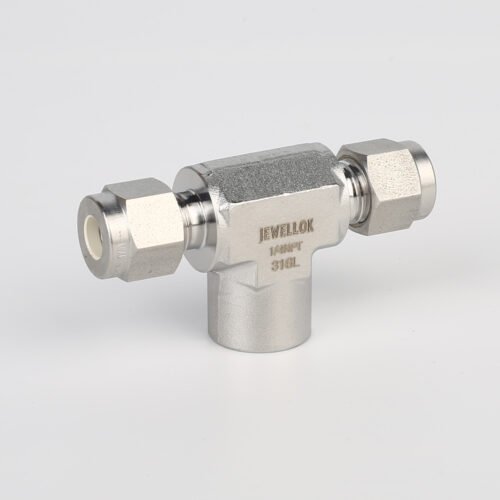
772 LF Female Branch Tee | Stainless Steel Tube Fitting Female Branch Tee 1/2 in. Tube OD x 1/2 in. Tube OD x 3/8 in. Female NPT
-
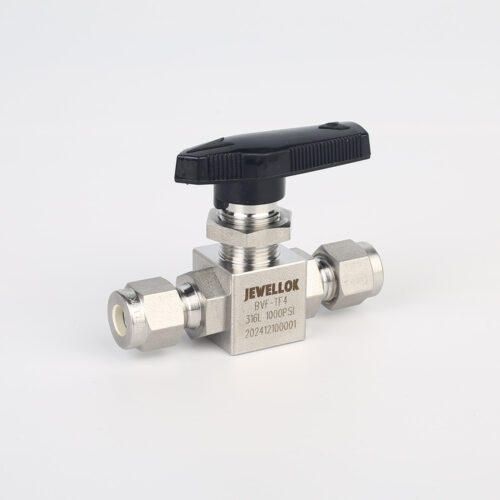
Stainless Steel High Purity High Temperature Pneumatic Actuated Ball Valves JBV2 Series
-
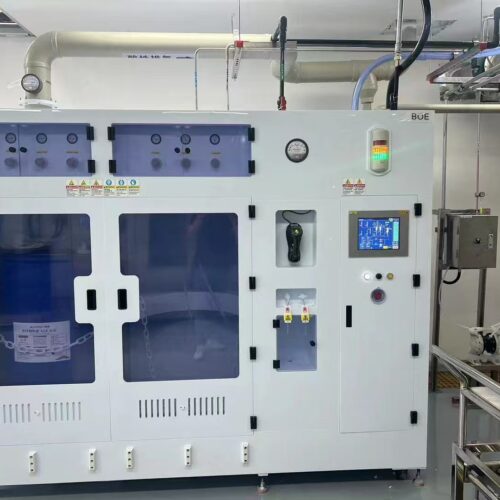
High Purity Bulk Chemical Delivery System and Automatic CDU for Advanced Semiconductor Manufacturing and Fabrication
-
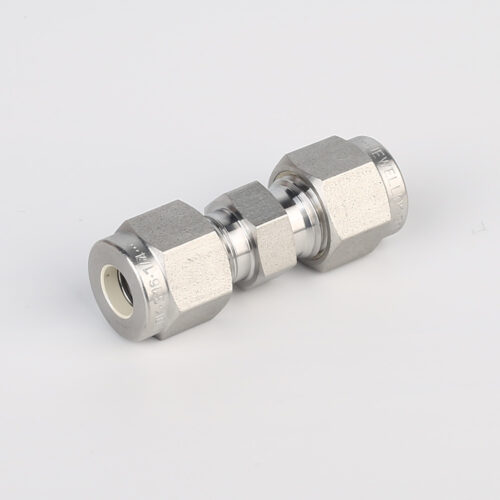
762L Stainless Steel High Purity Union High-Purity Gas System Fittings
-
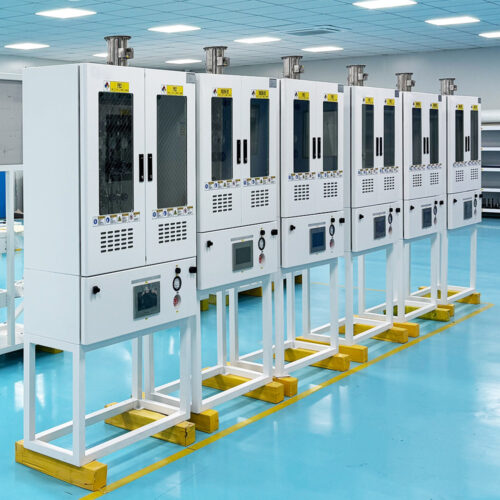
UHP Liquid Chemical Delivery Systems with Nitrogen Blanketing and Secondary Containment for Hazardous Industrial Chemical Processing
-
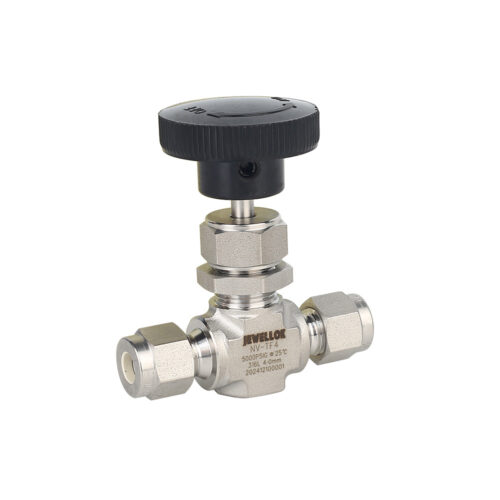
High Purity High Pressure Stainless Steel Needle Valve Natural Gas Flow Control Valve JNV Series
-
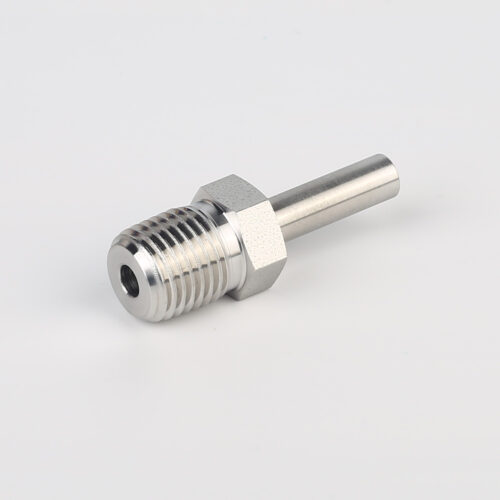
739 High Purity LMR Male Adapter Tube To Pipe Fittings And Adapters