
Regulator Manufacturer Tel: +86 13380377051
Regulator Manufacturer Tel: +86 13380377051

How to Select the Appropriate Inlet and Outlet Connection Types for Specialty Gas Pressure Regulator Valves?
In the pristine world of ultra-high-purity (UHP) gas delivery—the lifeblood of semiconductor fabrication, advanced pharmaceuticals, and cutting-edge research—the journey from cylinder to process point is a relentless battle against contamination. Every component must preserve the integrity of the gas, which can be compromised by parts-per-billion levels of moisture, oxygen, or particulates. While much focus is rightly placed on the internal design of specialty gas pressure regulator valves, their inlet and outlet connections represent the most critical mechanical interfaces in the entire system. A poor choice here can nullify the benefits of the most precisely machined regulator, introducing leaks, virtual leaks, and contamination vectors.
Selecting the appropriate connection type often used generically for tube fittings, welded, or others—is a foundational decision in UHP system design. It balances the uncompromising demands of leak-tight integrity, cleanability, serviceability, and mechanical robustness. This guide outlines the key considerations and trade-offs to ensure a leak-free, contaminant-free integration of your regulator into a UHP gas pipeline.

Part 1: The Non-Negotiable Imperatives of UHP Systems
Before evaluating specific fittings, one must understand the core requirements they must fulfill:
- Leak Integrity: The connection must achieve and maintain a helium leak rate of < 1 x 10⁻⁹ atm·cc/sec or better. This is not merely “bubble-tight”; it is a hermetic seal that prevents both the ingress of atmospheric contaminants (O₂, H₂O) and the egress of valuable or hazardous process gases.
- Internal Cleanliness: The fitting must have a smooth, crevice-free internal flow path. Stagnant areas (“dead legs”) or microscopic voids trap gas, creating virtual leaks that desorb over time, ruining purity. All wetted surfaces must be electropolished to a surface roughness (Ra) of often < 10 microinches to minimize adsorption sites.
- Material Compatibility: Wetted materials must be 316L or 316L VIM-VAR (Vacuum Induction Melted – Vacuum Arc Remelted) stainless steel, alloy 400 (Monel), or alloy C-276 (Hastelloy). These materials offer low outgassing, high corrosion resistance, and can withstand rigorous cleaning.
- Particle Generation: The connection must not generate metallic or other particulates during initial make-up, thermal cycling, or vibration. This excludes threaded (NPT) connections entirely from UHP service.
- Serviceability vs. Permanence: Can the connection be broken and re-made without performance degradation? Or is a permanent, welded joint preferred for ultimate integrity?
Part 2: Evaluation of Major UHP Connection Technologies
- Metal Gasket Face Seal Fittings: The Gold Standard
Principle: A soft metal gasket (typically nickel or copper, sometimes a gold-plated stainless steel spiral) is captured and compressed between two knife-edge or flat flanged ferrules, creating a plastic deformation and a cold-weld-like seal.
Key Example:
- How it Works: The gasket is placed between two female ferrules with conical sealing surfaces. A nut is tightened, driving the ferrules together and plastically deforming the gasket into the knife-edges.
- Advantages for UHP:
- Exceptional Leak Integrity: The metal-to-metal seal is inherently robust and suitable for high vacuum and high pressure.
- Zero-Clearance Design: When assembled, the ferrules are metal-to-metal, eliminating any thread-to-thread communication with the process gas. The sealing gasket is the only potential leak path, and it’s highly reliable.
- Cleanable & Reusable: The gasket is single-use, but the body and nut can be cleaned and reused with a new gasket, offering excellent serviceability. The internal flow path is smooth when assembled.
- Vibration & Thermal Cycling Resistance: Highly resistant to loosening.
- Disadvantages:
- Higher Cost: Gaskets are consumables.
- Requires Proper Torque: A calibrated torque wrench is mandatory to achieve correct gasket deformation without over-compression and galling.
- Best Applications: Inlet connections on regulators (CGA to regulator), critical outlet connections to manifolds, and any point in the system requiring frequent, reliable disassembly for maintenance or reconfiguration. The de facto standard for most semiconductor gas panels.
- Mechanically Assembled Ferrule Fittings (Swagelok®, Gyrolok, etc.)
Principle: A precision-machined ferrule (or set of ferrules) is compressed onto the outside diameter of a tube as a nut is tightened, creating both a seal on the tube and a back-pull resistant grip.
Key Example: Swagelok® Double Ferrule System.
- How it Works: The front ferrule creates the seal against the fitting body, while the back ferrule grips the tube and provides mechanical strength. The “swaging” action creates permanent, work-hardened seals.
- Advantages for UHP:
- Excellent Leak Performance: When properly installed, can meet UHP leak rate requirements.
- Tube-Centric Design: Excellent for building long, complex, rigid tubing runs with minimal connection points.
- Re-makeable: Can be disconnected and reconnected several times if necessary, though performance is best on first make-up.
- Vast Component Ecosystem: Fittings, valves, and regulators are readily available and designed to work together.
- Disadvantages for UHP:
- Potential for Improper Installation: Requires specific tools and rigorous training. Under- or over-tightening is a major risk. A go/no-go gauge is essential.
- Micro-Crevices: The interface between the ferrule and the fitting body, while sealed, can present a minute crevice not present in a face seal. This is often considered acceptable for many UHP applications but is scrutinized at the most extreme levels.
- Tube Preparation: Requires perfectly cut, deburred, and cleaned tube ends.
- Best Applications: Building the pipeline itself downstream of the regulator outlet, especially for sample lines, analyzer feeds, and distribution systems where tubing runs are long. Often used for the outlet port of regulators when connecting to such a system.
- Orbital Welding (Butt Weld Connections)
Principle: The regulator outlet or inlet is furnished with a tube stub end. This is then orbital welded directly to the pipeline tubing using an automated, purged welding head.
- Advantages for UHP:
- Ultimate Integrity: Creates a permanent, homogeneous, crevice-free joint. The internal surface, when done correctly, is as smooth as the parent material.
- No Extra Components: Eliminates gaskets, ferrules, and threads—the primary sources of potential leaks and particle traps.
- Optimal for High Vibration/High Purity: The preferred method for the most aggressive, particle-sensitive processes and locations subject to vibration.
- Disadvantages:
- Permanent: Requires cutting to remove, making regulator servicing or replacement a major operation.
- Requires Specialized Skill & Equipment: Demands certified orbital welders, controlled environments, and proper purge procedures to avoid weld oxidation (sugaring).
- Not Serviceable: Contrary to maintenance philosophies requiring frequent component swaps.
- Best Applications: Direct, permanent integration of regulators into central gas distribution systems (GCDs) within semiconductor fabs, or for the most hazardous gases (pyrophorics, high-toxics) where any potential leak point is unacceptable.
- The Inlet Imperative: CGA Connections with UHP Enhancements
The specialty gas pressure regulator valves inlet connecting to the cylinder valve is governed by CGA (Compressed Gas Association) standards for safety, but UHP demands enhancements.
- Standard CGA Threaded Connections (e.g., CGA 350): These are necessary for safety but are not UHP-sealed. The primary seal is often an elastomeric O-ring.
- UHP Solution: Metal Gasket CGA Connections: For UHP service, the CGA outlet is modified. Common types include:
- CGA-DISS (Diameter Index Safety System): Uses a specific threaded connection with a nylon or metal gasket. Better than standard but not optimal for highest purity.
- Mesa/UTi (Ultra-Torr Integra) or CGA-1A (RFO/RPV): These are metal-sealed CGA variants. They use a copper or nickel gasket compressed against a flat or raised “mesa” on the cylinder valve, providing a high-integrity, UHP-compatible metal seal. This is essential for connecting a UHP regulator to a UHP gas source.
Part 3: A Systematic Selection Methodology
Use this decision framework to select the right connection for each point of interface.
Step 1: Define the Application Requirements.
- Gas Properties: Is it inert, toxic, pyrophoric, or corrosive? Pyrophorics often dictate welded systems.
- Required Leak Rate: The stricter the requirement, the more you lean towards metal-gasket face seals or welds.
- Service Frequency: Will this connection need to be broken monthly for validation? Annually? Never?
- System Architecture: Is this a modular gas panel or a permanent welded line?
Step 2: Select the Regulator Inlet Connection.
- Mandatory: It must match the cylinder valve outlet. For UHP, this is almost always a metal-gasket CGA variant (e.g., RFO/RPV for 3000+ psi, Mesa for lower pressures). Never use standard elastomer-sealed CGA fittings for true UHP service.
Step 3: Select the Regulator Outlet Connection.
This is the most critical choice for system integration.
- Scenario A: Integration into a Modular/Serviceable Gas Panel: Choose a male or female outlet. This allows the regulator to be bolt-fastened to the panel’s block, enabling easy removal for maintenance or calibration. It provides the best balance of integrity and serviceability.
- Scenario B: Direct Connection to a Permanent Welded Pipeline: Specify the regulator with a weld stub outlet. Plan for it to be orbital welded directly to the system tubing. This is the choice for ultimate, permanent purity.
- Scenario C: Connection to a Tubing Run for an Analyzer or Tool: A Swagelok®-type female port is often appropriate. It allows a trained technician to make a reliable tube connection directly to the regulator outlet.
Step 4: Consistency and Documentation.
- Standardize: Within a facility or system, standardize on one or two connection types to simplify inventory, tooling, and training.
- Specify in Detail: Purchase orders must specify not just “VCJ” but the exact type: e.g., “316L VIM-VAR Electropolished Male Outlet with Nickel Gasket.”
- Procedures: Develop and enforce written procedures for make-up (including torque values), leak checking (helium mass spec), and cleaning.
Conclusion
The integration of a specialty gas pressure regulator into a UHP pipeline is only as strong as its weakest interface. The selection of inlet and outlet connections is a fundamental engineering decision that directly impacts system safety, gas purity, operational cost, and maintenance flexibility.
There is no single “best” answer, but a hierarchy of appropriateness exists based on the application’s purity dogma. For the most rigorous semiconductor and research applications, the paradigm often is: a metal-gasket CGA (e.g., RFO) at the inlet for source integrity, a VCJ face seal at the outlet for serviceable panel integration, and orbital welds for permanent distribution lines.
By treating each connection not as a simple plumbing accessory but as a precision sealing component—with its own material science, mechanics, and procedural requirements—engineers can construct a gas delivery system that is truly leak-free, contaminant-free, and worthy of the ultra-high-purity gases it carries. In this world, the connection is not just a junction; it is a covenant of purity.
For more about how to select the appropriate inlet and outlet connection types for specialty gas pressure regulator valves, you can pay a visit to Jewellok at https://www.specialtygasregulator.com/about/ for more info.
-
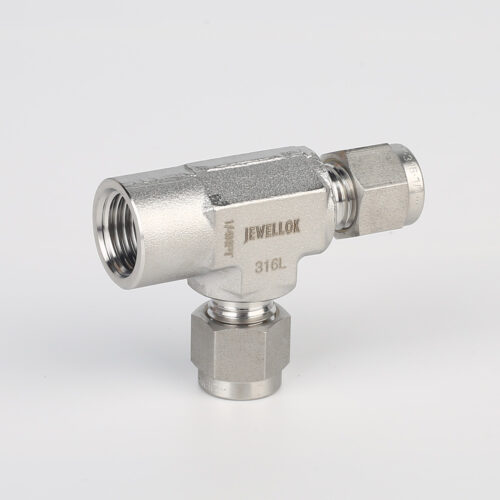
771LF Female Run Tee | Stainless Steel Tube Fitting Compression Fittings 1/4 In 3-Way Tee Female Run Tee
-
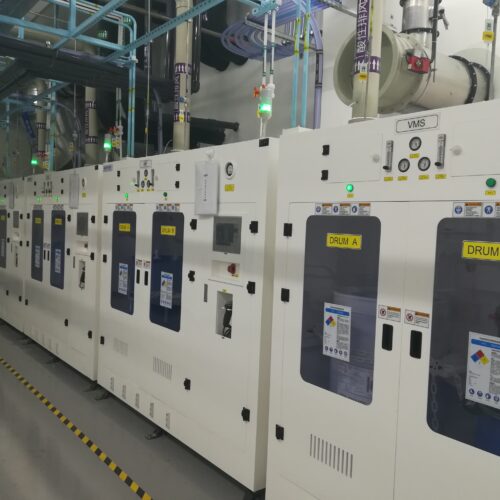
High Purity Liquid Chemical Delivery Systems Designed for Sub Micron Semiconductor Production
-
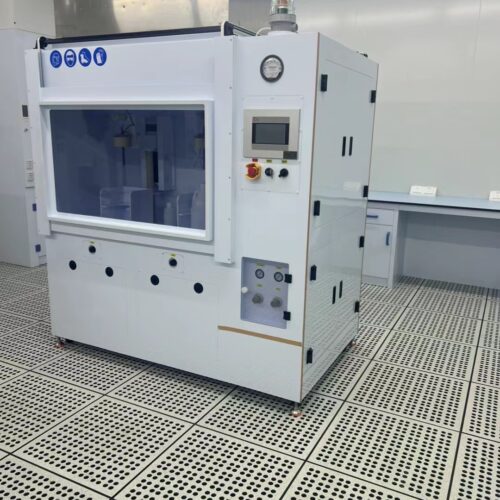
Custom VMB Valve Manifold Boxes for Enhanced Tool Isolation and Maximum Uptime in Complex Chemical Distribution Networks
-
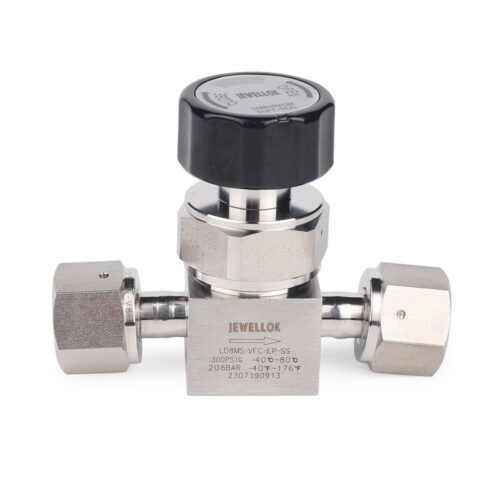
Flow Control Stainless Steel Low Pressure Manual Diaphragm Valve For High Purity And Ultra High Purity Gases
-
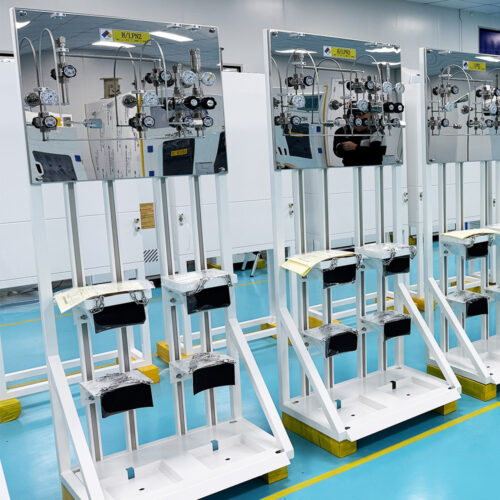
Fully Automated Gas Cabinet for Safe Ultra High Purity Specialty Gas Delivery in Semiconductor Manufacturing
-
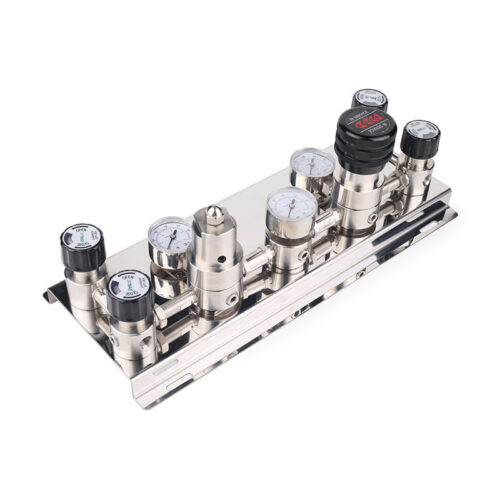
Stainless Steel High Pressure Specialty Gas Changeover Manifold For High Purity Oxygen Nitrogen Argon Helium Hydrogen Co2
-
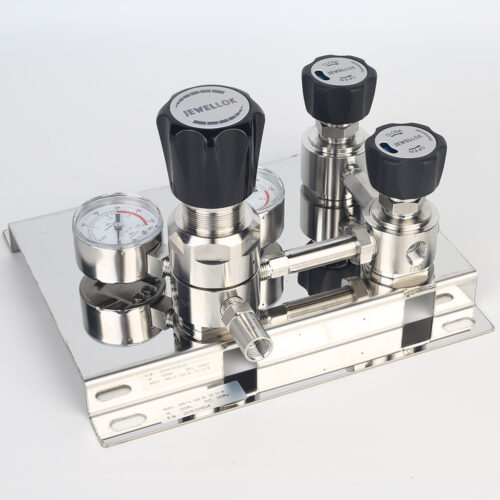
Stainless Steel 316L Single Stage Regulator Pressure Control Panels JSP-1E Series For Semiconductor Fluid Control
-

Ultra High Purity Diaphragm Valves and Pressure Regulators for Reliable Ultra High Purity Liquid Chemical Handling Systems