
Regulator Manufacturer Tel: +86 13380377051
Regulator Manufacturer Tel: +86 13380377051
How to Choose the Argon Gas UHP Valve: Diaphragm vs. Bellows Valve
In the world of advanced manufacturing and research—from semiconductor fabrication and photovoltaics to aerospace and analytical chemistry—the integrity of process gases is non-negotiable. Argon, as an inert shielding and purge gas, is ubiquitous in these fields. However, its value is entirely contingent on its purity. Introducing contaminants at parts-per-billion (ppb) or even parts-per-trillion (ppt) levels can lead to catastrophic yield loss, faulty research data, or component failure.
The valve is often the weakest link in an ultra-high purity (UHP) argon gas valve delivery system. It is a mechanical device with moving parts placed directly in the gas stream, making it a prime location for potential ingress, entrapment, and outgassing. Therefore, selecting the correct valve type is not a matter of convenience but a fundamental engineering decision impacting system performance, operational safety, and total cost of ownership.
For argon service, the debate overwhelmingly centers on two superior technologies: the Diaphragm Valve and the Metal Bellows Valve. This article provides a detailed technical comparison, guiding engineers and system designers through the critical parameters for making an informed choice.
Understanding the Contamination Challenge
Before evaluating valves, one must understand what they are designed to prevent:
- Particle Generation: Internal wear of seals and moving parts creates microscopic particles.
- Permeation: The diffusion of atmospheric gases (e.g., O₂, N₂, H₂O) through polymer seals or valve body walls.
- Outgassing: The desorption of moisture, hydrocarbons, and other volatiles from internal surfaces and seals.
- Dead Legs & Virtual Leaks: Internal cavities where gas can stagnate, be trapped, and slowly leach back into the stream.
- Leakage: Both external (to atmosphere) and internal (from stem to body).
UHP valves are engineered to minimize all these phenomena through specific design philosophies.
The Diaphragm Valve – A Sealed-Defense Design
Operating Principle:
A diaphragm valve uses a flexible, typically polymer, diaphragm as the sealing element and barrier. The actuator stem presses the diaphragm onto a raised seat (weir) in the valve body to stop flow. When retracted, the diaphragm lifts fully, offering a smooth, unobstructed flow path. The critical feature is that the diaphragm completely isolates the valve mechanism (stem, spring, actuator) from the process gas.
Key Advantages for UHP Argon:
- Unmatched Isolation: The hermetically sealed design ensures zero leakage from the stem into the gas stream (internal leakage) and zero gas contact with the actuator mechanism. This is its greatest strength.
- Minimal Internal Volume & Dead Legs: When open, the flow path is straight and can be extremely smooth, mimicking tubing. This ensures efficient purging and minimal residence zones.
- Low Particle Generation: With no dynamic stem seals exposed to the gas, and with the primary sealing action being the gentle compression of a diaphragm onto a smooth weir, particle generation is very low.
- Excellent Helium Leak-Tightness: Designs can achieve exceptionally low external leak rates (< 1 x 10⁻⁹ atm cc/sec He).
- Corrosion Resistance: Bodies are typically 316L VIM/VAR (Vacuum Induction Melted/Vacuum Arc Remelted) stainless steel, and the wetted diaphragm can be made from highly inert materials like PCTFE (Kalrez®) or PTFE.
Inherent Limitations:
- Diaphragm as a Single Point of Failure: The diaphragm is a consumable component. Its flexural life determines the valve’s cycle life. Failure can lead to a catastrophic breach.
- Limited Temperature & Pressure Range: The polymer diaphragm restricts operating temperatures (typically -20°C to 150°C) and pressure ratings (full vacuum to ~1500 psi, depending on design). Sudden pressure spikes can damage it.
- Potential for Permeation: Although minimal with high-quality fluoropolymers, some level of atmospheric gas permeation through the diaphragm is possible, which may be critical for the most extreme purity applications.
- Flow Coefficient (Cv): While good, the raised weir can create a slightly more restrictive flow path compared to a full-port bellows valve.
The Metal Bellows Valve – A Robust, All-Metal Barrier
Operating Principle:
A bellows valve uses a hermetically sealed, convoluted metal bellows as the moving stem seal. The stem is attached to the top of the bellows, which elongates and contracts with actuation. The primary seal at the tip of the stem is typically a metal poppet (e.g., stainless steel) sealing against a metal seat (often with a soft, inert gasket like nickel or silver). The bellows forms a dynamic, all-metal barrier between the process gas and the atmosphere.
Key Advantages for UHP Argon Gas Valve:
- All-Metal, High-Temperature Wetted Path: The bellows, stem, and body are all metal (316L SS, Alloy 600, etc.), eliminating polymer outgassing and permeation. This allows for high-temperature bake-out (e.g., 300°C+) to achieve the lowest possible outgassing rates.
- Extreme Durability and High-Pressure Capability: Metal bellows are robust, capable of withstanding very high pressures (up to 6000 psi or more) and are not susceptible to sudden failure like a diaphragm. Cycle life is typically very high (100,000+ cycles).
- Superior for Abrasive or Hot Gases: The all-metal construction is ideal if there is any risk of plasma, heat, or unusual conditions that would degrade a polymer diaphragm.
- High Flow Capacity (Cv): Designs often feature a full-port, straight-through flow path with minimal restriction, offering excellent conductance.
- Reliable, Predictable Failure Mode: A bellows typically fails by developing a small leak, which is detectable by a rise in package pressure or leak testing, rather than a sudden burst.
Inherent Limitations:
- Virtual Volume: The convolutions of the bellows create small, hard-to-purge volumes where gas can be trapped. This is a “virtual leak.” High-quality designs minimize this through deep drawing techniques and special purging features.
- Metal-to-Metal Wear Particles: The sealing action often involves metal-to-metal contact (poppet/seat), which can generate metallic particles. Soft-seat variants mitigate this.
- Bellows Fatigue: While durable, the bellows is subject to cyclic fatigue. Its life is a function of stroke length, pressure differential, and material.
- Potential for Internal Leakage: If the primary poppet seal degrades, internal leakage can occur, though it does not lead to atmospheric contamination.
Head-to-Head Comparison & Decision Matrix
| Parameter | Diaphragm Valve | Metal Bellows Valve | Verdict |
| Primary Sealing Barrier | Polymer Diaphragm | Metal Bellows | Bellows for temp/robustness; Diaphragm for perfect isolation. |
| Maximum Purity (Outgassing) | Excellent (with bake-out) | Superior (all-metal, higher bake-out temps) | Bellows wins for the absolute lowest outgassing specs. |
| Internal Leakage (Stem to Body) | Zero (fully isolated) | Possible (via poppet seal) | Diaphragm is definitive for preventing stem-to-body contamination. |
| Particle Generation | Very Low | Low (potential from metal seal) | Diaphragm has a slight edge, but both are excellent in UHP designs. |
| Cycle Life & Predictability | Good (10,000-100,000 cycles). Failure is sudden. | Very High (100,000+ cycles). Failure is gradual (leak). | Bellows for high-cycle or critical reliability applications. |
| Pressure & Temperature | Limited by diaphragm (e.g., 1500 psi, 150°C) | High (e.g., 6000 psi, 450°C) | Bellows for high P/T or bake-out >200°C. |
| Flow Conductance (Cv) | Good | Typically Higher (full-port designs) | Bellows for high-flow applications. |
| Virtual Leaks / Purging | Excellent (smooth, minimal internal volume) | Good (requires careful design to minimize bellows volume) | Diaphragm is simpler to purge completely. |
| Total Cost of Ownership | Lower upfront cost; diaphragm replacement cost. | Higher upfront cost; very low maintenance. | Diaphragm for low-cycle, Bellows for high-cycle/lifetime cost. |
Application-Driven Selection Guidelines
Choose a Diaphragm Valve when:
- Absolute Isolation is Paramount: In analytical instruments (e.g., GC-MS, ICP-MS) or sensitive processes where any chance of lubricant or actuator outgassing reaching the sample is unacceptable.
- Rapid Purging and Low Dead Volume are Critical: In gas chromatography or manifold systems where valve cavity volume directly impacts system response time and peak shape.
- Operating conditions are moderate: Your argon system operates within standard temperature (<150°C) and pressure (<1500 psi) ranges.
- Cost is a primary constraint for low-cycle applications: For systems that valve infrequently (e.g., isolation valves for gas cabinets).
Choose a Metal Bellows Valve when:
- Extreme Purity with Bake-Out is Required: In semiconductor precursor delivery systems or space simulation chambers where UHV/UHP conditions demand all-metal, bakeable seals to ppb/ppt impurity levels.
- Durability and High Cycle Life are Needed: In automated test stands, frequent manifold switching, or any application requiring hundreds of cycles per day.
- High Pressure or High Temperature is Involved: For high-pressure argon delivery (e.g., for sputtering) or systems that undergo in-situ baking.
- Reliability and Predictable Maintenance are Key: In hard-to-access or safety-critical systems where a gradual failure mode (detectable leak) is preferred over a sudden one.
Conclusion
The choice between a diaphragm and a bellows valve for UHP argon is not about finding a universally “better” technology, but about aligning valve characteristics with system priorities.
- The Diaphragm Valve embodies the philosophy of “perfect containment.” It sacrifices some ruggedness and temperature limits to achieve an uncompromising barrier between the process and the mechanical world. It is the surgeon’s scalpel—precise, clean, and ideal for controlled environments.
- The Metal Bellows Valve embodies the philosophy of “robust integrity.” It embraces all-metal construction for ultimate stability, durability, and high-temperature performance, while meticulously managing the trade-off of internal virtual volume. It is the industrial workhorse—powerful, reliable, and built for demanding conditions.
For most UHP argon gas valve applications, if your system can be baked above 150°C or requires extreme durability, the metal bellows valve is the default, industry-standard choice. If your application is highly sensitive to internal volume, operates mildly, and demands the ultimate in actuator isolation, the diaphragm valve is a superb and often more economical solution.
Always consult the manufacturer’s certified specifications for leak rates, particle counts, outgassing data, and Cv values. Ultimately, the best choice is the one that provides the required purity, reliability, and value for your specific argon application.
For more about how to choose the argon gas UHP valve: diaphragm vs. bellows valve, you can pay a visit to Jewellok at https://www.specialtygasregulator.com/product-category/specialty-gas-cabinet/ for more info.
-
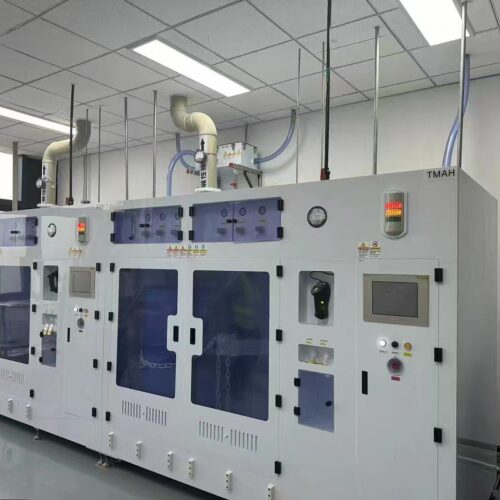
Automated Bulk Chemical Delivery System with Ultra High Purity CDU for Precise Industrial Fluid Control
-
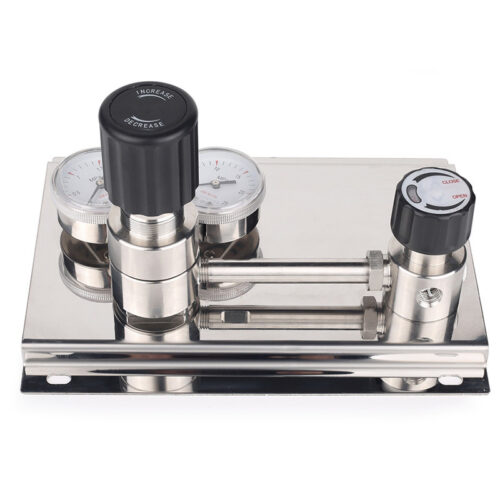
Stainless Steel Fully Automatic Gas Switchover Manifold System Automatic Gas Cylinder Switchover Co2 Cylinder Auto Changeover Controller
-
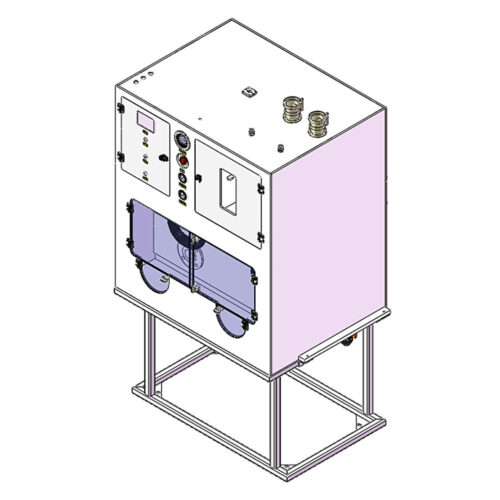
Clean Connection Cabinet JW-300-CCB Valve Manifold Box And Control Valve Box
-
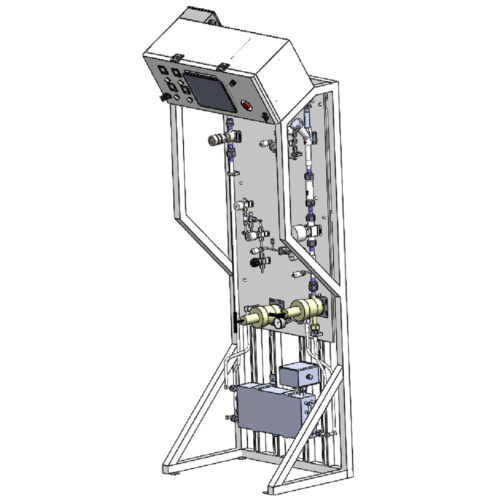
High Purity High Pressure Specialty Gas Bottle Gas Cylinder Storage Cabinet And Gas Pressure Regulating Cabinet For Semiconductor
-
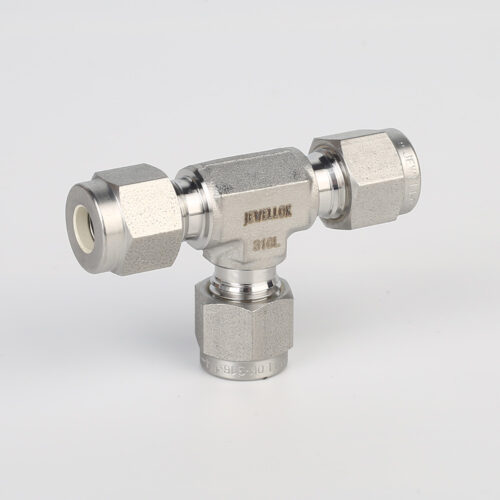
764L Stainless Steel Union Tee High Purity Fitting Union Tee Reducing Tubing Connection
-
Line And Panel Mounting Adjustable Low Pressure Propane And Nitrogen Pressure Regulator JSR-3L & JSR-3LP Series
-
775L Bulkhead Reducing Union | Stainless Steel High Purity Double Ferrule Bulkhead Reducing Unions
-

High Purity Bulk Gas Delivery Systems for Semiconductor Manufacturing and Advanced Chemical Distribution Infrastructure