
Regulator Manufacturer Tel: +86 13380377051
Regulator Manufacturer Tel: +86 13380377051
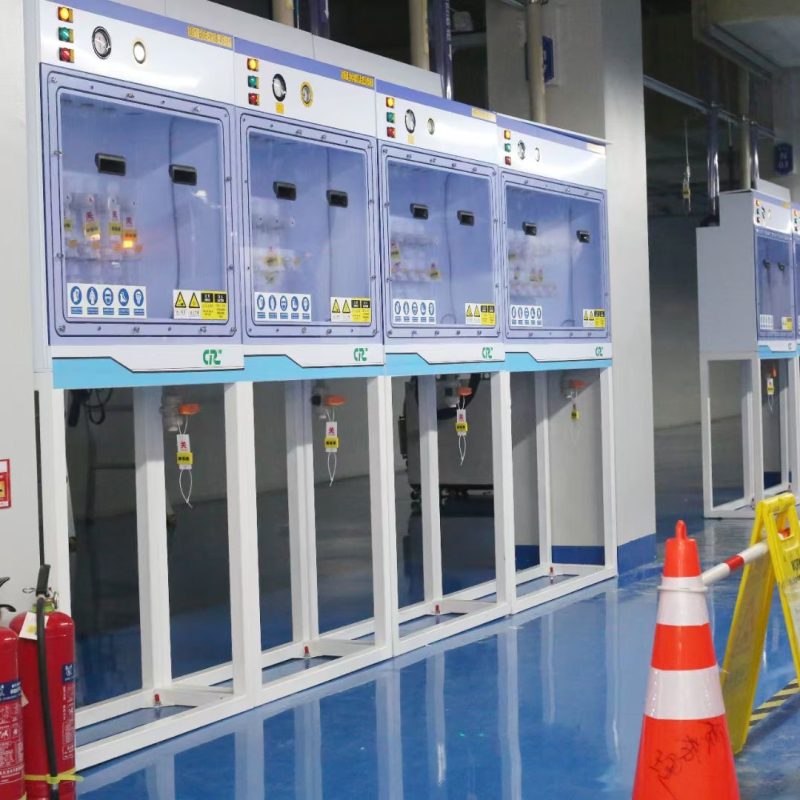
Best Practices for ALD Gas Cabinet Safety, Purity, and Process Stability
Introduction
Atomic Layer Deposition (ALD) has emerged as a cornerstone of modern semiconductor manufacturing, enabling the fabrication of ultra-thin, conformal films with angstrom-level precision. Unlike chemical vapor deposition (CVD), ALD relies on self-limiting surface reactions requiring alternating pulses of highly reactive precursor gases. This unique process places extraordinary demands on the gas delivery system—specifically, the gas cabinet. A well-designed and rigorously maintained gas cabinet is not merely a storage unit; it is the critical interface between hazardous gas supplies and the reaction chamber. Failures at this interface can lead to catastrophic safety incidents, catastrophic purity deviations, or chronic process instability. This article outlines best practices for ensuring that ALD gas cabinets deliver optimal safety, uncompromised purity, and repeatable process stability.

1. Safety: Engineering Controls for Hyper-Reactive and Pyrophoric Gases
ALD processes frequently utilize precursors such as trimethylaluminum (TMA), titanium tetrachloride (TiCl₄), ozone (O₃), and ammonia (NH₃). Many are pyrophoric, toxic, or corrosive. Therefore, safety must be the first pillar of gas cabinet design.
1.1 Fully Enclosed, Negative Pressure Ventilation
Every ALD gas cabinet should be a fully enclosed, continuously ventilated enclosure. The exhaust system must maintain a negative pressure relative to the cleanroom or fab environment. A minimum face velocity of 0.5–0.7 m/s (100–150 fpm) at the point of potential leakage is a common SEMI S2 standard requirement. Exhaust ducts should be dedicated and monitored with flow switches that interlock with the gas supply—if exhaust fails, the gas supply must automatically shut down. For pyrophoric gases like silane or TMA, the exhaust must be fire-rated and fitted with flame arrestors.
1.2 Automated Purge and Ventilation Sequences
A robust purge panel is non-negotiable. The gas cabinet should support automated, sequenced purging using inert gas (typically nitrogen, N₂) at each stage: component replacement, cylinder change-out, and leak check. Best practice dictates a three-cycle purge sequence: evacuate the gas stick to vacuum or low pressure, then backfill with N₂, repeating three times. This reduces residual moisture and oxygen to sub-ppm levels before the cabinet is opened for maintenance.
1.3 Leak Detection and Interlock Systems
Continuous monitoring of the cabinet atmosphere is mandatory. Fixed-point gas detectors should be positioned at the lowest point of the enclosure for heavier-than-air gases (e.g., TMA, WF₆) and at the exhaust duct for lighter gases (e.g., NH₃). Detection thresholds should be set at 10% of the IDLH (Immediately Dangerous to Life or Health) level. Upon detection of any leak above the first alarm threshold, the system must trigger local alarms and close pneumatic isolation valves on both the cylinder and the process tool. A second, higher threshold (e.g., 25% IDLH) should initiate full facility exhaust and evacuation signals.
1.4 Material Compatibility and Fire Suppression
Wetted materials in contact with ALD precursors must be meticulously chosen. 316L stainless steel with electropolished (EP) finish is standard for most halides and metalorganics, but for certain fluorine-based chemistries, nickel-based alloys (Hastelloy C-22) or barrier coatings (e.g., Inconel) may be necessary. Additionally, gas cabinets handling pyrophoric gases should include automatic fire suppression systems—typically dry chemical or inert gas (N₂ or Ar) flooding—rather than water sprinklers, which can exacerbate reactions with water-reactive precursors.
2. Purity: Protecting Angstrom-Level Film Integrity
In ALD, a single monolayer of contamination can ruin device performance. Purity management begins inside the gas cabinet and extends to the point-of-use.
2.1 Ultra-High Purity (UHP) Surface Finish Requirements
All internal surfaces of gas sticks, regulators, valves, and tubing must meet rigorous cleanliness standards. Best practice requires:
-
Surface roughness: Ra ≤ 0.13 µm (5 µin) for critical gas lines, achieved through electropolishing.
-
Passivation: After electropolishing, components must be passivated to form a stable chromium oxide layer, reducing the reactivity of the metal surface with trace moisture or oxygen.
-
Particle control: All components should be cleaned to meet SEMI F72-0313 standards, typically requiring fewer than 1 particle >0.1 µm per component.
2.2 Minimal Dead Volume and Welded Connections
Every dead leg, unnecessary elbow, or threaded fitting is a potential trap for moisture, particles, or reactive residues. Best practice mandates all-welded connections from the cylinder valve to the downstream isolation valve, using orbital welding with documented weld logs (peak temperature, rotation speed, purge flow). Where removable connections are unavoidable (e.g., at the cylinder connection), use metal gasket face-seal fittings (e.g., VCR® type) with nickel or stainless steel gaskets—never elastomeric seals, which outgas hydrocarbons.
2.3 Dedicated Purging and Cross-Contamination Prevention
In facilities with multiple ALD precursors, gas cabinets must be designed to prevent cross-contamination. Each gas line should have a dedicated high-purity N₂ purge line with a pressure-regulated purge valve. The purging sequence should be able to achieve a decay to less than 10 ppm of the original gas species within five volumes of the gas stick. For highly adsorptive precursors (e.g., TMA or water vapor), consider heated purge lines or extended purge cycles.
2.4 Point-of-Use Filtration
Even with UHP gas cabinet design, particles can be generated by diaphragm valve cycling or pressure fluctuations. Install a point-of-use (POU) all-metal filter as close to the ALD chamber as possible—ideally within 30 cm of the injection valve. POU filters should have a porosity of 0.003–0.01 µm (3–10 nm) for ALD precursors to trap metal-organic clusters and nano-particulates. Replace filters according to a time-based schedule, not just on pressure drop, because ALD precursors often leave non-volatile residues.
3. Process Stability: Delivering Repeatable Vapor Pulses
ALD process stability depends on delivering a consistent precursor flux during each sub-second pulse. The gas cabinet and its associated pressure control components directly influence this stability.
3.1 Pressure Regulation: Steady-State vs. Pulsed Delivery
ALD precursors are typically delivered by one of two methods:
-
Carrier gas delivery: Continuous flow of inert gas (Ar or N₂) saturated with precursor vapor.
-
Direct vapor draw (DVB): Valve opens, precursor vapor expands into the chamber.
For carrier gas systems, the gas cabinet must hold the cylinder pressure constant using a two-stage regulator with a 0.01% pressure stability specification. For DVB systems, the pressure upstream of the ALD injection valve must be actively controlled to within ±1 Torr using a pressure transducer and proportional valve feedback loop. Pressure spikes caused by regulator creep are a common source of ALD non-uniformity.
3.2 Temperature Control for Low Volatility Precursors
Many ALD precursors (e.g., Al₂O₃ using TMA/H₂O, or HfO₂ using TEMAH) require precise temperature control to maintain consistent vapor pressure. The gas cabinet should include:
-
Heated enclosures with independent temperature zones (cylinder zone, valve zone, line zone).
-
Temperature uniformity of ±0.5°C across the heated space. Cold spots cause condensation; hot spots cause premature decomposition.
-
Overtemperature protection with independent thermocouples that close pneumatic valves if a setpoint (typically 15°C below the precursor’s decomposition temperature) is exceeded.
3.3 Diaphragm Valve Life and Actuation Timing
ALD depends on extremely fast valve switching—typically 10–100 ms pulse widths. Pneumatically actuated diaphragm valves in the gas cabinet must be qualified for high cycle counts (millions of cycles). Use valves with:
-
Low actuation volume (minimizes compressible gas delays).
-
Position sensors (open/closed feedback to the PLC) to detect valve stiction or failure.
-
Ramp-up testing: Verify each valve’s opening and closing time using a fast pressure transducer (1 kHz sampling) during preventive maintenance.
Best practice: Replace all pneumatic valve diaphragms after 5–8 million cycles, or every 12 months, whichever comes first. Document cycle counts via a maintenance counter.
3.4 Active Pressure Control and Gas Panel Layout
For multi-precursor ALD processes (e.g., Al₂O3/TiO₂ nanolaminates), the gas cabinet should minimize the distance between the cylinder shut-off valve and the process tool’s injection manifold. Keep the gas stick as short as possible—ideally under 2 meters—to reduce volume-induced pulse smearing. Install an active pressure control module (APC) on the cabinet outlet to decouple the cylinder pressure decay from the injection process. The APC should maintain a pressure setpoint between 100 and 500 Torr absolute, depending on the precursor’s vapor pressure curve.
3.5 Real-Time Monitoring for Drift Detection
Process stability cannot be achieved without data. Implement real-time monitoring of the following parameters at the gas cabinet:
-
Upstream pressure (cylinder head pressure).
-
Downstream pressure (delivery line pressure).
-
Cabinet internal temperature (at three points).
-
N₂ purge flow rate.
-
Valve actuation times (open/close delays).
All data should be logged into the fab’s equipment data acquisition system (e.g., EDA/FDC) with alarms for any deviation exceeding ±3% of the baseline.
4. Maintenance and Operational Protocols
Best practices are only effective if supported by disciplined maintenance and change-out procedures.
4.1 Cylinder Change-Out (CCO) Procedure
A standardized, written CCO procedure is essential. The steps should be:
-
Close the cylinder valve.
-
Evacuate the gas stick to <50 mTorr.
-
Purge with N₂ to atmospheric pressure.
-
Repeat steps 2–3 three times.
-
Remove the cylinder.
-
Install the new cylinder, leak-check with a helium leak detector (sensitivity ≤1×10⁻⁹ atm·cc/sec).
-
Purge the gas stick three times before opening the new cylinder valve.
4.2 Preventive Maintenance (PM) Schedule
| Component | PM Interval | Action |
|---|---|---|
| Gas detectors | 6 months | Span calibration with certified gas |
| Regulators | 12 months | Seat replacement, leak check |
| Pneumatic valves | 12 months or 5M cycles | Diaphragm replacement |
| POU filter | 6 months | Replace, perform particle count |
| Heated zones | 12 months | Thermocouple validation, heater resistance check |
| Tubing | 5 years | Boroscope inspection for corrosion |
4.3 Training and Documentation
All technicians who interact with ALD gas cabinets must complete certified training on:
-
Chemical properties (pyrophoricity, water reactivity, toxicity).
-
Emergency response (cylinder leak, fire, power failure).
-
UHP handling (gloves, tools, no touching polished surfaces).
Maintain a logbook for each cabinet documenting every CCO, PM action, alarm event, and gas purity certification.
Conclusion
The ALD gas cabinet is far more than a simple gas storage box. It is a dynamic, safety-critical subsystem that directly influences personnel safety, film purity, and process repeatability. Implementing the best practices described here—negative-pressure ventilation, UHP surface finishes, active pressure control, heated zones, and rigorous maintenance—will reduce leakage risks, eliminate particle contamination, and stabilize the delicate vapor pulses that define ALD. As semiconductor devices shrink to sub-3nm nodes and ALD cycles increase into the thousands per wafer, the quality of the gas cabinet will become an ever more visible lever for manufacturing excellence. Invest in its design, respect its limitations, and monitor its performance continuously. The result will be a safer fab, purer films, and a truly stable ALD process.
For more about best practices for ALD gas cabinet safety, purity, and process stability, you can pay a visit to Jewellok at https://www.specialtygasregulator.com/product-category/specialty-gas-cabinet/ for more info.
-

Semi Automatic Gas Changeover Manifold System Manual Changeover Manifold Panel Single Stage Automatic Switchover Board
-
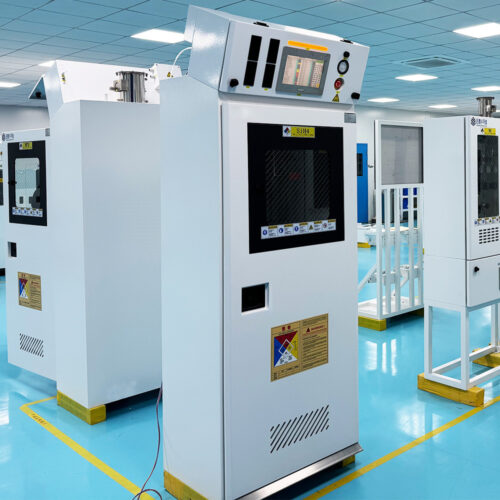
Fully Automated Gas Cabinet For Precise UHP Gas Delivery And High Purity Gas Delivery Systems JW-300-GC
-
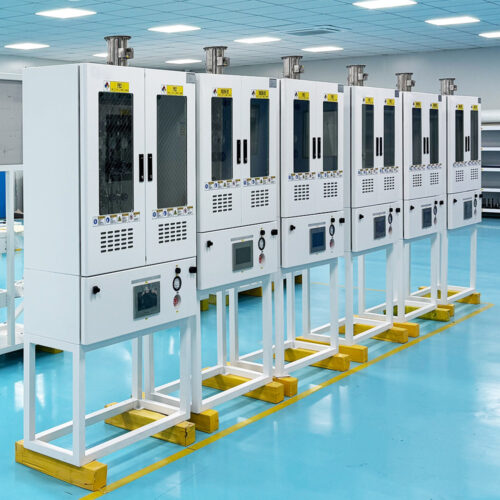
Integrated Gas Delivery Solutions with VMB Valve Manifold Box and Automatic Gas Switchover Systems for Industrial
-
772L Male Branch Tee | Stainless Steel High-Purity Tube Fitting Male Branch Tee
-
UHP Liquid Chemical Delivery Systems with Nitrogen Blanketing and Secondary Containment for Hazardous Industrial Chemical Processing
-
739 High Purity LMR Male Adapter Tube To Pipe Fittings And Adapters
-
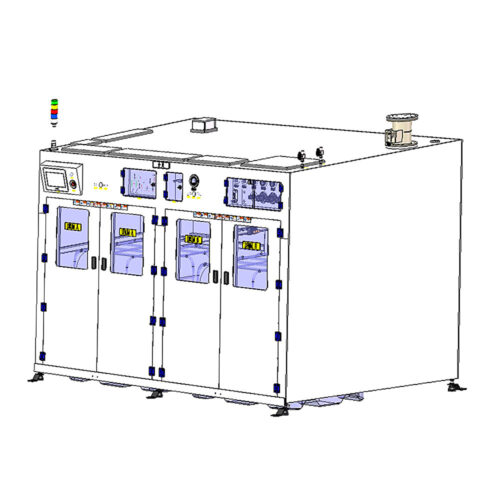
High Purity Chemical Dispense System & Packing System For Semiconductors JW-200L-CDM & JW-1000L-CDM
-
739LF High Purity Female Adapter Tube To Pipe Fittings And Connectors