
Regulator Manufacturer Tel: +86 13380377051
Regulator Manufacturer Tel: +86 13380377051
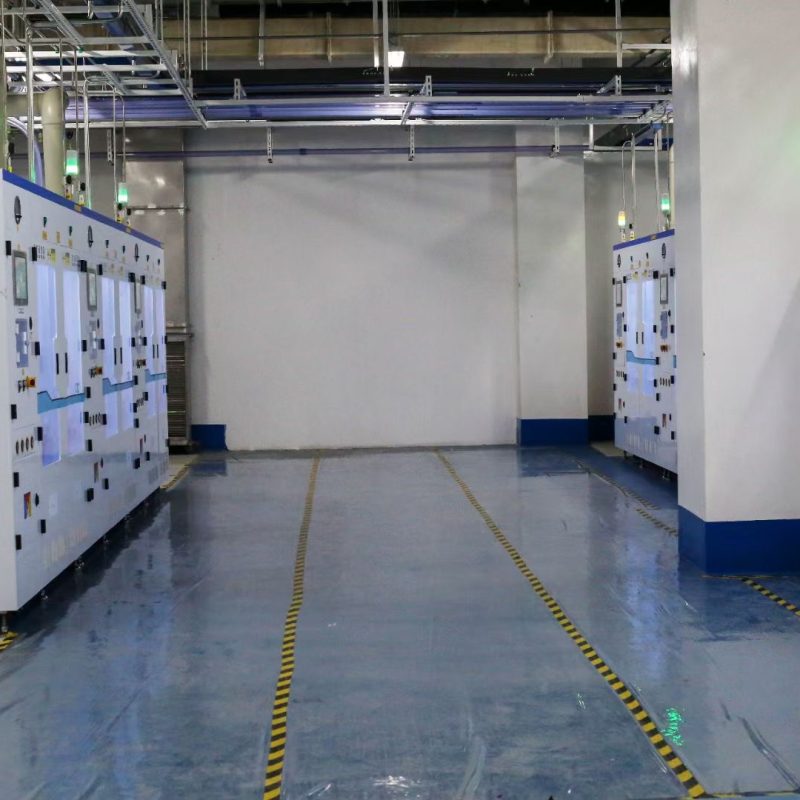
What is a High-Purity Bulk Chemical Distribution System (BCDS)?
In the world of advanced manufacturing—specifically semiconductor fabrication, photovoltaic cell production, and high-end pharmaceuticals—the “circulatory system” of the facility is the High-Purity Bulk Chemical Distribution System (BCDS). As microchips shrink to sub-7nm nodes and drug formulations become increasingly sensitive, the infrastructure used to move chemicals from a storage tank to a production tool has become as critical as the process tools themselves.
A High-Purity BCDS is an automated network designed to store, manage, and deliver ultrapure chemicals (such as acids, bases, solvents, and specialized slurries) with zero contamination and 99.999% uptime.
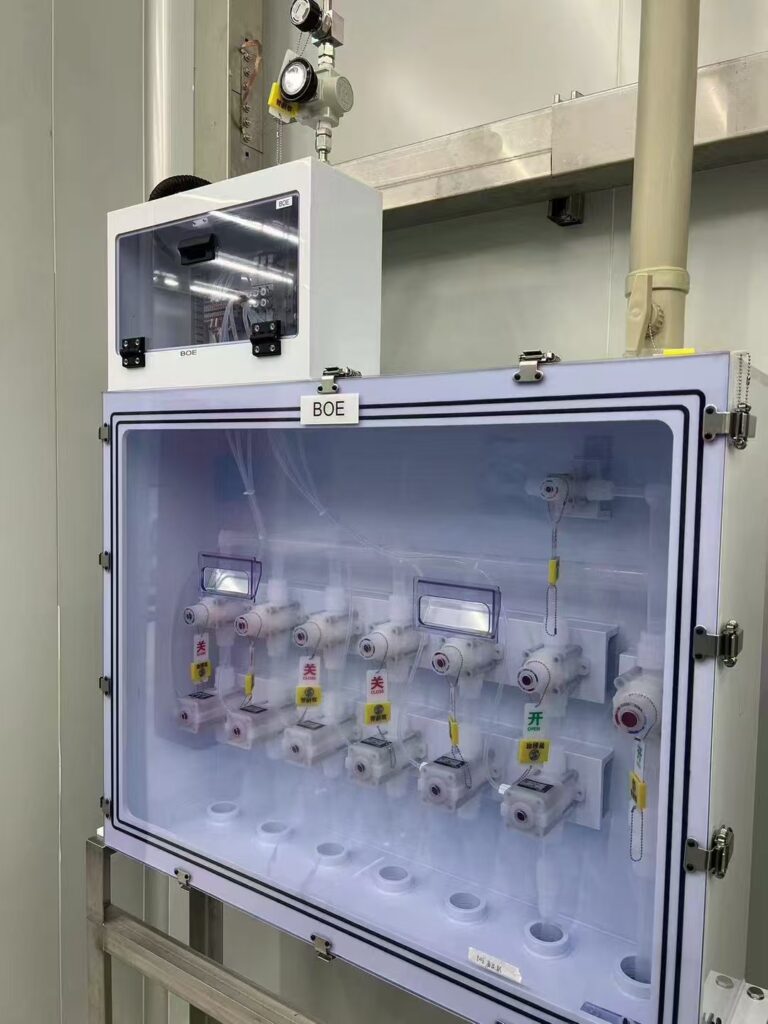
- The Core Architecture: From Source to Tool
A BCDS is not merely a collection of pipes and pumps; it is a highly engineered, closed-loop environment. The system typically follows a hierarchical flow:
Bulk Storage and Supply
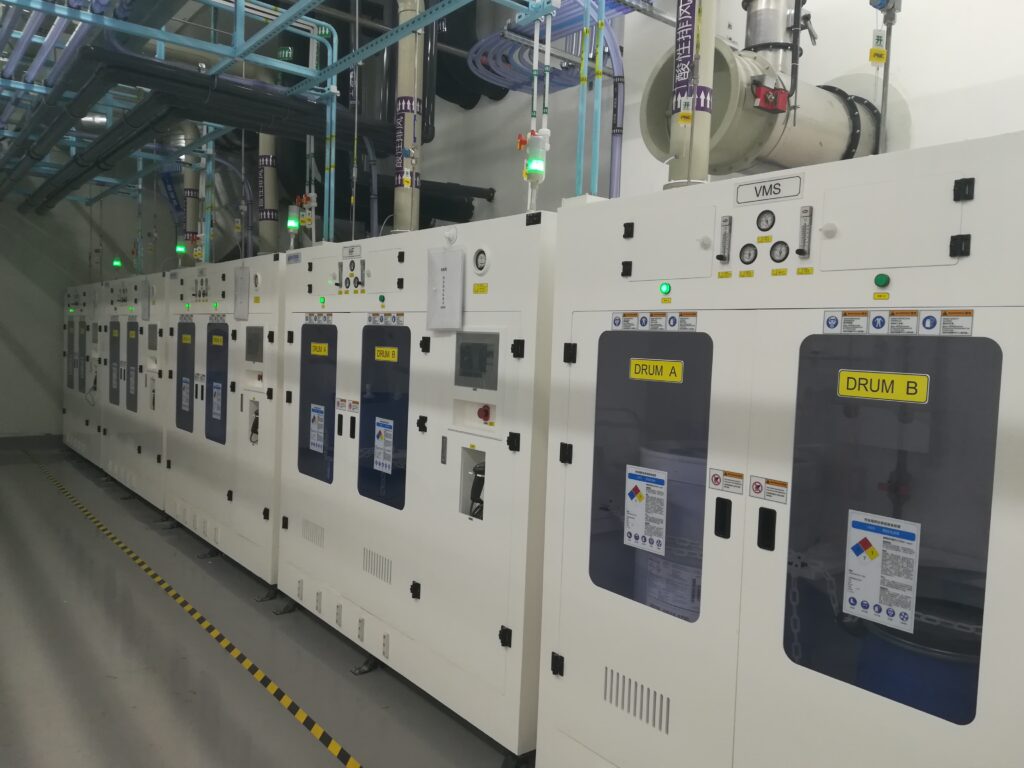
The journey begins at the Bulk Storage Area, often located in a specialized chemical room or a “sub-fab” level. Chemicals arrive in large-scale containers such as 1,000-liter Intermediate Bulk Containers (IBCs), 200-liter drums, or even direct tanker truck hookups. These sources are connected to the distribution system via automated Changeover Manifolds, which allow the system to switch from an empty container to a full one without interrupting the flow or introducing air pockets.
The Distribution Network
Once the chemical enters the system, it travels through a network of high-purity piping. Unlike standard industrial plumbing, BCDS piping is usually constructed from 316L Stainless Steel that has undergone Electropolishing (EP) to achieve a surface roughness of 5Ra or less. This mirror-like finish prevents particles from “snagging” on the pipe walls and inhibits the growth of bacteria or the buildup of chemical residues. For highly corrosive acids, fluoropolymers like PFA (Perfluoroalkoxy) are used due to their extreme chemical inertness.
Delivery and Control Units
Before reaching the final process tool, chemicals often pass through a Chemical Dispense Unit (CDU) or a Valve Manifold Box (VMB). These units act as “traffic controllers,” regulating pressure, filtering out microscopic impurities (down to 0.003μm), and ensuring the exact volume required is delivered to the specific point of use.
- Key Technical Requirements: Purity and Precision
In semiconductor manufacturing, a single microscopic particle can bridge the gap between two transistors, ruining an entire silicon wafer. Therefore, a BCDS must meet three non-negotiable technical standards:
Contamination Control (PPT Levels)
Modern BCDS units are rated for Parts-Per-Trillion (PPT) purity. This is achieved through multi-stage filtration and the use of nitrogen (N2) blanketing. By maintaining a positive pressure of high-purity nitrogen inside the storage tanks, the system prevents atmospheric oxygen and moisture from reacting with the chemicals, which could lead to degradation or the formation of precipitates.
Precision Metering
Chemicals used in etching or CMP (Chemical Mechanical Planarization) require exact concentrations. Advanced BCDS units incorporate Mass Flow Controllers (MFCs) and servo-driven diaphragm pumps. These allow the system to deliver fluids with an accuracy of ±0.5% to ±1%, ensuring that the chemical “recipe” remains consistent across thousands of production cycles.
Materials Compatibility
The system must be “chemically dead”—meaning it does not react with the substance it carries. Engineers must carefully match the system’s seals (O-rings), diaphragms, and pipe linings to the specific chemical. For example, while stainless steel is excellent for many solvents, it would be rapidly corroded by Hydrofluoric Acid (HF), which requires specialized PFA-lined components.
- Automation and Safety Protocols
Because the chemicals involved are often toxic, flammable, or highly corrosive, safety is integrated into every layer of the BCDS software and hardware.
Real-Time Monitoring
Modern systems, like those developed by Shenzhen Jewellok Technology, utilize PLC-based (Programmable Logic Controller) automation with 3D HMI (Human Machine Interface) screens. Operators can monitor flow rates, tank levels, and pressure gradients in real-time. If a sensor detects a pressure drop—indicating a potential leak—the system executes an Emergency Power Off (EPO) and closes pneumatic valves in milliseconds.
Secondary Containment
All high-purity chemical lines are “double-contained.” This means the primary process pipe is nested inside a secondary outer pipe or cabinet. If the inner pipe leaks, the chemical is trapped in the outer layer, where liquid sensors trigger an alarm, preventing the hazardous material from reaching the floor or the environment.
- Why the Industry is Shifting to Bulk Systems
In the past, many facilities used manual “bottle-pour” methods or small-scale canisters. The transition to fully automated Bulk Chemical Distribution Systems offers three major advantages:
- Reduced Human Exposure: By automating the delivery from bulk containers, technicians no longer need to manually handle hazardous bottles, significantly reducing the risk of chemical burns or inhalation of toxic fumes.
- Operational Efficiency: A BCDS eliminates the downtime associated with frequent container changes. By using “Day Tanks” (buffer tanks), the system can provide a continuous 24/7 supply even while the primary bulk source is being swapped.
- Cost Savings: Purchasing chemicals in bulk (IBCs or tankers) is significantly cheaper than buying individual small bottles. Furthermore, the precision of a BCDS reduces “over-pouring” and chemical waste, which can save a high-volume fab millions of dollars annually.
- Future Trends: Smart BCDS and Industry 4.0
The next generation of chemical delivery is moving toward Smart BCDS. This involves the integration of IoT (Internet of Things) sensors that use machine learning to predict when a filter is likely to clog or when a pump diaphragm is nearing the end of its life. This “Predictive Maintenance” ensures that the system never fails unexpectedly, which is vital in an industry where a single hour of downtime can cost a semiconductor fab over $100,000.
Furthermore, as the world moves toward “Green Manufacturing,” BCDS designs are evolving to include better chemical recovery and recycling modules, allowing used solvents to be purified and fed back into the system, drastically reducing the environmental footprint of high-tech production.
Conclusion
The High-Purity Bulk Chemical Distribution System is the invisible backbone of modern technology. Without its ability to deliver ultrapure fluids with surgical precision and absolute safety, the production of the microchips in our smartphones, the batteries in our electric vehicles, and the life-saving drugs in our hospitals would be impossible. As manufacturing requirements become even more stringent, the BCDS will continue to evolve, pushing the boundaries of material science, automation, and contamination control.
For more about what is a high-purity bulk chemical distribution system (bcds), you can pay a visit to Jewellok at https://www.specialtygasregulator.com/product-category/uhp-liquid-delivery-system/ for more info.
-
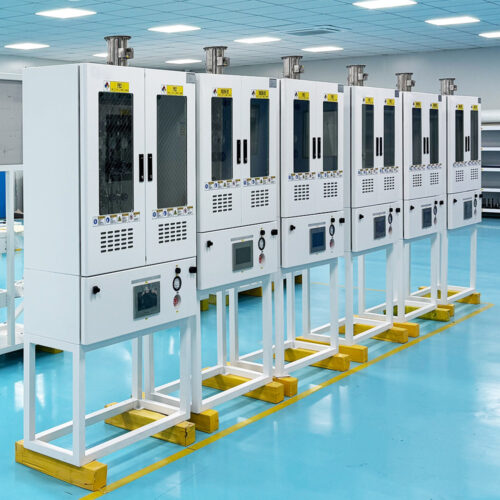
Precision Stainless Steel Valve Manifold Panel for Inert Gas Distribution in Cleanroom Manufacturing Environments
-
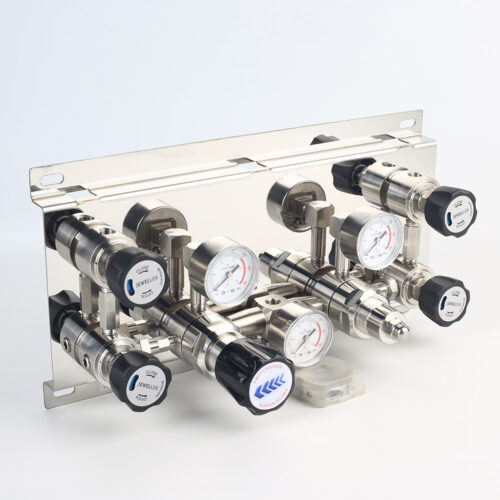
Pressure Control Panels For High Purity Gas Control System JSP-3AE Series From Pressure Control Panels Suppliers And Manufacturer
-
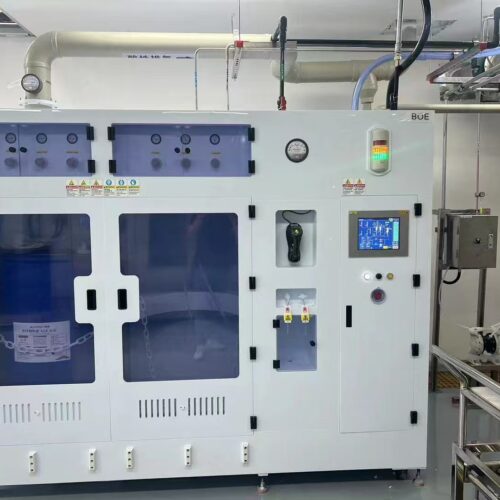
Chemical Delivery Modules for Automated Blending and Precise Dilution in Modern Wafer Cleaning Applications
-
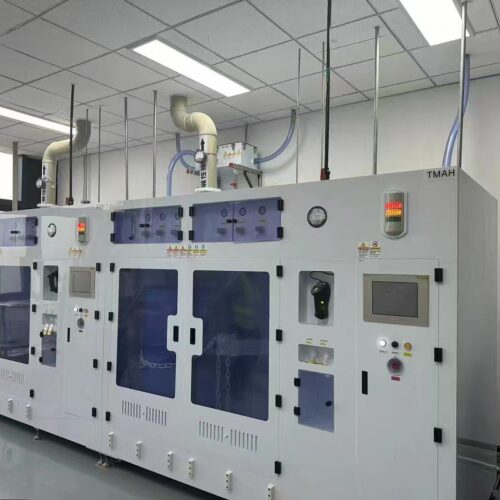
Custom Bulk Chemical Delivery System and Automatic Chemical Dispense Unit (CDU) for Solar Cell and EV Battery Production
-
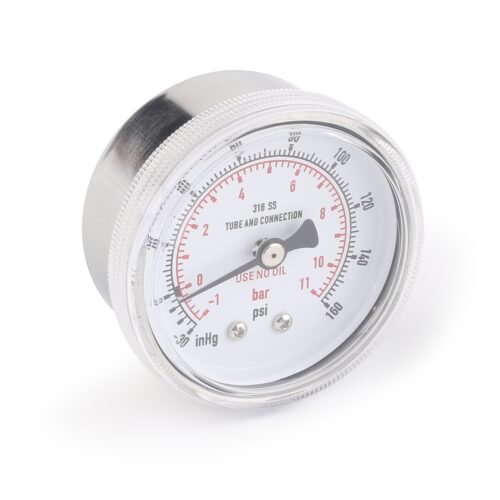
Ultra High Purity Pressure Gauge For Laboratory And Semiconductor JR Series
-
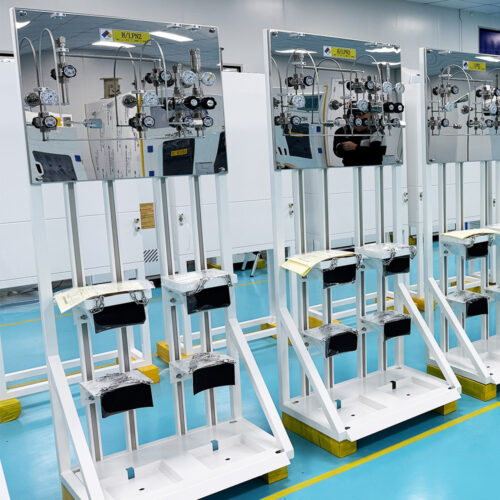
Manual Gas Rack High Purity Gas Delivery Systems JW-100-GR
-
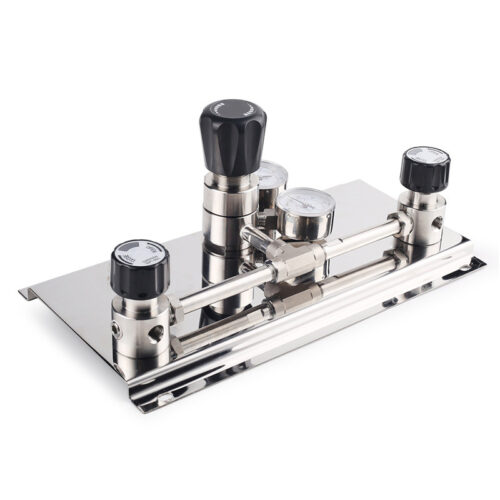
High Purity Semi-Auto Stainless Steel Changeover Manifold System, Nitrogen High Pressure Control Panel With Semiconductor Valve Manifold Box Diaphragm Valves
-
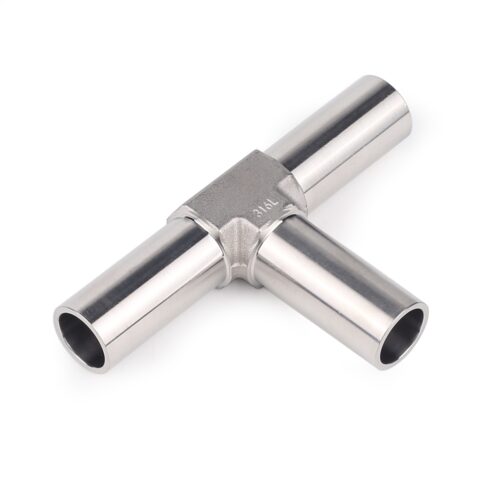
Stainless Steel Ultra Clean Welding Joint Fittings TW Series TRW Series & CW Series