
Regulator Manufacturer Tel: +86 13380377051
Regulator Manufacturer Tel: +86 13380377051
5 Key Considerations When Selecting a TMA Gas Switching Manifold
In the precise and demanding world of semiconductor manufacturing, thin film deposition processes like Atomic Layer Deposition (ALD) and Metal-Organic Chemical Vapor Deposition (MOCVD) are foundational. Precursors such as Trimethylaluminium (TMA) are critical for depositing high-quality aluminum oxide (Al₂O₃) and other compound films. However, TMA’s highly pyrophoric and moisture-sensitive nature makes its safe, reliable, and precise delivery a significant engineering challenge. At the heart of this delivery system lies the gas switching manifold—a component whose selection is far from trivial. A poorly chosen manifold can lead to process drift, particle contamination, hazardous leaks, or catastrophic failure. Therefore, selecting the right TMA gas switching manifold requires a meticulous evaluation of several technical factors. This article outlines the five most critical considerations to ensure safety, purity, and process stability.
- Material Compatibility and Surface Passivation
The foremost consideration is the manifold’s inherent resistance to the aggressive chemistry of TMA. TMA readily reacts with air, moisture, and even with passive oxide layers on many metals, leading to decomposition, particle generation, and clogging.
- Core Material Selection: Stainless steel (typically 316L or 316LV) is the standard base material for high-purity gas systems. However, for TMA, the inner surface condition is paramount. Electropolishing is essential to create a smooth, defect-free surface that minimizes the total surface area where TMA can adsorb or react, thereby reducing outgassing and particle traps.
- The Critical Role of Passivation: Raw stainless steel has a chromium oxide layer that can be compromised and react with TMA. Passivation—the process of enhancing and stabilizing this oxide layer—is non-negotiable. The chosen manifold supplier must demonstrate a rigorous passivation protocol (often using nitric acid or citric acid processes) that results in a robust, inert surface. For ultimate compatibility, manifolds with aluminum-coated or fully aluminum flow paths are available. Since TMA is an aluminum organometallic, it is far less likely to react with a native aluminum oxide layer, virtually eliminating the risk of decomposition within the manifold itself. This represents the gold standard for TMA delivery but at a higher cost.
- Seal Integrity: All seals must be compatible. Metal gaskets (CF, VCJ) with controlled plating are preferred over polymers. If elastomers like perfluoroelastomers (FFKM) are used, they must be of a high-grade, certified for use with aggressive organometallics, and meticulously installed to prevent permeation or degradation.
Consequence of Neglect: Choosing a TMA gas switching manifold with poor material finish or inadequate passivation will result in gradual TMA decomposition. This manifests as process drift (changing growth rate per cycle), increased particle counts leading to device defects, and eventual clogging of lines and valves, causing costly tool downtime.
- Flow Path Design and Dead Volume Minimization
The internal geometry of the manifold directly impacts process performance, particularly in ALD where pulse sharpness and purity are critical.
- Dead Volume: This refers to any volume in the manifold and connected lines where gas can be trapped and not efficiently purged. After a TMA pulse, residual precursor in dead volumes will slowly desorb or be slowly carried out by the purge gas. This creates “tailing”—a smearing of the TMA pulse into the purge and subsequent precursor steps—which degrades the film’s interfacial sharpness and can lead to incorrect stoichiometry in multi-precursor processes.
- Manifold Architecture: Low-dead-volume (LDV) or ultra-low-dead-volume (ULDV) designs are essential. This involves using specially designed valve bodies, optimized internal porting that minimizes cavities, and careful routing of connections. The goal is a compact, direct flow path. Manifolds that integrate valves, pressure transducers, and filters into a single, machined block often achieve lower dead volume compared to systems built from discrete components connected by tubing.
- Purging Efficiency: The design must facilitate efficient purging. This often means having dedicated, strategically placed purge gas inlets that create a sweeping flow across all critical volumes. The placement of pressure sensors should also be considered to avoid creating small, difficult-to-purge pockets.
Consequence of Neglect: High dead volume causes long purge times to clear the manifold, reducing the overall process cycle speed (wafers per hour). More critically, it leads to precursor intermixing, poor ALD self-saturation, and graded interfaces, which are unacceptable for advanced logic and memory devices.
- Valve Technology and Actuation Performance
The valves are the switching heart of the manifold, and their performance dictates the speed, reliability, and leak-tightness of the system.
- Valve Type: Diaphragm valves are overwhelmingly preferred over bellows valves for TMA service. They offer a hermetically sealed, packless design where the actuator is completely isolated from the wetted path by the diaphragm. This eliminates a major potential leak path. The diaphragm material (often Hastelloy with a PTFE or FFKM seal) can be selected for TMA compatibility.
- Actuation Speed and Control: For fast ALD cycles (<1 second pulse), pneumatically actuated valves with high-speed pilots are necessary. The consistency of actuation time (from signal to fully open/closed) is crucial for reproducible pulse timing. Some advanced systems employ piezoelectric valves for exceptionally fast and precise micro-dosing, though at a higher cost and complexity.
- Leak Integrity: The valve’s leak rate specification, both upstream and across the seat, is critical. A leak from the carrier gas line into the TMA line (or vice versa) will cause continuous, uncontrolled precursor flow, ruining the process. Valves must maintain a helium leak rate of <1 x 10⁻⁹ atm·cc/sec to ensure integrity. The fail-safe mode (normally open or closed) must also be specified based on safety and process requirements—typically, valves on TMA sources are configured to fail closed.
Consequence of Neglect: Slow valves limit process speed. Inconsistent valves cause pulse timing jitter. High-seat-leak valves lead to process contamination and wasted precursor. Valve failure in an unsafe state could lead to a hazardous release.
- Safety and Hazard Mitigation Features
Handling pyrophoric materials mandates that safety is engineered into the component, not just the system around it.
- Leak Detection Ports: The manifold should be equipped with sniffer ports or a dedicated purged enclosure interface. These allow the manifold to be housed inside a continuously purged cabinet. An analyzer samples this purge gas for trace TMA, providing early warning of any micro-leaks long before they become a visible or hazardous issue.
- Fire-Resistant Design: While the manifold itself may not be rated to withstand a full fire, its design should consider fire safety. Use of flame-arresting frits on vent lines, construction with fire-resistant materials, and ensuring critical seals won’t instantly fail under heat are important. The manifold should facilitate integration into a double containment system (e.g., a pipe-in-pipe vent line).
- Pressure Management: Integrated pressure relief devices (PRDs) or rupture discs, set at a safe pressure below the rating of the weakest component (like the TMA bubbler), protect against over-pressurization from a malfunctioning heater or valve. Pressure transducers with high accuracy at low pressures are needed for precise bubbler pressure control and for monitoring system integrity.
Consequence of Neglect: Overlooking integrated safety features shifts the entire burden to external systems, increasing complexity and potential points of failure. A lack of early leak detection can turn a minor seal failure into a major pyrophoric incident or fire.
- Thermal Management and Integration Capability
TMA must be maintained at a precise temperature to ensure a stable vapor pressure. The manifold is not a passive component in this thermal regime.
- Temperature Uniformity: The entire manifold, from the source inlet to the process tool outlet, must be isothermal. Any cold spot will cause TMA to condense, creating a time-varying source of precursor that disrupts process stability and can later revaporize unpredictably. Hot spots can cause thermal decomposition. The manifold design should facilitate easy and uniform heating jacket or trace heating installation. Some advanced manifolds come with integrated heating elements and temperature control zones.
- Integration Footprint: The physical layout must allow for clean, simple, and short connections to the TMA source bottle and to the process chamber. A compact, well-designed manifold reduces the overall heated volume and the length of exposed tubing, simplifying temperature control and reducing system footprint. Compatibility with standard faceplate mounting or rack systems is important for serviceability.
- Serviceability and Diagnostics: Despite best efforts, maintenance will be required. A good manifold design allows for modular replacement of valves or sensors without requiring a full system rebuild. Features like test ports for in-situ pressure decay tests or helium leak checks are invaluable for preventative maintenance and troubleshooting.
Consequence of Neglect: Thermal gradients lead to TMA condensation and “puffing” (unstable delivery), causing irreproducible film thickness and properties. A poorly integrated, sprawling manifold is difficult to heat, harder to maintain, and more prone to leaks at its numerous connections.
Conclusion
Selecting a gas switching manifold for TMA is a strategic decision that balances advanced engineering with practical operational demands. It is not merely a plumbing fixture but a core component that defines the safety envelope and process capability of the deposition tool. By rigorously evaluating Material Compatibility, Flow Path Design, Valve Performance, Integrated Safety, and Thermal Management, engineers and procurement specialists can make an informed choice.
The optimal manifold is one that is constructed from impeccably passivated or aluminum-compatible materials, features an ultra-low dead volume architecture, is equipped with fast and leak-tight diaphragm valves, incorporates proactive safety monitoring, and is designed for precise, uniform heating. Investing in a high-quality, purpose-built TMA manifold minimizes operational risks, ensures consistent, high-purity film deposition, and ultimately protects the substantial investment in the fab tool and the valuable substrates it processes. In the mission-critical environment of semiconductor fabrication, this component selection is a cornerstone of both yield and safety.
For more about 5 key considerations when selecting a TMA gas switching manifold, you can pay a visit to Jewellok at https://www.specialtygasregulator.com/product-category/ultra-high-purity-diaphragm-valves/ for more info.
-
7108L Cylinder Cap Connectors For Ultra High Purity Gases
-
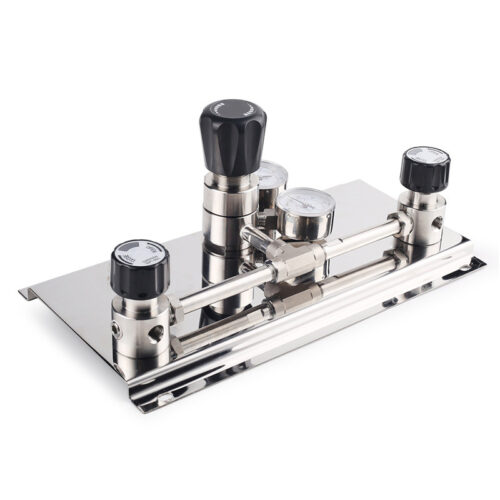
High Purity Semi-Auto Stainless Steel Changeover Manifold System, Nitrogen High Pressure Control Panel With Semiconductor Valve Manifold Box Diaphragm Valves
-
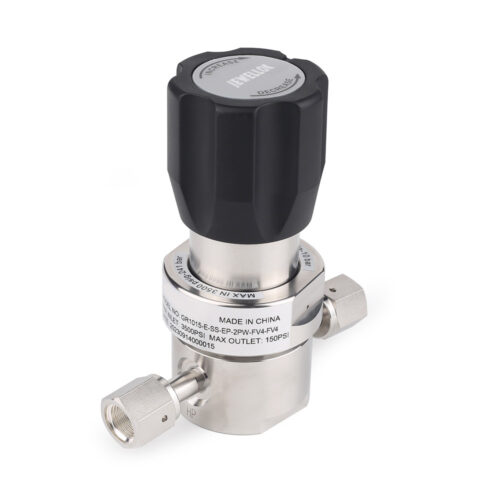
JR1000 Series UHP Ultra High Purity Single Stage Pressure Reducing Regulator And Low To Intermediate Flow
-
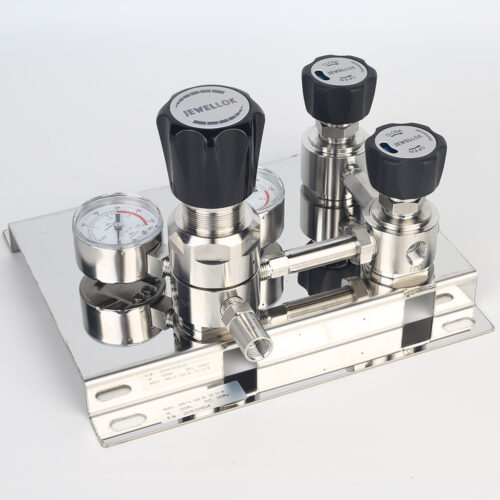
Stainless Steel 316L Single Stage Regulator Pressure Control Panels JSP-1E Series For Semiconductor Fluid Control
-
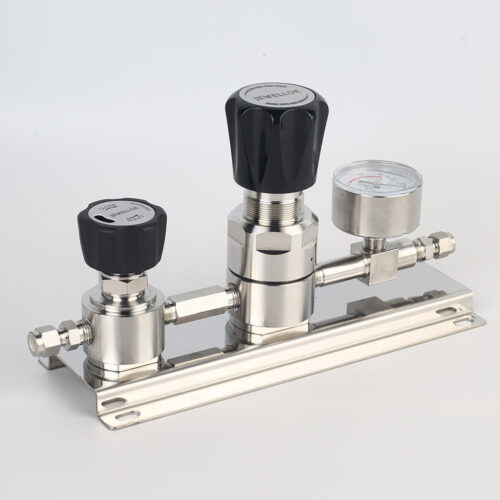
High Purity High Flow Pressure Control Regulators & Valves Gas Stick Assemblies JSR-2TG Series
-
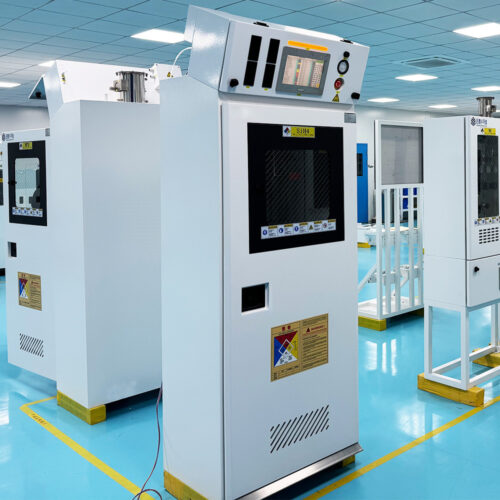
Integrated Scrubber Tail Gas Treatment Cabinet for Safe Bulk Specialty Gas System Exhaust Management
-
Fully Automated Gas Cabinet For Precise UHP Gas Delivery And High Purity Gas Delivery Systems JW-300-GC
-
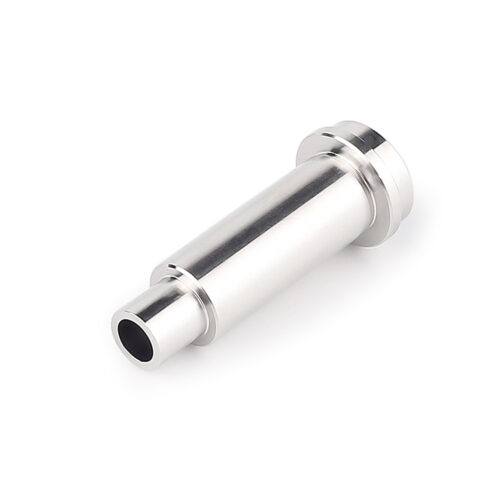
UHP Metal Gasket Face Seal Fittings Vacuum Coupling Metal Face Seal Join Long Gland And Short Gland