
Regulator Manufacturer Tel: +86 13380377051
Regulator Manufacturer Tel: +86 13380377051
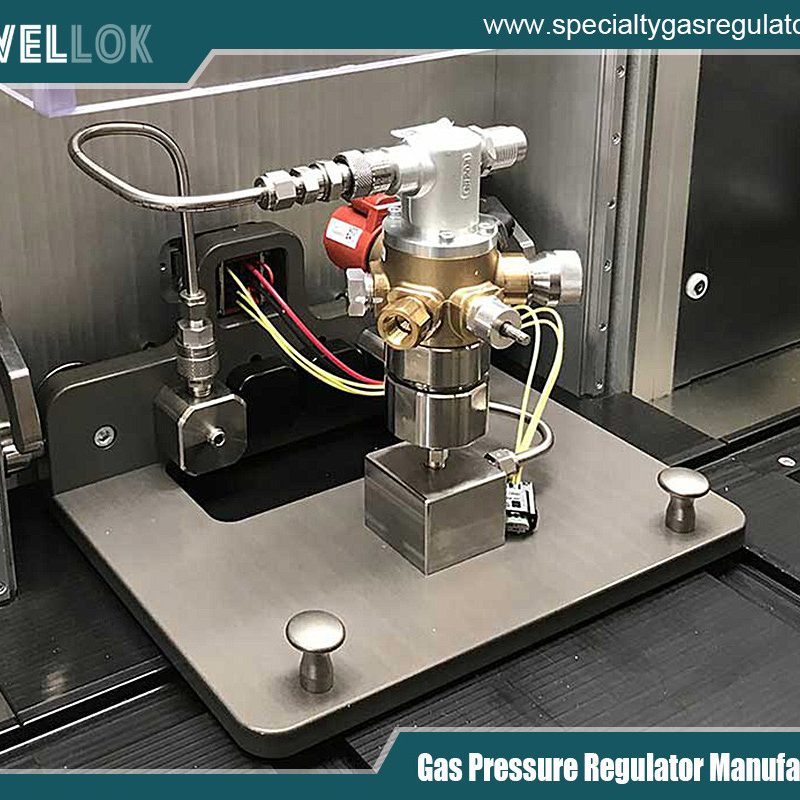
How to Optimize the Flow Parameters of High-Pressure Hydraulic Needle Valve to Meet the Micro-Flow Control Requirements Under High-Pressure Conditions?
High-pressure hydraulic needle valves are precision-engineered components essential for regulating fluid flow in demanding applications such as aerospace hydraulics, industrial servo systems, injection molding machines, and advanced manufacturing equipment. These valves feature a slender, tapered needle that adjusts the annular gap between itself and the valve seat to control flow rates with fine granularity. In high-pressure environments—often exceeding 100 bar or up to several thousand PSI—the challenge intensifies due to factors like fluid compressibility, potential cavitation, and material deformation, which can compromise regulation accuracy.
Flow regulation accuracy refers to the valve’s ability to maintain consistent, predictable flow rates in response to adjustments, particularly for micro-flow control where rates may be as low as microliters per minute. Micro-flow requirements demand minimal hysteresis, low leakage, and linear response to ensure precise metering without overshoot or instability. Under high pressure, inaccuracies can lead to system inefficiencies, pressure surges, or failures in downstream components. Critical structural parameters directly influence these performance metrics by dictating flow dynamics, sealing integrity, and mechanical stability.
This article explores the primary structural parameters affecting accuracy, including needle geometry, seat design, clearances, and material properties. It then discusses optimization strategies, leveraging simulation, experimental validation, and design iterations to achieve reliable micro-flow control. By addressing these, engineers can enhance valve performance, extending service life and operational precision in harsh conditions.

Principles of Operation in High-Pressure Hydraulic Needle Valves
A hydraulic needle valve operates by linearly displacing a needle within a conical or cylindrical seat, varying the effective orifice area to modulate flow. The flow rate Q is governed by the equation Q = C_d * A * √(2ΔP/ρ), where C_d is the discharge coefficient, A is the flow area, ΔP is the pressure drop, and ρ is fluid density. In high-pressure setups, ΔP is large, amplifying sensitivity to small changes in A, which is ideal for micro-flow but prone to errors from geometric imperfections or elastic deformations.
For micro-flow, the valve must achieve resolutions finer than 1% of full scale, often requiring needle lifts on the order of micrometers. High pressure exacerbates issues like radial expansion of the seat or needle deflection, altering A unpredictably. Accuracy is quantified by metrics such as linearity (flow vs. position), repeatability (hysteresis <0.5%), and leakage rates (<0.01 cc/min at shutoff). Structural parameters modulate these by influencing turbulence, pressure distribution, and contact forces.
Critical Structural Parameters Affecting Flow Regulation Accuracy
Several interrelated parameters define the valve’s structure and directly impact accuracy. These include geometric features of the needle and seat, dimensional tolerances, and material selections.
Needle Geometry: Diameter, Taper Angle, and Tip Shape
The needle’s diameter (DN) and taper angle (β, or apex angle) are foundational. A smaller DN reduces the stressed area at the base, lowering the force required for actuation and minimizing inertia for faster response. However, under high pressure, a larger DN can enhance sealing by increasing contact pressure, reducing leakage that skews micro-flow accuracy. The taper angle β critically affects flow linearity: small angles (e.g., 10-20°) provide gradual area changes for precise micro-regulation but limit maximum flow and increase sensitivity to vibrations. Larger angles (up to 90°) enable quicker adjustments but introduce non-linearity due to abrupt flow transitions.
Tip shape—conical, rounded, or sharp-edged—impacts fluid dynamics. Sharp-edged tips promote vena contracta effects, reducing effective A and C_d, which can cause flow instability in micro-regimes. Rounded tips mitigate erosion from high-velocity jets and improve flow attachment, enhancing precision in aggressive fluids. In high-pressure conditions, tip deformation under contact stresses alters the gap, leading to hysteresis; for instance, conical tips in 100-bar systems experience fluctuating pressures that amplify torque demands, degrading repeatability.
Seat and Orifice Design
The seat’s orifice diameter and profile determine the baseline flow path. A matched conical seat with precise angular tolerance ensures uniform annular gap formation. Mismatches cause eccentric flow, increasing turbulence and pressure fluctuations that erode accuracy. Inlet and outlet passage diameters (analogous to IPD/OPD in control valves) influence pressure buildup: narrow inlets slow response by restricting supply, while wide outlets accelerate relief but risk cavitation in micro-flows. Under high pressure, seat expansion due to hoop stresses widens the gap unpredictably, promoting leakage. Non-dimensional parameters like ζ (needle position relative to seat) and λ (exit channel geometry) normalize these effects, with optimal values minimizing hydraulic losses.
Clearances and Fit Tolerances
Radial and axial clearances between needle and seat govern leakage and backlash. Tight fits (<5 μm) are essential for micro-flow shutoff but heighten stiction and wear under pressure-induced loads. Excessive clearance allows bypass flow, reducing regulation resolution. Threading precision in the stem mechanism affects positional accuracy; coarse threads sacrifice finesse for robustness, while fine micrometer threads enable sub-micron adjustments but amplify sensitivity to thermal expansion.
Material Properties and Surface Finish
Materials must resist deformation; high-strength alloys like hardened steel or Inconel maintain geometry under 5000 PSI, but polymers (e.g., POM tips) reduce friction for smoother control. Surface roughness (Ra <0.2 μm) minimizes drag and leakage, while hardness mismatches prevent galling. In high-pressure micro-flow, material elasticity affects compliance: stiff materials preserve shape, but compliant ones conform for better sealing at the cost of hysteresis.
These parameters interact; for example, a small β with tight clearance excels in low-flow linearity but demands premium materials to avoid high-pressure buckling.
Effects on Flow Regulation Accuracy Under High-Pressure Micro-Flow Conditions
In micro-flow scenarios (Re <1000), laminar dominance amplifies geometric influences: minor taper deviations cause disproportionate area changes, yielding non-linear Q vs. lift curves. High pressure (ΔP >100 bar) induces elastic deformations, where seat radial strain ε_r = (P * r)/(E * t) (P=pressure, r=radius, E=modulus, t=thickness) alters clearances, increasing leakage by 10-20% and degrading repeatability.
Response times—opening/closing delays (T1-T4)—are sensitive: larger DN or CPD delays opening by reducing net force, while OPD variations affect relief speed. Hysteresis arises from friction in conical contacts, exacerbated by pressure-flattened tips, leading to position-dependent flow errors >5%. Cavitation at micro-orifices erodes tips, shifting C_d over time. Overall, unoptimized parameters result in poor linearity (R² <0.95) and resolution limits, failing precision demands in servo-hydraulics.
Optimization Strategies for Micro-Flow Control
Optimizing these parameters involves iterative design, simulation, and testing to balance accuracy, durability, and manufacturability.
Geometric Optimization via Simulation and Analysis
Computational Fluid Dynamics (CFD) models flow fields to tune β and tip shape: for micro-flow, simulations reveal optimal β ~15° for linear Q-lift, reducing turbulence via rounded tips that increase C_d by 10-15%. Finite Element Analysis (FEA) assesses deformations; scaling DN inversely with pressure minimizes strain while preserving sealing. Sensitivity analyses, like DOE or Taguchi methods, quantify impacts: vary parameters ±20% to prioritize, e.g., minimizing IPD for faster response without excessive closing delays. Needle lift z optimization uses non-dimensional φ = z/d for scalable designs, targeting low Re to avoid cavitation.
Material and Surface Enhancements
Select low-friction tips (e.g., Nylon-66 over steel) to cut drive torque by 50%, easing precise actuation in high-pressure setups. Coatings like DLC reduce roughness, enhancing sealing. Hybrid materials—stiff body with compliant tip—conform under load, minimizing leakage to <0.001 cc/min.
Manufacturing and Tolerance Control
Precision machining (e.g., EDM for seats) achieves <2 μm tolerances. Thread optimization with fine pitches (0.5 mm) coupled to anti-backlash mechanisms ensures micrometer repeatability. Experimental validation on test benches measures Q vs. position under load, iterating designs.
Integrated Control Approaches
For dynamic accuracy, pair optimized hardware with feedback loops; BAS algorithms tune PID gains for needle position, compensating parameter drifts. In motorized valves, minimize travel for response <10 ms.Case studies show CFD-optimized conical valves achieving 0.1% linearity at 200 bar, with rounded tips extending life 3x by curbing erosion.
Challenges and Future Trends
Challenges include scaling for ultra-high pressures (>1000 bar), where quantum effects in micro-flows emerge, and sustainability via recyclable materials. Future trends: additive manufacturing for complex geometries, AI-driven DOE for rapid optimization, and smart sensors embedded for real-time calibration. Nano-coatings may further slash friction, enabling sub-microliter control.
Conclusion
Critical parameters like needle taper, diameters, clearances, and materials profoundly affect accuracy by governing flow area, sealing, and response dynamics. Optimization through simulation, sensitivity analysis, and material innovation enables micro-flow precision under high pressure, vital for advanced hydraulics. By systematically refining these, needle valves evolve from basic throttles to enablers of next-gen systems, ensuring reliability and efficiency.
For more about how to optimize the flow parameters of high-pressure hydraulic needle valve to meet the micro-flow control requirements under high-pressure conditions, you can pay a visit to Jewellok at https://www.specialtygasregulator.com/product-category/specialty-gas-cabinet/ for more info.
-
UHP Metal Gasket Face Seal Fittings Vacuum Coupling Metal Face Seal Join Long Gland And Short Gland
-
Stainless Steel Mini Elbow Mini Tee Mini Cross Mini Tribow Ultrahigh Purity Mini Butt Weld Fittings
-

Custom Wet and Dry Exhaust Gas Scrubber System Technology for Effective Acid Gas Neutralization
-
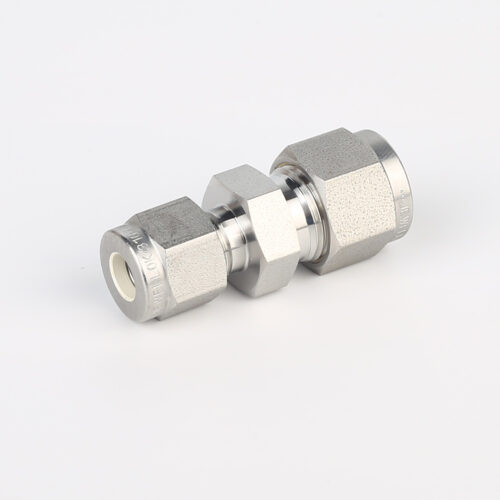
763L Stainless Steel High Purity Pressure Reducing Union Fittings And Tubing Pressure Reducing Valve Adjustment
-
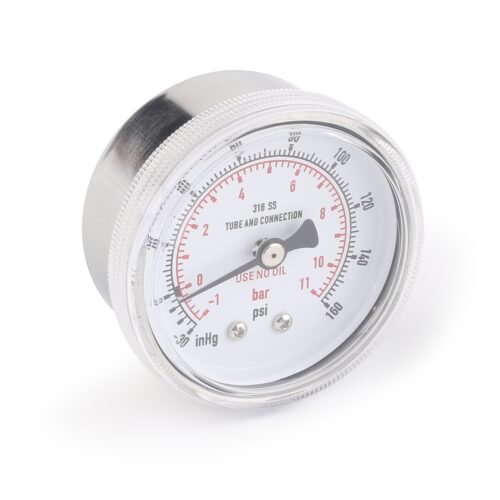
Ultra High Purity Pressure Gauge For Laboratory And Semiconductor JR Series
-
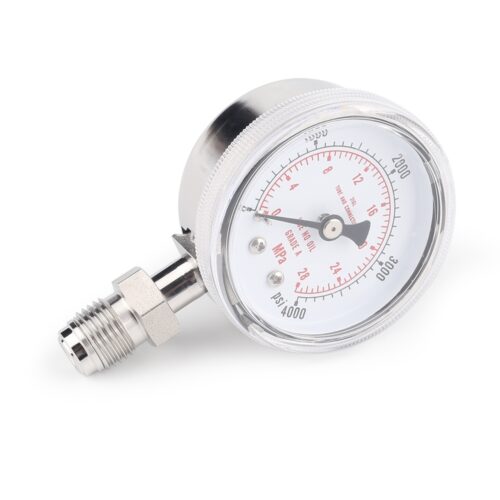
Ultra High Purity Oxygen Pressure Gauge For Semiconductor Gases JG Series Pressure Instruments For Semiconductor Manufacturing
-
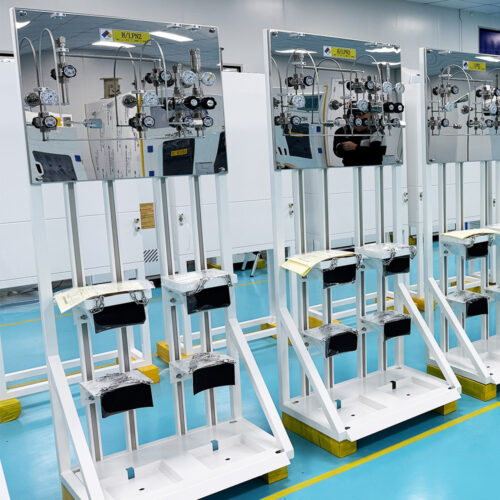
Semi-Automatic VMB Gas Cabinet Gas Changeover Manifold With Semiconductor Valve Manifold Box Diaphragm Valves And Gas Pressure Regulators
-
Manual Gas Rack High Purity Gas Delivery Systems JW-100-GR