
Regulator Manufacturer Tel: +86 13380377051
Regulator Manufacturer Tel: +86 13380377051

Reliable ALD Gas Delivery Equipment for UHP Semiconductor Applications
Introduction
As semiconductor devices continue to evolve toward smaller process nodes, higher integration density, and more advanced architectures, the demand for ultra-high purity (UHP) process environments has become increasingly critical. Technologies such as Atomic Layer Deposition (ALD) are now indispensable in semiconductor fabrication because they enable precise, conformal thin-film deposition at the atomic scale. ALD processes are widely used in logic chips, memory devices, advanced packaging, MEMS, and compound semiconductor manufacturing.
However, the success of ALD technology depends not only on the reactor itself but also on the reliability and purity of the gas delivery system that supplies process gases and precursors. Even minimal contamination, pressure instability, dead volume, or leakage can significantly affect film quality, yield, and equipment uptime.
Reliable ALD gas delivery equipment designed for UHP semiconductor applications must therefore provide exceptional purity control, accurate flow management, corrosion resistance, and long-term operational stability. This article explores the key design requirements, major components, engineering challenges, and technological advancements in ALD gas delivery systems for modern semiconductor manufacturing.
Understanding ALD Process Requirements
Atomic Layer Deposition is a cyclic thin-film deposition technique based on self-limiting surface reactions. Unlike conventional Chemical Vapor Deposition (CVD), ALD introduces precursor gases sequentially rather than simultaneously. Each precursor reacts only with available surface sites, enabling monolayer-level film growth control.
Typical ALD cycles involve:
- First precursor pulse
- Purge step
- Second precursor pulse
- Second purge step
This cycle repeats hundreds or thousands of times depending on the desired film thickness.
Because ALD relies on extremely precise chemical reactions, the gas delivery system must ensure:
- Stable gas pressure and flow
- Zero cross-contamination between precursors
- Fast switching response
- Minimal particle generation
- High leak integrity
- Consistent vaporization of liquid precursors
- Compatibility with corrosive and reactive chemicals
In advanced semiconductor fabs operating at 5nm, 3nm, and beyond, even parts-per-billion (ppb) contamination can negatively affect device performance. Therefore, UHP gas delivery equipment has become a mission-critical infrastructure component.
Importance of Ultra-High Purity in Semiconductor Manufacturing
Ultra-high purity standards are essential throughout semiconductor fabrication. Contaminants such as moisture, oxygen, hydrocarbons, and metallic particles can cause:
- Defects in deposited films
- Poor step coverage
- Interface instability
- Increased leakage current
- Reduced device reliability
- Lower wafer yield
ALD processes are particularly sensitive because film growth occurs atom by atom. A small amount of contamination may disrupt surface chemistry and alter film composition.
Reliable UHP ALD gas delivery systems are therefore engineered to minimize contamination through:
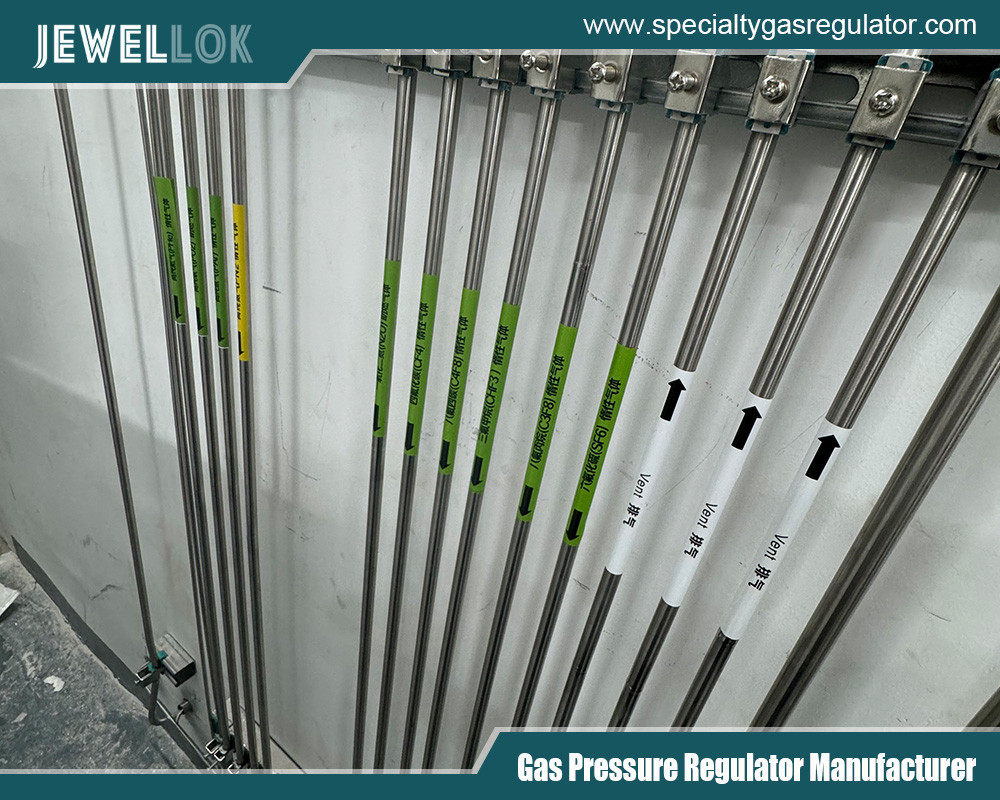
- Electropolished stainless steel tubing
- Orbital welding
- Metal diaphragm valves
- Surface passivation
- High-purity regulators
- Dead-volume-free flow paths
- Helium leak testing
Many semiconductor fabs require gas systems to meet stringent industry standards such as SEMI F20, SEMI F19, and ISO cleanliness requirements.
Core Components of ALD Gas Delivery Equipment
1. Gas Cabinets
Gas cabinets provide safe containment and control of hazardous process gases and liquid precursors. In semiconductor ALD applications, gas cabinets often include:
- Automatic shutoff systems
- Pressure monitoring
- Purge panels
- Gas detection sensors
- Emergency interlocks
- Ventilation systems
For pyrophoric, toxic, or corrosive gases, double-containment designs are frequently used to improve operational safety.
Modern UHP gas cabinets are typically constructed from SS316L stainless steel with electropolished internal surfaces to reduce particle generation and chemical adsorption.
2. Valve Manifold Boxes (VMBs)
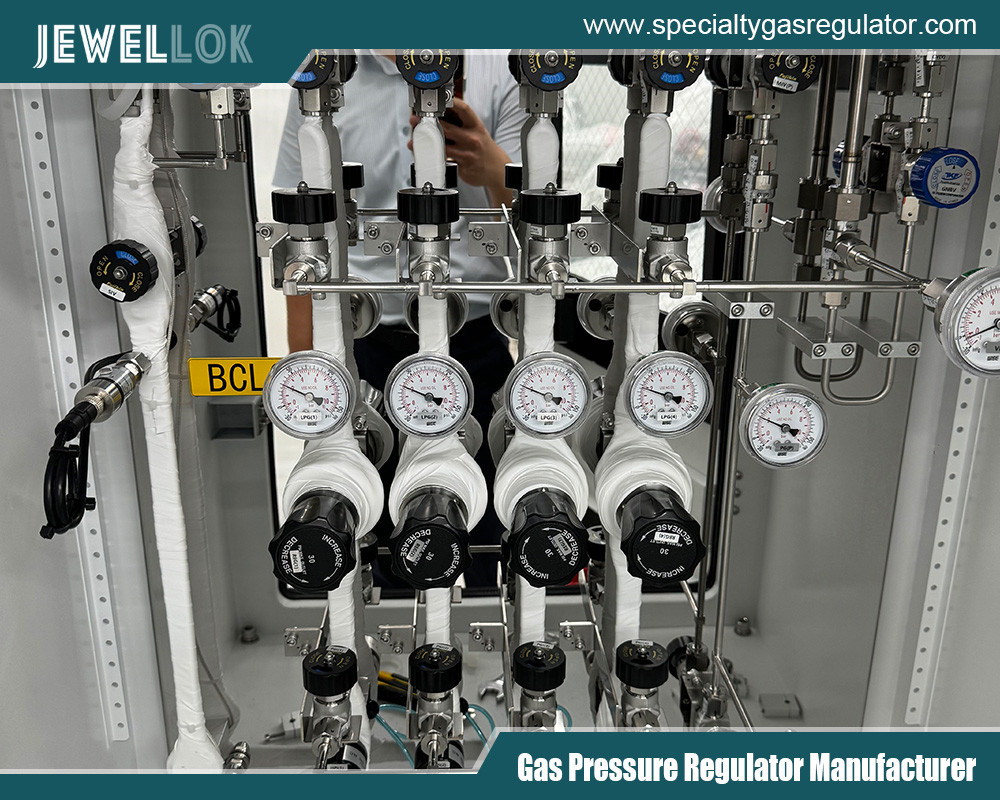
Valve manifold boxes distribute gases from the central supply system to multiple process tools. They are designed to maintain gas purity while enabling precise flow routing.
Key features include:
- Compact modular construction
- Minimal dead volume
- Pneumatic diaphragm valves
- High leak tightness
- Fast purge capability
- Flexible expansion options
In ALD systems, rapid precursor switching is essential for maintaining deposition cycle efficiency. High-performance VMBs help minimize cycle times and improve throughput.
3. UHP Pressure Regulators
Pressure regulators ensure stable downstream gas pressure despite fluctuations in cylinder pressure or process demand.
Critical requirements for ALD applications include:
- Low internal surface roughness
- High sensitivity
- Minimal pressure decay
- Corrosion resistance
- Low particle generation
Single-stage and dual-stage regulators are selected based on process stability requirements. Dual-stage regulators are often preferred for highly sensitive ALD processes because they provide superior pressure consistency.
4. Diaphragm Valves
Diaphragm valves are among the most important components in UHP gas delivery systems.
Compared with conventional valves, UHP diaphragm valves offer:
- Metal-to-metal sealing
- Low dead volume
- Excellent leak integrity
- High cycle life
- Reduced contamination risk
Advanced semiconductor fabs commonly require helium leak rates below 1×10⁻⁹ atm·cc/sec.
Manual, pneumatic, and automated diaphragm valves are all used depending on process integration requirements.
5. Heated Delivery Systems
Many ALD precursors exist as low-vapor-pressure liquids or solids. These materials require heated delivery systems to maintain stable vaporization and prevent condensation.
Heated systems may include:
- Heated gas lines
- Vaporizer modules
- Temperature-controlled cabinets
- Heated pressure regulators
- Thermal insulation
Accurate temperature control is critical because precursor vapor pressure directly affects deposition consistency.
Poor thermal management may lead to:
- Condensation
- Particle formation
- Flow instability
- Incomplete precursor delivery
6. Mass Flow Controllers (MFCs)
Mass Flow Controllers regulate gas flow with high precision. In ALD processes, repeatability is more important than absolute flow volume.
Modern semiconductor-grade MFCs provide:
- High response speed
- Digital communication protocols
- Multi-gas calibration
- Low drift characteristics
- High control accuracy
Stable flow control ensures uniform deposition across the wafer surface.
Material Selection for UHP ALD Systems
Material compatibility is one of the most important engineering considerations in ALD gas delivery equipment.
ALD precursors can be highly reactive, corrosive, moisture-sensitive, or thermally unstable. Common precursor families include:
- Metal-organic compounds
- Halides
- Hydrides
- Organometallics
To ensure long-term reliability, gas delivery systems typically use:
SS316L Stainless Steel
Electropolished SS316L is the industry standard because of its:
- Corrosion resistance
- Smooth internal finish
- Mechanical durability
- Low outgassing characteristics
Internal surface roughness is often controlled below 10 Ra microinch.
Hastelloy and Nickel Alloys
For highly corrosive chemicals, Hastelloy or nickel-based alloys may be required.
These materials offer:
- Superior chemical resistance
- High-temperature stability
- Extended service life
Surface Passivation Technologies
Advanced surface treatments improve corrosion resistance and reduce chemical adsorption.
Common technologies include:
- Electropolishing
- Silicon passivation
- Chromium oxide stabilization
- Specialized coating processes
These treatments enhance gas purity and reduce particle contamination.
Challenges in ALD Gas Delivery Engineering
1. Precursor Stability
Many ALD precursors are thermally sensitive. Excessive heating may cause decomposition, while insufficient heating may lead to condensation.
Engineers must carefully optimize:
- Temperature profiles
- Flow dynamics
- Delivery pressure
- Residence time
2. Moisture Sensitivity
Some precursors react violently with moisture or oxygen. Even trace contamination can cause:
- Particle formation
- Chemical decomposition
- Line blockage
Therefore, UHP systems require rigorous purge procedures and airtight sealing technologies.
3. Particle Control
Particles are a major concern in semiconductor manufacturing. Gas delivery systems must minimize particle generation during:
- Valve cycling
- Gas switching
- Pressure regulation
- Thermal expansion
Cleanroom-compatible manufacturing and assembly processes are essential.
4. System Dead Volume
Dead volume refers to stagnant areas within the gas flow path where gases can accumulate.
Excessive dead volume can cause:
- Cross-contamination
- Slow purge response
- Precursor mixing
- Process instability
ALD systems therefore use compact flow-path designs with minimal internal cavities.
Automation and Smart Monitoring
Modern semiconductor fabs increasingly rely on automation and intelligent monitoring systems to improve reliability and reduce downtime.
Advanced ALD gas delivery systems may include:
- PLC control systems
- Remote monitoring
- Predictive maintenance
- Digital pressure sensing
- Real-time diagnostics
- Automated purge sequences
Industry 4.0 integration enables engineers to monitor system performance continuously and identify potential failures before they impact production.
Smart sensors can detect:
- Abnormal pressure fluctuations
- Valve cycle degradation
- Gas leakage
- Temperature instability
These capabilities significantly improve operational efficiency and fab safety.
Safety Considerations in ALD Gas Delivery
Many ALD gases are toxic, flammable, pyrophoric, or corrosive. Safety therefore plays a central role in equipment design.
Key safety features include:
- Automatic shutdown systems
- Gas leak detectors
- Excess flow sensors
- Ventilation integration
- Fire suppression compatibility
- Emergency purge systems
Compliance with international safety standards such as SEMI S2 and local regulatory requirements is essential.
Additionally, double-containment systems are increasingly adopted for hazardous precursor delivery.
Future Trends in ALD Gas Delivery Equipment
As semiconductor technology advances, ALD gas delivery systems are evolving in several important directions.
Miniaturization and Compact Design
Semiconductor fabs aim to maximize cleanroom space efficiency. Compact modular gas systems help reduce installation footprint while maintaining performance.
Higher Purity Standards
Future process nodes will require even stricter contamination control.
Emerging technologies include:
- Advanced surface coatings
- Improved orbital welding techniques
- Enhanced purification modules
- Ultra-low particle valve designs
Advanced Precursor Delivery
Next-generation ALD processes use increasingly complex precursor chemistries. Delivery systems must support:
- Low-vapor-pressure materials
- Multi-precursor integration
- Pulsed vaporization technologies
- High-temperature operation
Digitalization and AI Integration
Artificial intelligence and machine learning are expected to improve predictive maintenance and process optimization.
Future smart gas systems may automatically adjust operating parameters based on real-time process conditions.
Choosing a Reliable ALD Gas Delivery Equipment Supplier
Selecting the right supplier is critical for semiconductor manufacturers seeking long-term reliability and process stability.
Important evaluation criteria include:
- Semiconductor industry experience
- UHP manufacturing capability
- Surface finishing quality
- Leak testing standards
- Engineering customization capability
- Global technical support
- Compliance certifications
A reliable supplier should also provide:
- Complete system integration
- Factory acceptance testing (FAT)
- Cleanroom assembly
- Documentation and traceability
- Fast maintenance support
Collaborating with experienced UHP gas system manufacturers helps fabs reduce operational risks and improve production efficiency.
Conclusion
Reliable ALD gas delivery equipment is a foundational technology for modern semiconductor manufacturing. As device architectures become increasingly complex and process tolerances continue to tighten, the importance of ultra-high purity gas control grows significantly.
High-performance ALD gas delivery systems must deliver exceptional purity, precise flow control, thermal stability, corrosion resistance, and operational safety. From gas cabinets and diaphragm valves to heated delivery systems and intelligent monitoring platforms, every component plays a critical role in maintaining process consistency and wafer yield.
Future semiconductor innovation will continue driving advancements in UHP gas delivery engineering. Manufacturers that invest in reliable, contamination-free, and highly automated ALD gas delivery solutions will be better positioned to support next-generation semiconductor fabrication technologies while ensuring long-term production reliability and competitiveness.
For more about reliable ALD gas delivery equipment for UHP semiconductor applications, you can pay a visit to Jewellok at https://www.specialtygasregulator.com/product-category/specialty-gas-cabinet/ for more info.
-
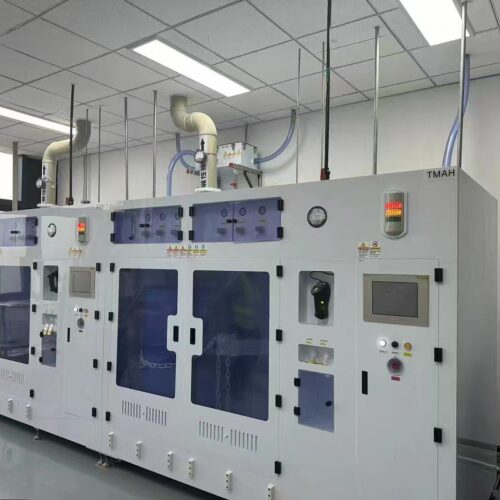
Liquid Bulk Chemical Delivery System with Automatic Chemical Dispense Unit (CDU) Featuring 316L Electropolished Stainless Steel Piping Components
-
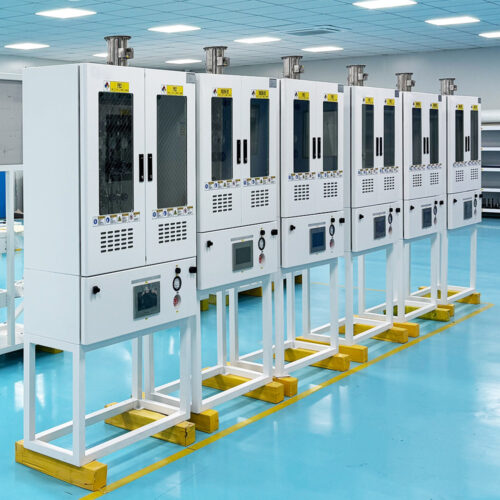
VMB Valve Manifold Panels And Boxes High Purity Configurable Systems JW-200-VMB & JW-100-VMB
-
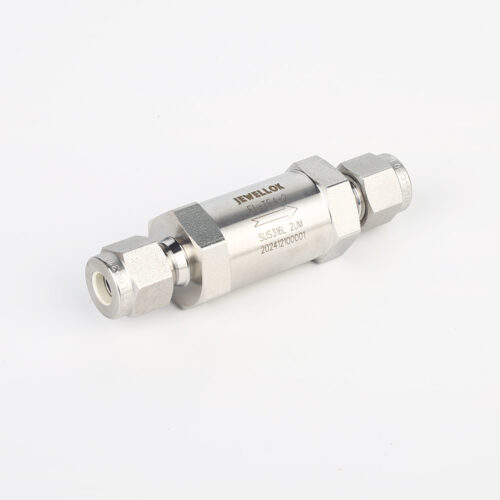
JF Series In-Line Gas Filters | High Purity High Precision High Flow Semiconductor Gas Filter Gas Filtration & Purification
-
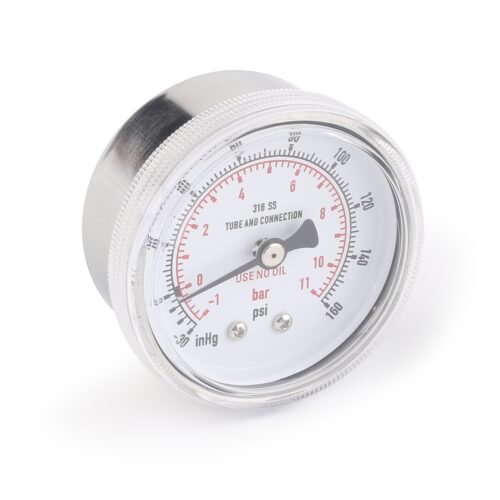
Ultra High Purity Pressure Gauge For Laboratory And Semiconductor JR Series
-
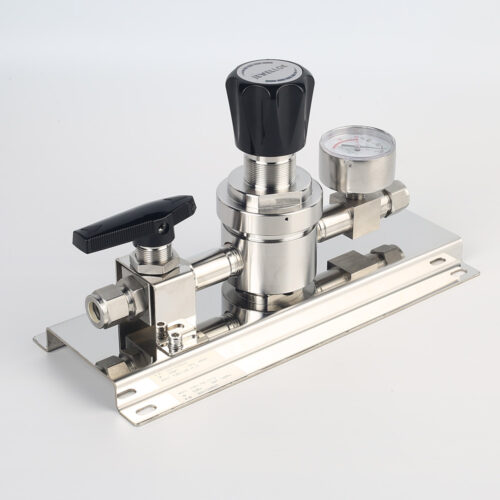
High Purity And Industria Gas Stick Assemblies Precise Pressure Control Gas Systems JSR-1ETG-BV Series
-
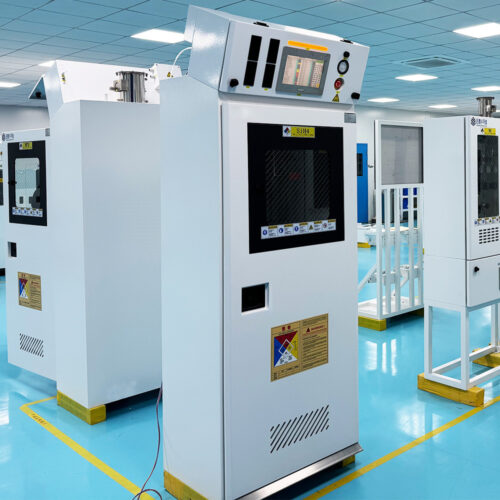
High Purity Bulk Specialty Gas Pressure Control And Filtration Bulk Gas Skid Systems JW-300-BSGS
-
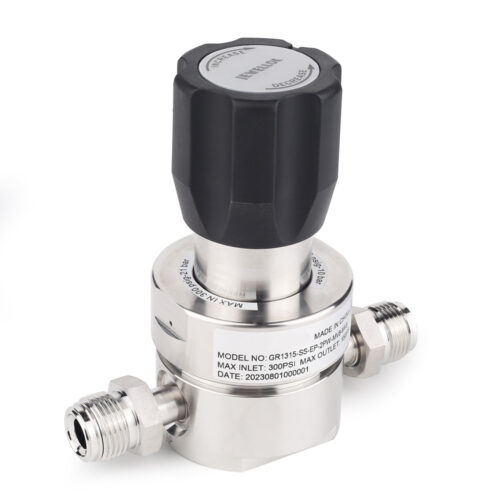
JR1300 Series Ultra High Purity Single Stage Regulator High Flow Line Regulator For Ultra High Purity Intermediate Flow
-
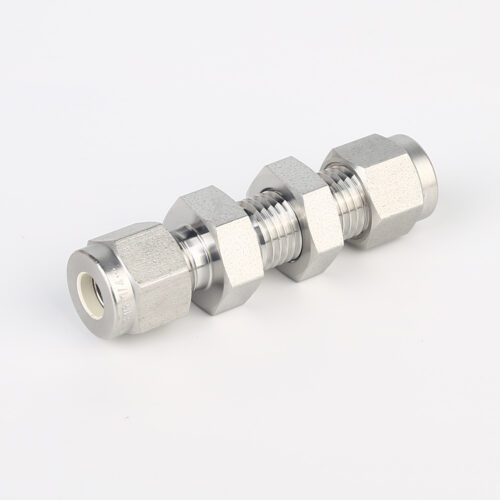
774L Stainless Steel UHP Fittings Butt Weld Bulkhead Union For High Flow Special Gas Fluid